Siti Nabilah Mahdzar, Mohd Aftar Abu Bakar, Nadiatur Akmar Zulkifli, Mahanem Mat Noor, Mohd Hafiz Abdul Rahman, Norfarhan Mohd-Assa'ad, Shairah Abdul Razak
{"title":"Geographical distribution and phenotypic characterization of Malin sheep in three selected states of Peninsular Malaysia.","authors":"Siti Nabilah Mahdzar, Mohd Aftar Abu Bakar, Nadiatur Akmar Zulkifli, Mahanem Mat Noor, Mohd Hafiz Abdul Rahman, Norfarhan Mohd-Assa'ad, Shairah Abdul Razak","doi":"10.5187/jast.2023.e80","DOIUrl":null,"url":null,"abstract":"<p><p>Conservation of indigenous breeds of ruminants is crucial for offering alternatives to commercial breeds. Moreover, it is part of long-term strategies in the agri-food sector to sustain supplies by ensuring genetic resource diversity to overcome climate change and the food crisis. Malin is the only native sheep breed in Malaysia. Due to traits such as heat tolerance and disease resistance, Malin sheep are considered an invaluable biological heritage. However, breeders and industrial producers are not interested in Malin because of their low commercial value and slow growth rate. Hence, this breed is neglected, its population is fragmented, and its numbers are dwindling, without data updates. Therefore, current information regarding Malin sheep is needed, including the latest geographical distribution and phenotypic characterization. First, we determined the population distribution using information from the State Department of Veterinary Services. Data were then collected from 15 studied locations in Pahang, Perak, and Kelantan via purposive sampling. Six qualitative traits and seven morphometric traits were recorded for 152 Malin sheep. These traits were quantitatively analyzed using multi-variate statistical tools to define the best measure to represent body conformation when comparing Malin sheep across studied locations. Findings showed that the Malin Ne population is very small. Morphologically, most Malin sheep exhibit light-brown wool with a course wool type; convex head shape, curved and horned in males but polled in females; and white hoof color. Imputation for missing body weight values in one population was successfully performed based on imputation regression modelling prior to downstream analyses. Kruskal-Wallis tests indicated that the median value of all morphometric traits except female body weight differed significantly between all studied locations. The highest correlation was observed between chest girth and body length in males (ρ=0.76) and chest girth and body weight (ρ=0.76) in females. Non-metric dimensional scaling showed that sheep maintained by smallholders in Pahang and Kelantan are similar phenotypically, but with smaller size compared with Perak. These findings suggest that phenotypic traits can help evaluate and compare sheep body conformation and thus provide an opportunity to distinguish and clarify a herd's position, thereby highlighting populations requiring management attention.</p>","PeriodicalId":14923,"journal":{"name":"Journal of Animal Science and Technology","volume":"10 1","pages":"737-758"},"PeriodicalIF":3.2000,"publicationDate":"2025-07-01","publicationTypes":"Journal Article","fieldsOfStudy":null,"isOpenAccess":false,"openAccessPdf":"https://www.ncbi.nlm.nih.gov/pmc/articles/PMC12380030/pdf/","citationCount":"0","resultStr":null,"platform":"Semanticscholar","paperid":null,"PeriodicalName":"Journal of Animal Science and Technology","FirstCategoryId":"97","ListUrlMain":"https://doi.org/10.5187/jast.2023.e80","RegionNum":3,"RegionCategory":"农林科学","ArticlePicture":[],"TitleCN":null,"AbstractTextCN":null,"PMCID":null,"EPubDate":"2025/7/31 0:00:00","PubModel":"Epub","JCR":"Q1","JCRName":"AGRICULTURE, DAIRY & ANIMAL SCIENCE","Score":null,"Total":0}
引用次数: 0
Abstract
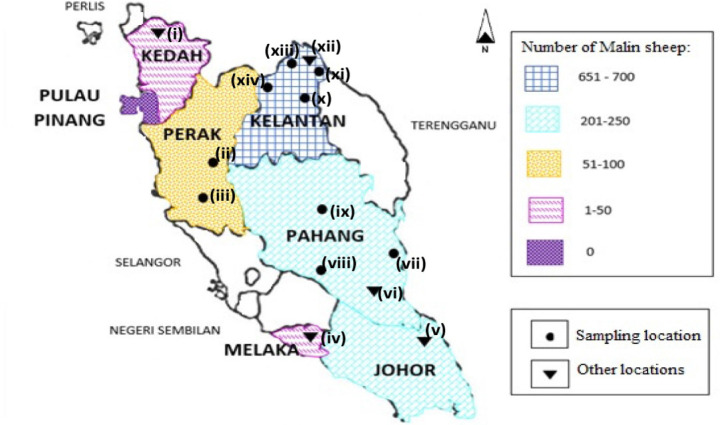
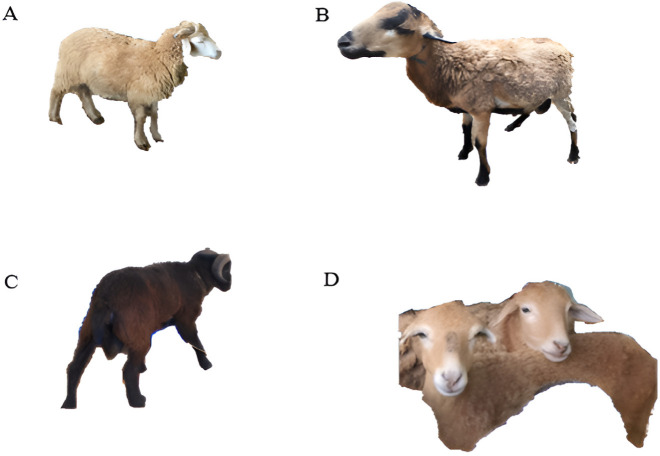
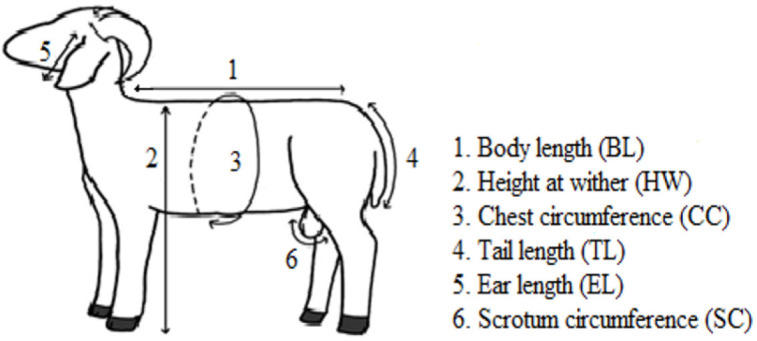
Conservation of indigenous breeds of ruminants is crucial for offering alternatives to commercial breeds. Moreover, it is part of long-term strategies in the agri-food sector to sustain supplies by ensuring genetic resource diversity to overcome climate change and the food crisis. Malin is the only native sheep breed in Malaysia. Due to traits such as heat tolerance and disease resistance, Malin sheep are considered an invaluable biological heritage. However, breeders and industrial producers are not interested in Malin because of their low commercial value and slow growth rate. Hence, this breed is neglected, its population is fragmented, and its numbers are dwindling, without data updates. Therefore, current information regarding Malin sheep is needed, including the latest geographical distribution and phenotypic characterization. First, we determined the population distribution using information from the State Department of Veterinary Services. Data were then collected from 15 studied locations in Pahang, Perak, and Kelantan via purposive sampling. Six qualitative traits and seven morphometric traits were recorded for 152 Malin sheep. These traits were quantitatively analyzed using multi-variate statistical tools to define the best measure to represent body conformation when comparing Malin sheep across studied locations. Findings showed that the Malin Ne population is very small. Morphologically, most Malin sheep exhibit light-brown wool with a course wool type; convex head shape, curved and horned in males but polled in females; and white hoof color. Imputation for missing body weight values in one population was successfully performed based on imputation regression modelling prior to downstream analyses. Kruskal-Wallis tests indicated that the median value of all morphometric traits except female body weight differed significantly between all studied locations. The highest correlation was observed between chest girth and body length in males (ρ=0.76) and chest girth and body weight (ρ=0.76) in females. Non-metric dimensional scaling showed that sheep maintained by smallholders in Pahang and Kelantan are similar phenotypically, but with smaller size compared with Perak. These findings suggest that phenotypic traits can help evaluate and compare sheep body conformation and thus provide an opportunity to distinguish and clarify a herd's position, thereby highlighting populations requiring management attention.
期刊介绍:
Journal of Animal Science and Technology (J. Anim. Sci. Technol. or JAST) is a peer-reviewed, open access journal publishing original research, review articles and notes in all fields of animal science.
Topics covered by the journal include: genetics and breeding, physiology, nutrition of monogastric animals, nutrition of ruminants, animal products (milk, meat, eggs and their by-products) and their processing, grasslands and roughages, livestock environment, animal biotechnology, animal behavior and welfare.
Articles generally report research involving beef cattle, dairy cattle, pigs, companion animals, goats, horses, and sheep. However, studies involving other farm animals, aquatic and wildlife species, and laboratory animal species that address fundamental questions related to livestock and companion animal biology will also be considered for publication.
The Journal of Animal Science and Technology (J. Anim. Technol. or JAST) has been the official journal of The Korean Society of Animal Science and Technology (KSAST) since 2000, formerly known as The Korean Journal of Animal Sciences (launched in 1956).



 京公网安备 11010802042870号
京ICP备2023020795号-1
京公网安备 11010802042870号
京ICP备2023020795号-1

 分享
分享
 求助内容:
求助内容: 应助结果提醒方式:
 扫码关注我们
