Madeline J Churchill, Haley du Bois, Taylor A Heim, Tenny Mudianto, Maria M Steele, Jeffrey C Nolz, Amanda W Lund
{"title":"Infection-induced lymphatic zippering restricts fluid transport and viral dissemination from skin.","authors":"Madeline J Churchill, Haley du Bois, Taylor A Heim, Tenny Mudianto, Maria M Steele, Jeffrey C Nolz, Amanda W Lund","doi":"10.1084/jem.20211830","DOIUrl":null,"url":null,"abstract":"<p><p>Lymphatic vessels are often considered passive conduits that flush antigenic material, pathogens, and cells to draining lymph nodes. Recent evidence, however, suggests that lymphatic vessels actively regulate diverse processes from antigen transport to leukocyte trafficking and dietary lipid absorption. Here we tested the hypothesis that infection-induced changes in lymphatic transport actively contribute to innate host defense. We demonstrate that cutaneous vaccinia virus infection by scarification activates dermal lymphatic capillary junction tightening (zippering) and lymph node lymphangiogenesis, which are associated with reduced fluid transport and cutaneous viral sequestration. Lymphatic-specific deletion of VEGFR2 prevented infection-induced lymphatic capillary zippering, increased fluid flux out of tissue, and allowed lymphatic dissemination of virus. Further, a reduction in dendritic cell migration to lymph nodes in the absence of lymphatic VEGFR2 associated with reduced antiviral CD8+ T cell expansion. These data indicate that VEGFR2-driven lymphatic remodeling is a context-dependent, active mechanism of innate host defense that limits viral dissemination and facilitates protective, antiviral CD8+ T cell responses.</p>","PeriodicalId":47340,"journal":{"name":"International Journal of Middle East Studies","volume":"11 1","pages":""},"PeriodicalIF":1.4000,"publicationDate":"2022-05-02","publicationTypes":"Journal Article","fieldsOfStudy":null,"isOpenAccess":false,"openAccessPdf":"https://www.ncbi.nlm.nih.gov/pmc/articles/PMC8972184/pdf/","citationCount":"0","resultStr":null,"platform":"Semanticscholar","paperid":null,"PeriodicalName":"International Journal of Middle East Studies","FirstCategoryId":"1085","ListUrlMain":"https://doi.org/10.1084/jem.20211830","RegionNum":3,"RegionCategory":"社会学","ArticlePicture":[],"TitleCN":null,"AbstractTextCN":null,"PMCID":null,"EPubDate":"2022/3/30 0:00:00","PubModel":"Epub","JCR":"Q1","JCRName":"AREA STUDIES","Score":null,"Total":0}
引用次数: 0
Abstract
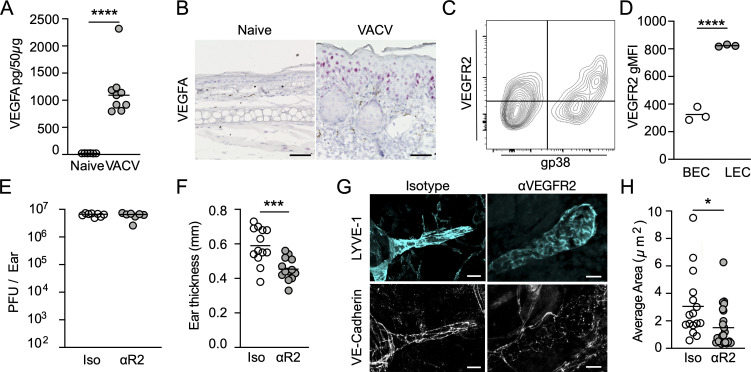
Lymphatic vessels are often considered passive conduits that flush antigenic material, pathogens, and cells to draining lymph nodes. Recent evidence, however, suggests that lymphatic vessels actively regulate diverse processes from antigen transport to leukocyte trafficking and dietary lipid absorption. Here we tested the hypothesis that infection-induced changes in lymphatic transport actively contribute to innate host defense. We demonstrate that cutaneous vaccinia virus infection by scarification activates dermal lymphatic capillary junction tightening (zippering) and lymph node lymphangiogenesis, which are associated with reduced fluid transport and cutaneous viral sequestration. Lymphatic-specific deletion of VEGFR2 prevented infection-induced lymphatic capillary zippering, increased fluid flux out of tissue, and allowed lymphatic dissemination of virus. Further, a reduction in dendritic cell migration to lymph nodes in the absence of lymphatic VEGFR2 associated with reduced antiviral CD8+ T cell expansion. These data indicate that VEGFR2-driven lymphatic remodeling is a context-dependent, active mechanism of innate host defense that limits viral dissemination and facilitates protective, antiviral CD8+ T cell responses.
期刊介绍:
The International Journal of Middle East Studies publishes original research on politics, society and culture in the Middle East from the seventh century to the present day. The journal also covers Spain, south-east Europe, and parts of Africa, South Asia, and the former Soviet Union for subjects of relevance to Middle Eastern civilization. Particular attention is paid to the history, politics, economics, anthropology, sociology, literature, and cultural studies of the area and to comparative religion, theology, law, and philosophy. Each issue contains approximately 50 pages of detailed book reviews. Subscribers to the print version also receive the Review of Middle East Studies free. Published under the auspices of the Middle East Studies Association of North America







 京公网安备 11010802042870号
京ICP备2023020795号-1
京公网安备 11010802042870号
京ICP备2023020795号-1

 分享
分享
 求助内容:
求助内容: 应助结果提醒方式:
 扫码关注我们
