Michelle Berger, Ricarda Schäfer, Marco Schmidt, Christian Regal, Henner Gimpel
{"title":"How to prevent technostress at the digital workplace: a Delphi study.","authors":"Michelle Berger, Ricarda Schäfer, Marco Schmidt, Christian Regal, Henner Gimpel","doi":"10.1007/s11573-023-01159-3","DOIUrl":null,"url":null,"abstract":"<p><p>Technostress is a rising issue in the changing world of digital work. Technostress can cause severe adverse outcomes for individuals and organizations. Thus, organizations face the moral, legal, and economic responsibility to prevent employees' excessive technostress. As technostress develops over time, it is crucial to prevent it throughout the process of its emergence instead of only reacting after adverse outcomes occur. Contextualizing the Theory of Preventive Stress management to technostress, we synthesize and advance existing knowledge on inhibiting technostress. We develop a set of 24 technostress prevention measures from technostress inhibitor literature, other technostress literature, and based on qualitative and quantitative contributions from a Delphi study. Based on expert feedback, we characterize each measure and, where possible, assess its relevance in addressing specific technostressors. Our paper contributes to research by transferring the Theory of Preventive Stress Management into the context of technostress and presenting specific measures to prevent technostress. This offers a complementary view to technostress inhibitors by expanding the theoretical grounding and adding a time perspective through the implementation of primary, secondary, and tertiary prevention measures. For practice, we offer a comprehensive and applicable overview of measures organizations can implement to prevent technostress.</p>","PeriodicalId":12642,"journal":{"name":"Geology","volume":"2 1","pages":"1-63"},"PeriodicalIF":4.6000,"publicationDate":"2023-05-02","publicationTypes":"Journal Article","fieldsOfStudy":null,"isOpenAccess":false,"openAccessPdf":"https://www.ncbi.nlm.nih.gov/pmc/articles/PMC10153052/pdf/","citationCount":"0","resultStr":null,"platform":"Semanticscholar","paperid":null,"PeriodicalName":"Geology","FirstCategoryId":"89","ListUrlMain":"https://doi.org/10.1007/s11573-023-01159-3","RegionNum":1,"RegionCategory":"地球科学","ArticlePicture":[],"TitleCN":null,"AbstractTextCN":null,"PMCID":null,"EPubDate":"","PubModel":"","JCR":"Q1","JCRName":"GEOLOGY","Score":null,"Total":0}
引用次数: 0
Abstract
Technostress is a rising issue in the changing world of digital work. Technostress can cause severe adverse outcomes for individuals and organizations. Thus, organizations face the moral, legal, and economic responsibility to prevent employees' excessive technostress. As technostress develops over time, it is crucial to prevent it throughout the process of its emergence instead of only reacting after adverse outcomes occur. Contextualizing the Theory of Preventive Stress management to technostress, we synthesize and advance existing knowledge on inhibiting technostress. We develop a set of 24 technostress prevention measures from technostress inhibitor literature, other technostress literature, and based on qualitative and quantitative contributions from a Delphi study. Based on expert feedback, we characterize each measure and, where possible, assess its relevance in addressing specific technostressors. Our paper contributes to research by transferring the Theory of Preventive Stress Management into the context of technostress and presenting specific measures to prevent technostress. This offers a complementary view to technostress inhibitors by expanding the theoretical grounding and adding a time perspective through the implementation of primary, secondary, and tertiary prevention measures. For practice, we offer a comprehensive and applicable overview of measures organizations can implement to prevent technostress.
期刊介绍:
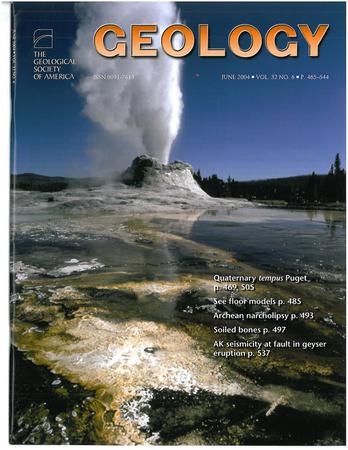
Published since 1973, Geology features rapid publication of about 23 refereed short (four-page) papers each month. Articles cover all earth-science disciplines and include new investigations and provocative topics. Professional geologists and university-level students in the earth sciences use this widely read journal to keep up with scientific research trends. The online forum section facilitates author-reader dialog. Includes color and occasional large-format illustrations on oversized loose inserts.



 京公网安备 11010802042870号
京ICP备2023020795号-1
京公网安备 11010802042870号
京ICP备2023020795号-1

 分享
分享
 求助内容:
求助内容: 应助结果提醒方式:
 扫码关注我们
