Analysis of Rail Passenger Flow in a Rail Station Concourse Prior to and During the COVID-19 Pandemic Using Event-Based Simulation Models and Scenarios.
{"title":"Analysis of Rail Passenger Flow in a Rail Station Concourse Prior to and During the COVID-19 Pandemic Using Event-Based Simulation Models and Scenarios.","authors":"Jeremy Lee, Marin Marinov","doi":"10.1007/s40864-022-00167-w","DOIUrl":null,"url":null,"abstract":"<p><p>During COVID-19, certain means were proposed to improve crowd management in the Birmingham New Street railway station. To validate the current system of crowd management in the station, this paper examines the rail passenger flow in the concourse of the Birmingham New Street railway station and the passenger interactions and queueing phenomena associated with it, mainly at the ticket machines, offices and gates, prior to and during the implementation of COVID-19 measures. The passenger behaviour in the concourse of the station was simulated using the SIMUL8 event-based simulation modelling package. Three different scenarios were modelled to analyse the changes and impacts from pre-COVID-19 and within the COVID-19 context. The results revealed that passenger behaviour in railway stations is changing due to COVID-19. Specifically, passengers are more likely to buy tickets using their smartphones or online prior to or whilst entering the station so that they can go through the station concourse with minimal queuing times and avoid contact with a facility of common use at the station, whereas those without tickets are more likely to be in a queue to buy their tickets in the station. For pre-COVID, the results showed that even with a reduced number of ticket machines, overcrowding inside the station was unlikely to occur, as 80% of all passengers in the simulation completed service within a 15-minute time frame. However, during implementation of COVID-19 measures, as the number of passengers using the station dropped significantly and more passengers bought their tickets using their smartphones and/or online, queueing times were also shorter, and thus passengers spent less time in the system. The simulation results were in accordance with the expected practice; hence the effectiveness of the simulation model was verified. Overall, as a result of this study, the following suggestions to improve crowd management in a railway passenger station concourse are proposed: encourage passengers to purchase tickets on their smartphones, remove ticket gates and replace them with sensors, and provide a one-way passenger flow system in the main concourse of the station.</p>","PeriodicalId":38405,"journal":{"name":"Rechtsgeschichte","volume":"1 1","pages":"99-120"},"PeriodicalIF":0.0000,"publicationDate":"2022-01-01","publicationTypes":"Journal Article","fieldsOfStudy":null,"isOpenAccess":false,"openAccessPdf":"https://www.ncbi.nlm.nih.gov/pmc/articles/PMC9099279/pdf/","citationCount":"0","resultStr":null,"platform":"Semanticscholar","paperid":null,"PeriodicalName":"Rechtsgeschichte","FirstCategoryId":"5","ListUrlMain":"https://doi.org/10.1007/s40864-022-00167-w","RegionNum":0,"RegionCategory":null,"ArticlePicture":[],"TitleCN":null,"AbstractTextCN":null,"PMCID":null,"EPubDate":"2022/5/13 0:00:00","PubModel":"Epub","JCR":"Q4","JCRName":"Arts and Humanities","Score":null,"Total":0}
引用次数: 0
Abstract
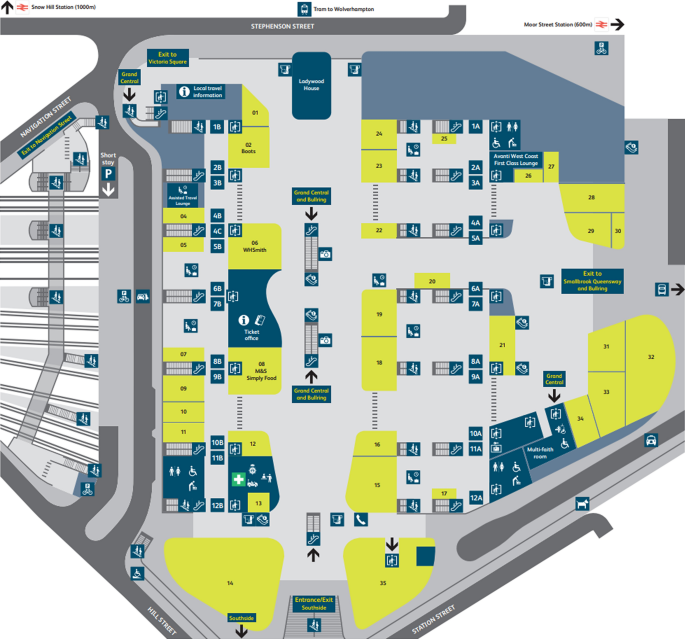
During COVID-19, certain means were proposed to improve crowd management in the Birmingham New Street railway station. To validate the current system of crowd management in the station, this paper examines the rail passenger flow in the concourse of the Birmingham New Street railway station and the passenger interactions and queueing phenomena associated with it, mainly at the ticket machines, offices and gates, prior to and during the implementation of COVID-19 measures. The passenger behaviour in the concourse of the station was simulated using the SIMUL8 event-based simulation modelling package. Three different scenarios were modelled to analyse the changes and impacts from pre-COVID-19 and within the COVID-19 context. The results revealed that passenger behaviour in railway stations is changing due to COVID-19. Specifically, passengers are more likely to buy tickets using their smartphones or online prior to or whilst entering the station so that they can go through the station concourse with minimal queuing times and avoid contact with a facility of common use at the station, whereas those without tickets are more likely to be in a queue to buy their tickets in the station. For pre-COVID, the results showed that even with a reduced number of ticket machines, overcrowding inside the station was unlikely to occur, as 80% of all passengers in the simulation completed service within a 15-minute time frame. However, during implementation of COVID-19 measures, as the number of passengers using the station dropped significantly and more passengers bought their tickets using their smartphones and/or online, queueing times were also shorter, and thus passengers spent less time in the system. The simulation results were in accordance with the expected practice; hence the effectiveness of the simulation model was verified. Overall, as a result of this study, the following suggestions to improve crowd management in a railway passenger station concourse are proposed: encourage passengers to purchase tickets on their smartphones, remove ticket gates and replace them with sensors, and provide a one-way passenger flow system in the main concourse of the station.




 京公网安备 11010802042870号
京ICP备2023020795号-1
京公网安备 11010802042870号
京ICP备2023020795号-1

 分享
分享
 求助内容:
求助内容: 应助结果提醒方式:
 扫码关注我们
