{"title":"Aspects of xenobiotics and their receptors in stroke.","authors":"Aishika Datta, Bijoyani Ghosh, Deepaneeta Sarmah, Antra Chaudhary, Anupom Borah, Pallab Bhattacharya","doi":"10.1002/nep3.9","DOIUrl":null,"url":null,"abstract":"<p><p>Stroke is devastating and the second leading cause of disability and death worldwide. The pathophysiology of stroke is intricate involving oxidative stress, ionic imbalance, and excitotoxicity leading to cell death. The current therapeutic strategies for ischemic stroke primarily aim to restore cerebral blood flow by removing clots using intravenous thrombolysis and mechanical thrombectomy. However, hemorrhagic stroke requires different therapeutic interventions, where intravenous thrombolysis worsens the persistent condition. Nevertheless, the present treatment strategies do not provide effective neuroprotection as they have limitations such as narrow time window, specialized clinics and personnel, and higher expense. Therefore, studies on novel therapeutic strategies that can render neuroprotection over an extended time with minimum adverse effects are solicited. Xenobiotics are agents that are foreign to the biological system but can regulate their metabolism by binding to different xenobiotic receptors (XRs) to produce toxic substances. Modulation of XRs in different preclinical studies have shown benefits in the stroke outcome. Therefore, targeting XRs may be a future therapeutic strategy for stroke intervention. The present review briefly discusses various implications of xenobiotics and their receptors to evolve as a potential therapeutic target for prospective use as an adjunctive therapy for stroke.</p>","PeriodicalId":74291,"journal":{"name":"Neuroprotection","volume":"1 1","pages":"23-34"},"PeriodicalIF":0.0000,"publicationDate":"2022-12-20","publicationTypes":"Journal Article","fieldsOfStudy":null,"isOpenAccess":false,"openAccessPdf":"https://www.ncbi.nlm.nih.gov/pmc/articles/PMC12486939/pdf/","citationCount":"0","resultStr":null,"platform":"Semanticscholar","paperid":null,"PeriodicalName":"Neuroprotection","FirstCategoryId":"1085","ListUrlMain":"https://doi.org/10.1002/nep3.9","RegionNum":0,"RegionCategory":null,"ArticlePicture":[],"TitleCN":null,"AbstractTextCN":null,"PMCID":null,"EPubDate":"2023/9/1 0:00:00","PubModel":"eCollection","JCR":"","JCRName":"","Score":null,"Total":0}
引用次数: 0
Abstract
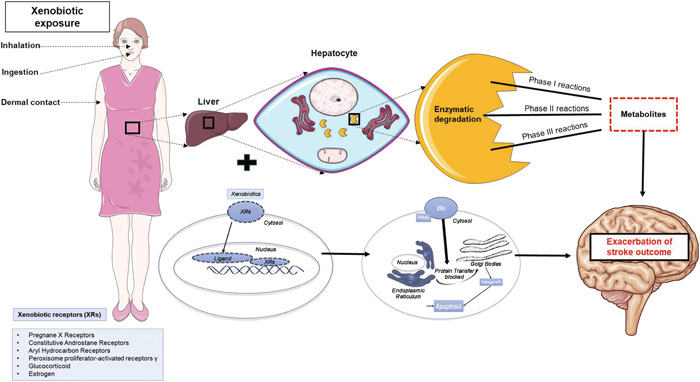
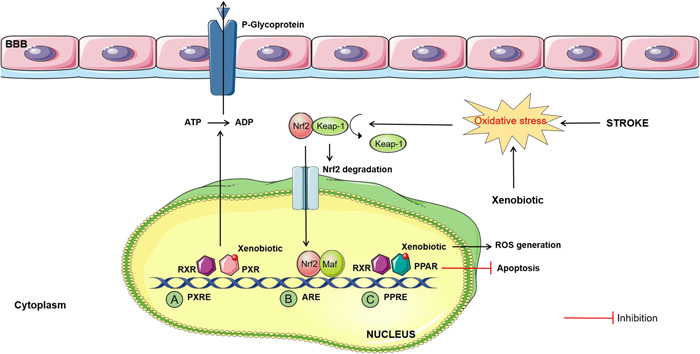
Stroke is devastating and the second leading cause of disability and death worldwide. The pathophysiology of stroke is intricate involving oxidative stress, ionic imbalance, and excitotoxicity leading to cell death. The current therapeutic strategies for ischemic stroke primarily aim to restore cerebral blood flow by removing clots using intravenous thrombolysis and mechanical thrombectomy. However, hemorrhagic stroke requires different therapeutic interventions, where intravenous thrombolysis worsens the persistent condition. Nevertheless, the present treatment strategies do not provide effective neuroprotection as they have limitations such as narrow time window, specialized clinics and personnel, and higher expense. Therefore, studies on novel therapeutic strategies that can render neuroprotection over an extended time with minimum adverse effects are solicited. Xenobiotics are agents that are foreign to the biological system but can regulate their metabolism by binding to different xenobiotic receptors (XRs) to produce toxic substances. Modulation of XRs in different preclinical studies have shown benefits in the stroke outcome. Therefore, targeting XRs may be a future therapeutic strategy for stroke intervention. The present review briefly discusses various implications of xenobiotics and their receptors to evolve as a potential therapeutic target for prospective use as an adjunctive therapy for stroke.



 京公网安备 11010802042870号
京ICP备2023020795号-1
京公网安备 11010802042870号
京ICP备2023020795号-1

 分享
分享

 求助内容:
求助内容: 应助结果提醒方式:
 扫码关注我们
