{"title":"Flow cytometric measurable residual disease in adult acute myeloid leukemia: a preliminary report from Eastern India.","authors":"Neha Singh, Avinash Gupta, Sujeet Kumar, Gojiri Mawalankar, Bhumika Gupta, Nilesh Dhole, RohitKumar Kori, Anil Singh","doi":"10.1007/s12308-022-00527-2","DOIUrl":null,"url":null,"abstract":"<p><p>Presence of measurable residual disease (MRD) in acute myeloid leukemia (AML) is considered to be an independent predictor of relapse and poorer survival outcomes. MRD can be measured by flow cytometric, quantitative PCR, and NGS-based assays at varying sensitivities. There is scant Indian data on different aspects of MFC-MRD in AML including analysis strategies as well as molecular spectrum, clinical correlation, etc. This retrospective observational study included all newly diagnosed patients of acute myeloid leukemia in whom complete baseline diagnostic workup was available including flow cytometry and cytogenetic and molecular studies. Among patients with cytogenetic abnormalities (n = 25), no statistically significant correlation was observed between flow cytometric MRD positivity and presence of ≥ 3 mutations as well as relapsed disease. However, in AML patients with normal karyotype (n = 32), MRD positivity correlated strongly with relapsed status (p = 0.02), although no significant correlation was found with respect to FLT3 mutation, IDH mutation, NPM1 mutation, or complex genotype. Interestingly, 90.5% of MRD-positive patients belonged to ELN (2017) intermediate to high-risk category unlike only 9.5% in the good risk category (p = 0.0002). Median relapse-free survival was 8.5 months with a follow-up range of 3-24 months. On the basis of the observations of the present study, it can be clearly inferred that MRD status affects relapse status in the normal karyotype subgroup and can delineate patients who require stem cell transplantation in addition to molecular signatures.</p>","PeriodicalId":51491,"journal":{"name":"Political Science Quarterly","volume":"115 1","pages":"17-25"},"PeriodicalIF":1.1000,"publicationDate":"2023-03-01","publicationTypes":"Journal Article","fieldsOfStudy":null,"isOpenAccess":false,"openAccessPdf":"","citationCount":"0","resultStr":null,"platform":"Semanticscholar","paperid":null,"PeriodicalName":"Political Science Quarterly","FirstCategoryId":"90","ListUrlMain":"https://doi.org/10.1007/s12308-022-00527-2","RegionNum":4,"RegionCategory":"社会学","ArticlePicture":[],"TitleCN":null,"AbstractTextCN":null,"PMCID":null,"EPubDate":"2023/1/10 0:00:00","PubModel":"Epub","JCR":"Q3","JCRName":"POLITICAL SCIENCE","Score":null,"Total":0}
引用次数: 0
Abstract
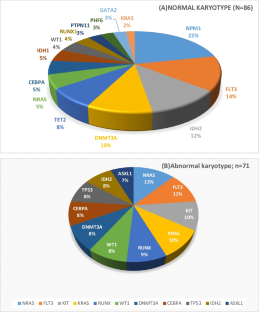
Presence of measurable residual disease (MRD) in acute myeloid leukemia (AML) is considered to be an independent predictor of relapse and poorer survival outcomes. MRD can be measured by flow cytometric, quantitative PCR, and NGS-based assays at varying sensitivities. There is scant Indian data on different aspects of MFC-MRD in AML including analysis strategies as well as molecular spectrum, clinical correlation, etc. This retrospective observational study included all newly diagnosed patients of acute myeloid leukemia in whom complete baseline diagnostic workup was available including flow cytometry and cytogenetic and molecular studies. Among patients with cytogenetic abnormalities (n = 25), no statistically significant correlation was observed between flow cytometric MRD positivity and presence of ≥ 3 mutations as well as relapsed disease. However, in AML patients with normal karyotype (n = 32), MRD positivity correlated strongly with relapsed status (p = 0.02), although no significant correlation was found with respect to FLT3 mutation, IDH mutation, NPM1 mutation, or complex genotype. Interestingly, 90.5% of MRD-positive patients belonged to ELN (2017) intermediate to high-risk category unlike only 9.5% in the good risk category (p = 0.0002). Median relapse-free survival was 8.5 months with a follow-up range of 3-24 months. On the basis of the observations of the present study, it can be clearly inferred that MRD status affects relapse status in the normal karyotype subgroup and can delineate patients who require stem cell transplantation in addition to molecular signatures.
期刊介绍:
Published continuously since 1886, Political Science Quarterly or PSQ is the most widely read and accessible scholarly journal covering government, politics and policy. A nonpartisan journal, PSQ is edited for both political scientists and general readers with a keen interest in public and foreign affairs. Each article is based on objective evidence and is fully refereed.




 京公网安备 11010802042870号
京ICP备2023020795号-1
京公网安备 11010802042870号
京ICP备2023020795号-1

 分享
分享
 求助内容:
求助内容: 应助结果提醒方式:
 扫码关注我们
