M Shah-Vardi, E Nazaryanpour, S Nejad-Ebrahimi, M Farzaneh
{"title":"Remediation of zearalenone mycotoxin contamination in rumen fluid by phytochemical compounds of <i>Zataria multiflora</i>.","authors":"M Shah-Vardi, E Nazaryanpour, S Nejad-Ebrahimi, M Farzaneh","doi":"10.22099/IJVR.2022.39561.5746","DOIUrl":null,"url":null,"abstract":"<p><strong>Background: </strong>Zearalenone (ZEA), which is one of the most prevalent wheat and corn seeds mycotoxins causes acute and chronic toxicities in ruminants, poultry, and aquatic animals. Among commercial toxin binders, only a few active charcoals have the significant ability to adsorb ZEA contamination; nevertheless, active charcoal is not considered a sound additive by the feed industry.</p><p><strong>Aims: </strong>This study aimed to screen and identify the ZEA-degradation compounds of the <i>Zataria multiflora</i> (Shirazi thyme) in the cattle rumen fluid.</p><p><strong>Methods: </strong>In this investigation, essential oil and different extracts (<i>n</i>-hexane, ethyl acetate, and methanol) of the aerial part of Shirazi thyme (at three concentrations of 0.5, 1, and 2 mg/ml) were screened to reduce ZEA contamination conditions (2 µg/ml) in rumen fluid. ZEA-content was analyzed by high-performance liquid chromatography (HPLC) with a fluorescence detector. In addition, Shirazi thyme phytochemical compounds responsible for eliminating ZEA were localized by HPLC-based activity profiling and then identified by mass spectrometry (LC-MS).</p><p><strong>Results: </strong>Both <i>n</i>-hexane and methanol extracts of <i>Z. multiflora</i>, considerably remediated ZEA (63-78%) from rumen fluid. According to HPLC-based activity profiling of <i>Z. multiflora</i> extract and LC-MS analysis, two triterpene compounds, including ursolic and oleanolic acids were introduced as ZEA degradation agents.</p><p><strong>Conclusion: </strong><i>Z. multiflora</i> could be recommended as a new botanical source, and ursolic and oleanolic acids could be introduced as new phytochemical compounds that degrade ZEA.</p>","PeriodicalId":14629,"journal":{"name":"Iranian journal of veterinary research","volume":"23 4","pages":"302-309"},"PeriodicalIF":1.0000,"publicationDate":"2022-01-01","publicationTypes":"Journal Article","fieldsOfStudy":null,"isOpenAccess":false,"openAccessPdf":"https://ftp.ncbi.nlm.nih.gov/pub/pmc/oa_pdf/61/4d/ijvr-23-302.PMC9984138.pdf","citationCount":"0","resultStr":null,"platform":"Semanticscholar","paperid":null,"PeriodicalName":"Iranian journal of veterinary research","FirstCategoryId":"97","ListUrlMain":"https://doi.org/10.22099/IJVR.2022.39561.5746","RegionNum":4,"RegionCategory":"农林科学","ArticlePicture":[],"TitleCN":null,"AbstractTextCN":null,"PMCID":null,"EPubDate":"","PubModel":"","JCR":"Q3","JCRName":"VETERINARY SCIENCES","Score":null,"Total":0}
引用次数: 0
Abstract
Background: Zearalenone (ZEA), which is one of the most prevalent wheat and corn seeds mycotoxins causes acute and chronic toxicities in ruminants, poultry, and aquatic animals. Among commercial toxin binders, only a few active charcoals have the significant ability to adsorb ZEA contamination; nevertheless, active charcoal is not considered a sound additive by the feed industry.
Aims: This study aimed to screen and identify the ZEA-degradation compounds of the Zataria multiflora (Shirazi thyme) in the cattle rumen fluid.
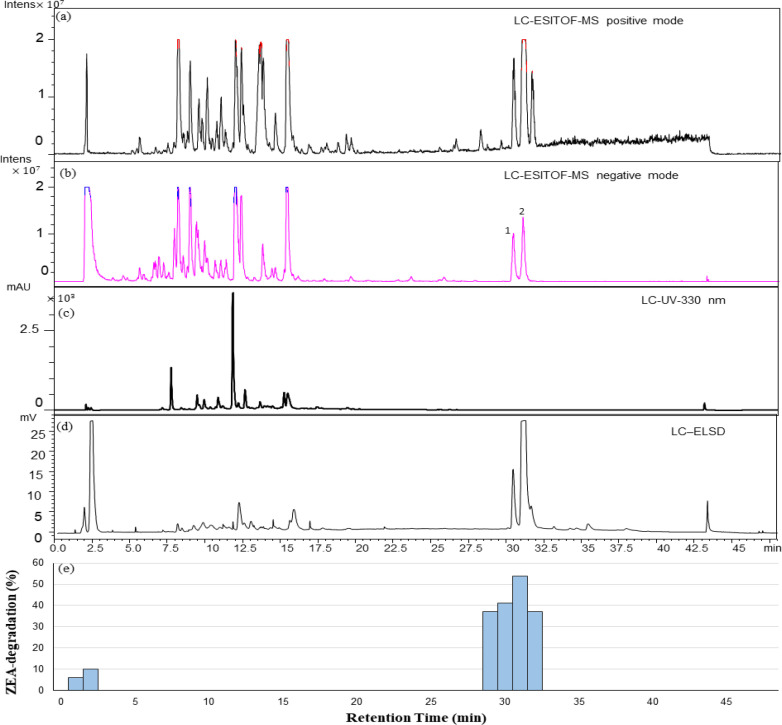
Methods: In this investigation, essential oil and different extracts (n-hexane, ethyl acetate, and methanol) of the aerial part of Shirazi thyme (at three concentrations of 0.5, 1, and 2 mg/ml) were screened to reduce ZEA contamination conditions (2 µg/ml) in rumen fluid. ZEA-content was analyzed by high-performance liquid chromatography (HPLC) with a fluorescence detector. In addition, Shirazi thyme phytochemical compounds responsible for eliminating ZEA were localized by HPLC-based activity profiling and then identified by mass spectrometry (LC-MS).
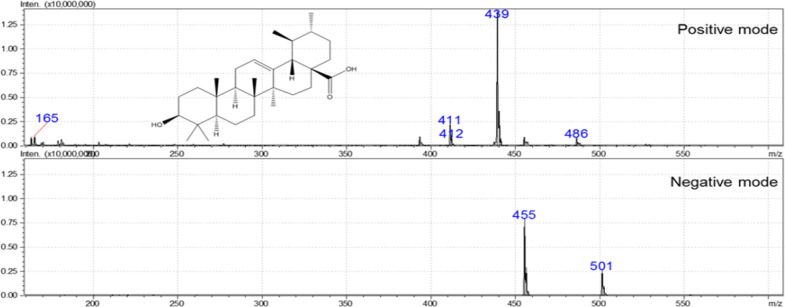
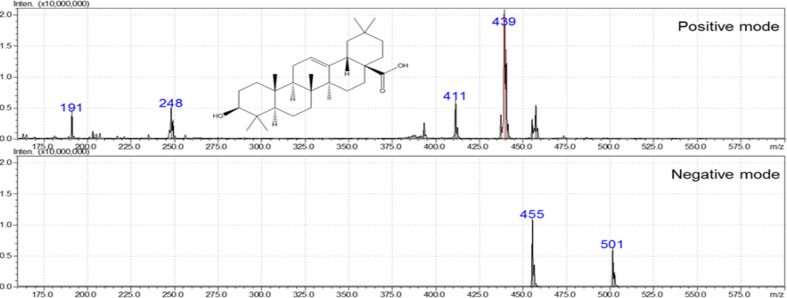
Results: Both n-hexane and methanol extracts of Z. multiflora, considerably remediated ZEA (63-78%) from rumen fluid. According to HPLC-based activity profiling of Z. multiflora extract and LC-MS analysis, two triterpene compounds, including ursolic and oleanolic acids were introduced as ZEA degradation agents.
Conclusion: Z. multiflora could be recommended as a new botanical source, and ursolic and oleanolic acids could be introduced as new phytochemical compounds that degrade ZEA.
期刊介绍:
The Iranian Journal of Veterinary Research(IJVR) is published quarterly in 4 issues. The aims of this journal are to improve and expand knowledge in all veterinary fields. It is an international journal indexed by the Thomson Institute for Scientific Information (ISI), Elsevier, Scopus, CAB International, Veterinary Bulletin and several other international databases. Research papers and reports on a wide range of veterinary topics are published in the journal after being evaluated by expert reviewers.The Editor-in-Chief is responsible for the editorial content of the journal—including peer-reviewed manuscripts—and the timing of its publication.



 京公网安备 11010802042870号
京ICP备2023020795号-1
京公网安备 11010802042870号
京ICP备2023020795号-1

 分享
分享
 求助内容:
求助内容: 应助结果提醒方式:
 扫码关注我们
