{"title":"Seasonal changes of the prostate gland in the raccoon (Procyon lotor) inhabiting Hokkaido, Japan.","authors":"Yuki Ishiguro, Motoki Sasaki, Emi Yamaguchi, Kotaro Matsumoto, Shinya Fukumoto, Hidefumi Furuoka, Kunitoshi Imai, Nobuo Kitamura","doi":"10.1292/jvms.22-0407","DOIUrl":null,"url":null,"abstract":"<p><p>In the prostate gland of the raccoon (Procyon lotor), the morphological appearance of the epithelial cells, such as basal and luminal cells, and the expressions of p63, androgen receptor (AR), and proliferating cell nuclear antigen (PCNA) were examined histologically and immunohistochemically to clarify their seasonal dynamics throughout the year. In this study, the regression with luminal cell defluxion and the regeneration process of the prostatic glandular epithelium was revealed in the seasons with declined spermatogenesis (June to August). The expression of p63 was observed only in the basal cells. AR immunoreactivity in the luminal cells was shown in the developed and regenerating (close to developed) prostates, whereas the basal cells exhibited AR immunoreactivity all year round. PCNA expression was rare in epithelial cells of the developed prostate gland. In the regressed gland, the basal cells demonstrated proliferative ability, whereas PCNA of the luminal cells appeared for the first time in the regenerating phase. This study is the first to clarify the regression with luminal cell defluxion and restoration and the seasonal dynamics of AR expression and proliferative activity in the prostate gland of seasonal breeders.</p>","PeriodicalId":49959,"journal":{"name":"Journal of Veterinary Medical Science","volume":"85 2","pages":"214-225"},"PeriodicalIF":1.1000,"publicationDate":"2023-02-10","publicationTypes":"Journal Article","fieldsOfStudy":null,"isOpenAccess":false,"openAccessPdf":"https://ftp.ncbi.nlm.nih.gov/pub/pmc/oa_pdf/2e/d0/jvms-85-214.PMC10017286.pdf","citationCount":"0","resultStr":null,"platform":"Semanticscholar","paperid":null,"PeriodicalName":"Journal of Veterinary Medical Science","FirstCategoryId":"97","ListUrlMain":"https://doi.org/10.1292/jvms.22-0407","RegionNum":4,"RegionCategory":"农林科学","ArticlePicture":[],"TitleCN":null,"AbstractTextCN":null,"PMCID":null,"EPubDate":"2022/12/29 0:00:00","PubModel":"Epub","JCR":"Q3","JCRName":"VETERINARY SCIENCES","Score":null,"Total":0}
引用次数: 0
Abstract
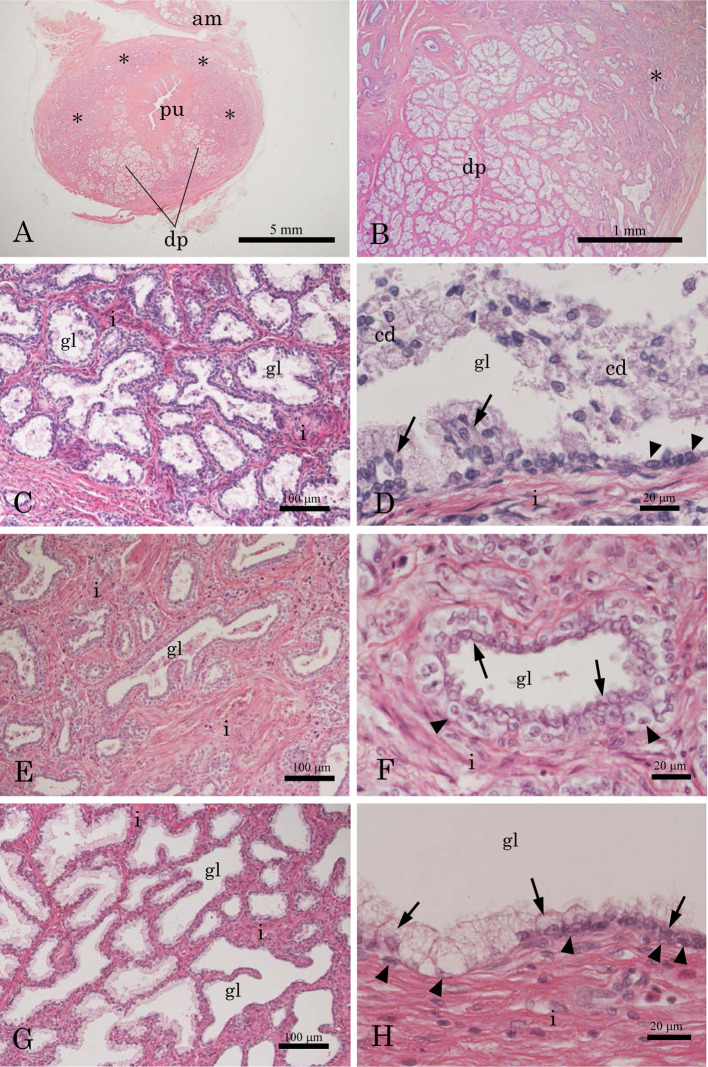
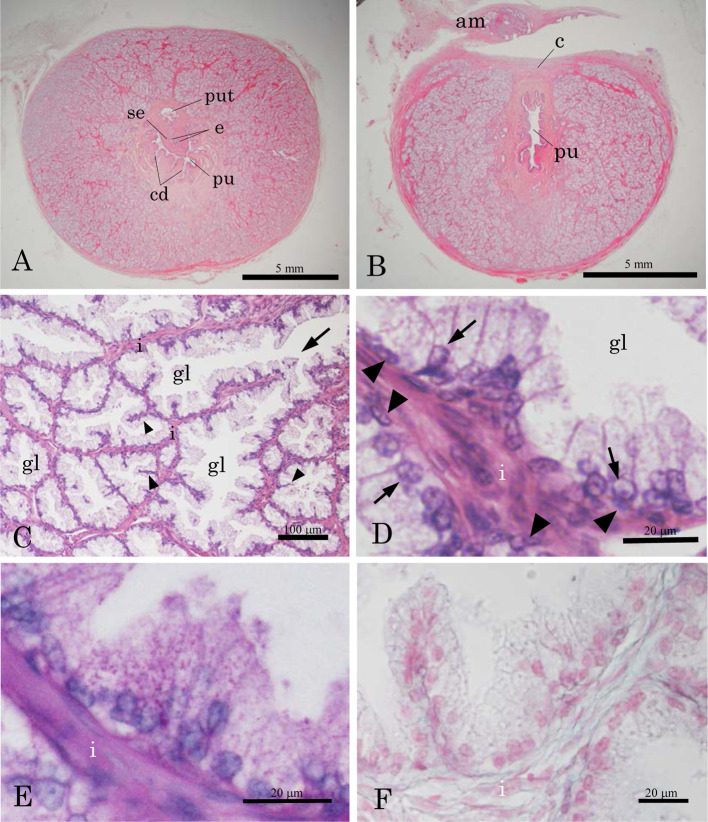
In the prostate gland of the raccoon (Procyon lotor), the morphological appearance of the epithelial cells, such as basal and luminal cells, and the expressions of p63, androgen receptor (AR), and proliferating cell nuclear antigen (PCNA) were examined histologically and immunohistochemically to clarify their seasonal dynamics throughout the year. In this study, the regression with luminal cell defluxion and the regeneration process of the prostatic glandular epithelium was revealed in the seasons with declined spermatogenesis (June to August). The expression of p63 was observed only in the basal cells. AR immunoreactivity in the luminal cells was shown in the developed and regenerating (close to developed) prostates, whereas the basal cells exhibited AR immunoreactivity all year round. PCNA expression was rare in epithelial cells of the developed prostate gland. In the regressed gland, the basal cells demonstrated proliferative ability, whereas PCNA of the luminal cells appeared for the first time in the regenerating phase. This study is the first to clarify the regression with luminal cell defluxion and restoration and the seasonal dynamics of AR expression and proliferative activity in the prostate gland of seasonal breeders.
期刊介绍:
JVMS is a peer-reviewed journal and publishes a variety of papers on veterinary science from basic research to applied science and clinical research. JVMS is published monthly and consists of twelve issues per year. Papers are from the areas of anatomy, physiology, pharmacology, toxicology, pathology, immunology, microbiology, virology, parasitology, internal medicine, surgery, clinical pathology, theriogenology, avian disease, public health, ethology, and laboratory animal science. Although JVMS has played a role in publishing the scientific achievements of Japanese researchers and clinicians for many years, it now also accepts papers submitted from all over the world.



 京公网安备 11010802042870号
京ICP备2023020795号-1
京公网安备 11010802042870号
京ICP备2023020795号-1

 分享
分享
 求助内容:
求助内容: 应助结果提醒方式:
 扫码关注我们
