{"title":"Safety and Clinical Benefits of Laryngeal Closure in Patients with Amyotrophic Lateral Sclerosis.","authors":"Sayaka Yokoi, Naoki Nishio, Takashi Maruo, Mariko Hiramatsu, Nobuaki Mukoyama, Hidenori Tsuzuki, Akihisa Wada, Naoki Atsuta, Daisuke Ito, Takashi Tsuboi, Gen Sobue, Masahisa Katsuno, Yasushi Fujimoto, Michihiko Sone","doi":"10.1007/s00455-022-10454-0","DOIUrl":null,"url":null,"abstract":"<p><p>This study evaluated the safety of laryngeal closure and post-surgical changes in swallowing function of patients with amyotrophic lateral sclerosis (ALS) and proposed an appropriate surgical strategy for patients with ALS. Clinical and surgical data of 26 consecutive patients with ALS who underwent laryngeal closure at Nagoya University Hospital in Japan between 2003 and 2020 were retrospectively analyzed. Changes in swallowing functions were evaluated before and approximately 1 month post-surgery using Neuromuscular Disease Swallowing Status Scale (NdSSS), and Functional Oral Intake Scale (FOIS). The median operation time was 126 min (range, 51-163 min), and the median intraoperative blood loss was 20 mL (range, 0-88 mL). Among the 26 ALS patients who underwent laryngeal closure, grade 1 (mild) complications occurred in three patients (12%); however, no severe complications were observed. After surgery, 25 patients (96%) maintained the swallowing function and only one patient (4%) had deteriorating NdSSS and FOIS scores. No patients were referred to our hospital due to severe aspiration pneumonia after the surgery. Two patients did not require a feeding tube after the surgery and returned to oral intake. Laryngeal closure may be a safe surgical procedure for preventing chronic aspiration and may also maintain swallowing function of patients with ALS. Further multicenter prospective studies using the gold standard videofluoroscopic swallowing examination are required to support our findings.</p>","PeriodicalId":11508,"journal":{"name":"Dysphagia","volume":"38 1","pages":"211-219"},"PeriodicalIF":3.0000,"publicationDate":"2023-02-01","publicationTypes":"Journal Article","fieldsOfStudy":null,"isOpenAccess":false,"openAccessPdf":"https://www.ncbi.nlm.nih.gov/pmc/articles/PMC9873708/pdf/","citationCount":"2","resultStr":null,"platform":"Semanticscholar","paperid":null,"PeriodicalName":"Dysphagia","FirstCategoryId":"3","ListUrlMain":"https://doi.org/10.1007/s00455-022-10454-0","RegionNum":3,"RegionCategory":"医学","ArticlePicture":[],"TitleCN":null,"AbstractTextCN":null,"PMCID":null,"EPubDate":"","PubModel":"","JCR":"Q1","JCRName":"OTORHINOLARYNGOLOGY","Score":null,"Total":0}
引用次数: 2
Abstract
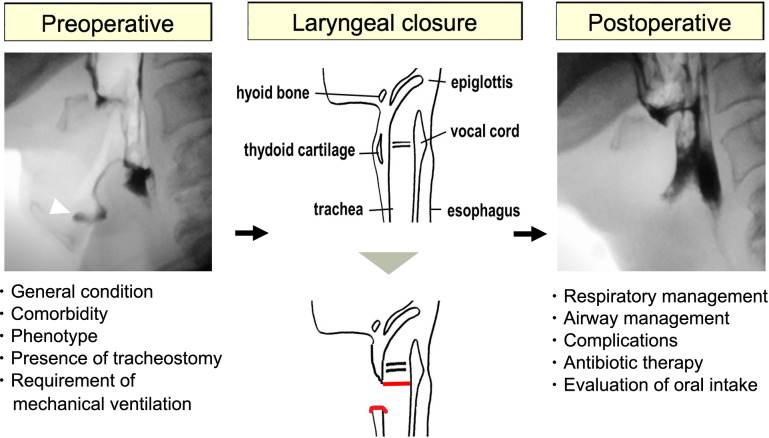
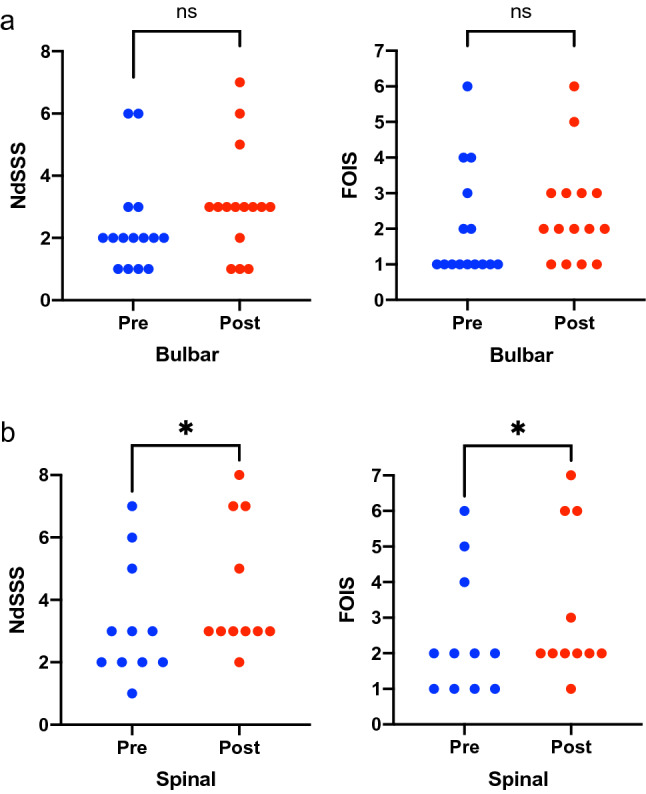
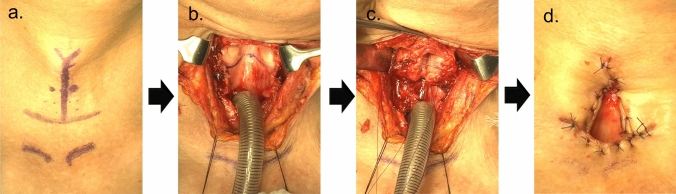
This study evaluated the safety of laryngeal closure and post-surgical changes in swallowing function of patients with amyotrophic lateral sclerosis (ALS) and proposed an appropriate surgical strategy for patients with ALS. Clinical and surgical data of 26 consecutive patients with ALS who underwent laryngeal closure at Nagoya University Hospital in Japan between 2003 and 2020 were retrospectively analyzed. Changes in swallowing functions were evaluated before and approximately 1 month post-surgery using Neuromuscular Disease Swallowing Status Scale (NdSSS), and Functional Oral Intake Scale (FOIS). The median operation time was 126 min (range, 51-163 min), and the median intraoperative blood loss was 20 mL (range, 0-88 mL). Among the 26 ALS patients who underwent laryngeal closure, grade 1 (mild) complications occurred in three patients (12%); however, no severe complications were observed. After surgery, 25 patients (96%) maintained the swallowing function and only one patient (4%) had deteriorating NdSSS and FOIS scores. No patients were referred to our hospital due to severe aspiration pneumonia after the surgery. Two patients did not require a feeding tube after the surgery and returned to oral intake. Laryngeal closure may be a safe surgical procedure for preventing chronic aspiration and may also maintain swallowing function of patients with ALS. Further multicenter prospective studies using the gold standard videofluoroscopic swallowing examination are required to support our findings.
期刊介绍:
Dysphagia aims to serve as a voice for the benefit of the patient. The journal is devoted exclusively to swallowing and its disorders. The purpose of the journal is to provide a source of information to the flourishing dysphagia community. Over the past years, the field of dysphagia has grown rapidly, and the community of dysphagia researchers have galvanized with ambition to represent dysphagia patients. In addition to covering a myriad of disciplines in medicine and speech pathology, the following topics are also covered, but are not limited to: bio-engineering, deglutition, esophageal motility, immunology, and neuro-gastroenterology. The journal aims to foster a growing need for further dysphagia investigation, to disseminate knowledge through research, and to stimulate communication among interested professionals. The journal publishes original papers, technical and instrumental notes, letters to the editor, and review articles.



 京公网安备 11010802042870号
京ICP备2023020795号-1
京公网安备 11010802042870号
京ICP备2023020795号-1

 分享
分享
 求助内容:
求助内容: 应助结果提醒方式:
 扫码关注我们
