{"title":"Retroperitoneal kaposiform hemangioendothelioma with kasabach-merritt phenomenon in children: A case report and review of the literature.","authors":"Junming Huo, Song Chen, Jing Li, Chengjun Liu","doi":"10.3389/fped.2023.1138689","DOIUrl":null,"url":null,"abstract":"<p><strong>Objective: </strong>To investigate the clinical features, diagnosis and treatment methods and prognosis of retroperitoneal Kaposiform hemangioendothelioma (R-KHE) in children.</p><p><strong>Methods: </strong>The clinical data of an infant with R-KHE was retrospectively analyzed. Literature on R-KHE in pediatrics were retrieved in databases including Wanfang, CNKI and PubMed as of April 2022.</p><p><strong>Results: </strong>A 1 month and 6 days female infant with R-KHE was reported. After the diagnosis was confirmed by biopsy and pathological examination, the patient was treated by interventional embolization, and a combined therapy with glucocorticoid, vincristine, sirolimus and propranolol. The patient has been followed up for 1 year and 2 months, and is still alive with tumor. Through literature search, a total of 15 children, together with the case in our report, were included. The main manifestations were diversity among those patients. 14 cases have combined Kasabach-Merritt phenomenon (KMP). 6 cases accepted surgery plus drug therapy. 4 cases accepted only surgery, and 4 cases only accepted drug therapy. While drug therapy plus radiotherapy were employed to 1 case. Improvement was observed in 11 cases, with significantly reduced tumor and survival with tumor. Tumor disappeared completely in 2 cases. While 2 cases suffered death.</p><p><strong>Conclusion: </strong>R-KHE has diverse clinical presentations and non-specificity in symptoms and imaging examinations, and most cases accompanied with KMP. Methods for R-KHE treatment include surgical resection, interventional embolization and drug therapy. Close attention needs to be paid to the adverse reactions of the drug during the course of treatment.</p>","PeriodicalId":12637,"journal":{"name":"Frontiers in Pediatrics","volume":"11 ","pages":"1138689"},"PeriodicalIF":2.0000,"publicationDate":"2023-01-01","publicationTypes":"Journal Article","fieldsOfStudy":null,"isOpenAccess":false,"openAccessPdf":"https://www.ncbi.nlm.nih.gov/pmc/articles/PMC10064051/pdf/","citationCount":"0","resultStr":null,"platform":"Semanticscholar","paperid":null,"PeriodicalName":"Frontiers in Pediatrics","FirstCategoryId":"3","ListUrlMain":"https://doi.org/10.3389/fped.2023.1138689","RegionNum":3,"RegionCategory":"医学","ArticlePicture":[],"TitleCN":null,"AbstractTextCN":null,"PMCID":null,"EPubDate":"","PubModel":"","JCR":"Q2","JCRName":"PEDIATRICS","Score":null,"Total":0}
引用次数: 0
Abstract
Objective: To investigate the clinical features, diagnosis and treatment methods and prognosis of retroperitoneal Kaposiform hemangioendothelioma (R-KHE) in children.
Methods: The clinical data of an infant with R-KHE was retrospectively analyzed. Literature on R-KHE in pediatrics were retrieved in databases including Wanfang, CNKI and PubMed as of April 2022.
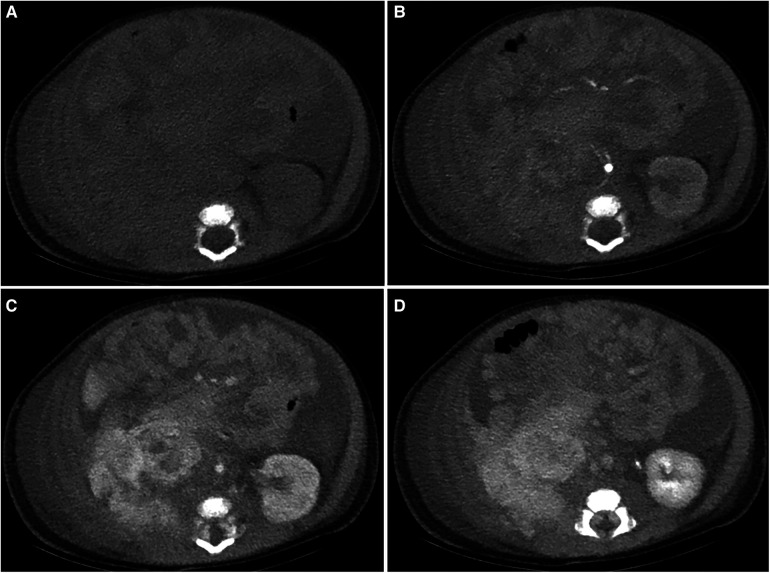
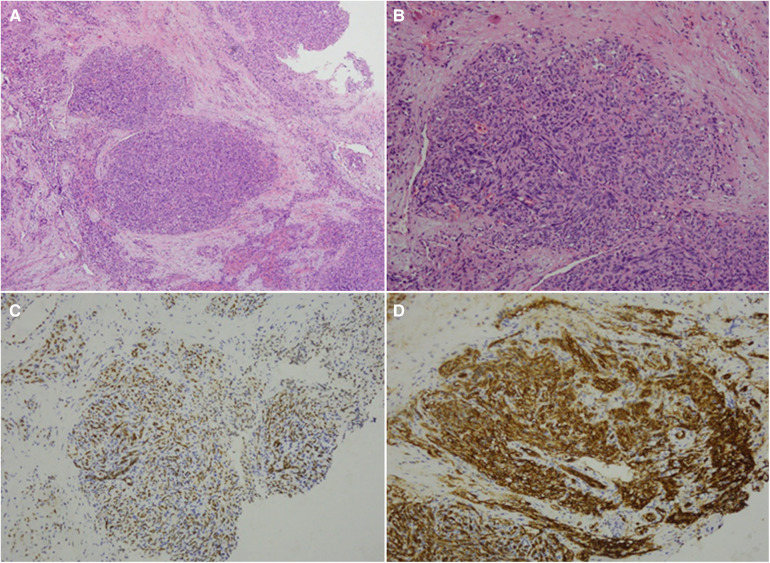
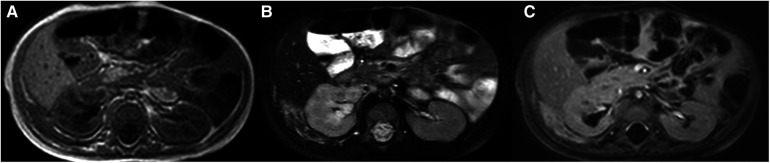
Results: A 1 month and 6 days female infant with R-KHE was reported. After the diagnosis was confirmed by biopsy and pathological examination, the patient was treated by interventional embolization, and a combined therapy with glucocorticoid, vincristine, sirolimus and propranolol. The patient has been followed up for 1 year and 2 months, and is still alive with tumor. Through literature search, a total of 15 children, together with the case in our report, were included. The main manifestations were diversity among those patients. 14 cases have combined Kasabach-Merritt phenomenon (KMP). 6 cases accepted surgery plus drug therapy. 4 cases accepted only surgery, and 4 cases only accepted drug therapy. While drug therapy plus radiotherapy were employed to 1 case. Improvement was observed in 11 cases, with significantly reduced tumor and survival with tumor. Tumor disappeared completely in 2 cases. While 2 cases suffered death.
Conclusion: R-KHE has diverse clinical presentations and non-specificity in symptoms and imaging examinations, and most cases accompanied with KMP. Methods for R-KHE treatment include surgical resection, interventional embolization and drug therapy. Close attention needs to be paid to the adverse reactions of the drug during the course of treatment.
期刊介绍:
Frontiers in Pediatrics (Impact Factor 2.33) publishes rigorously peer-reviewed research broadly across the field, from basic to clinical research that meets ongoing challenges in pediatric patient care and child health. Field Chief Editors Arjan Te Pas at Leiden University and Michael L. Moritz at the Children''s Hospital of Pittsburgh are supported by an outstanding Editorial Board of international experts. This multidisciplinary open-access journal is at the forefront of disseminating and communicating scientific knowledge and impactful discoveries to researchers, academics, clinicians and the public worldwide.
Frontiers in Pediatrics also features Research Topics, Frontiers special theme-focused issues managed by Guest Associate Editors, addressing important areas in pediatrics. In this fashion, Frontiers serves as an outlet to publish the broadest aspects of pediatrics in both basic and clinical research, including high-quality reviews, case reports, editorials and commentaries related to all aspects of pediatrics.



 京公网安备 11010802042870号
京ICP备2023020795号-1
京公网安备 11010802042870号
京ICP备2023020795号-1

 分享
分享
 求助内容:
求助内容: 应助结果提醒方式:
 扫码关注我们
