{"title":"Meeting the Mental Health Needs of College Students with a Background in Foster Care.","authors":"Cynthia A Lietz, Justine R Cheung","doi":"10.1007/s10560-022-00905-w","DOIUrl":null,"url":null,"abstract":"<p><p>Many colleges and universities are creating campus-based programs to support students with a background in foster care. When considering the histories of trauma experienced by these young people, meeting mental health needs is an important part of a portfolio of services. ASuPIRE is a strengths-based, trauma-informed counseling program that was designed to respond to the unique needs of college students who aged-out and/or experienced foster care at any point across their development. This program can stand alone or can be used to supplement campus-based support programs. This approach, including its theoretical framework and related interventions, will be described. A case study is also provided to illustrate the model for other post-secondary institutions interested in adopting this approach.</p>","PeriodicalId":72568,"journal":{"name":"","volume":"40 2","pages":"193-206"},"PeriodicalIF":0.0,"publicationDate":"2023-01-01","publicationTypes":"Journal Article","fieldsOfStudy":null,"isOpenAccess":false,"openAccessPdf":"https://www.ncbi.nlm.nih.gov/pmc/articles/PMC9735276/pdf/","citationCount":"1","resultStr":null,"platform":"Semanticscholar","paperid":null,"PeriodicalName":"","FirstCategoryId":"3","ListUrlMain":"https://doi.org/10.1007/s10560-022-00905-w","RegionNum":0,"RegionCategory":null,"ArticlePicture":[],"TitleCN":null,"AbstractTextCN":null,"PMCID":null,"EPubDate":"","PubModel":"","JCR":"","JCRName":"","Score":null,"Total":0}
引用次数: 1
Abstract
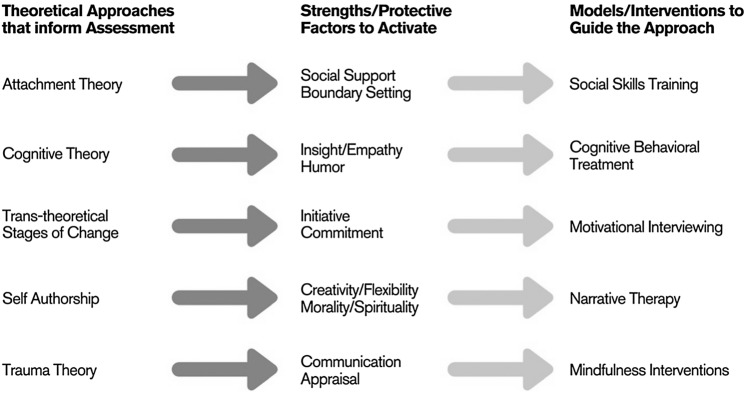
Many colleges and universities are creating campus-based programs to support students with a background in foster care. When considering the histories of trauma experienced by these young people, meeting mental health needs is an important part of a portfolio of services. ASuPIRE is a strengths-based, trauma-informed counseling program that was designed to respond to the unique needs of college students who aged-out and/or experienced foster care at any point across their development. This program can stand alone or can be used to supplement campus-based support programs. This approach, including its theoretical framework and related interventions, will be described. A case study is also provided to illustrate the model for other post-secondary institutions interested in adopting this approach.



 京公网安备 11010802042870号
京ICP备2023020795号-1
京公网安备 11010802042870号
京ICP备2023020795号-1

 分享
分享
 求助内容:
求助内容: 应助结果提醒方式:
 扫码关注我们
