Yizhen Li, Jilili Abuduwaili, Long Ma, Wen Liu, Tao Zeng
{"title":"Source apportionment and source-specific risk evaluation of potential toxic elements in oasis agricultural soils of Tarim River Basin.","authors":"Yizhen Li, Jilili Abuduwaili, Long Ma, Wen Liu, Tao Zeng","doi":"10.1038/s41598-023-29911-3","DOIUrl":null,"url":null,"abstract":"<p><p>As rapidly developing area of intensive agriculture during the past half century, the oases in the source region of the Tarim River have encountered serious environmental challenges. Therefore, a comparative analysis of soil pollution characteristics and source-specific risks in different oases is an important measure to prevent and control soil pollution and provide guidance for extensive resource management in this area. In this study, the concentration of potential toxic elements (PTEs) was analyzed by collecting soil samples from the four oases in the source region of the Tarim River. The cumulative frequency curve method, pollution index method, positive matrix factorization (PMF) model, geographical detector method and health risk assessment model were used to analyze the pollution status and source-specific risk of potential toxic elements in different oases. The results showed that Cd was the most prominent PTE in the oasis agricultural soil in the source region of the Tarim River. Especially in Hotan Oasis, where 81.25% of the soil samples were moderately contaminated and 18.75% were highly contaminated with Cd. The PTEs in the Hotan Oasis corresponded to a moderate level of risk to the ecological environment, and the noncarcinogenic risk of soil PTEs in the four oases to local children exceeded the threshold (TH > 1), while the carcinogenic risk to local residents was acceptable (1E-06 < TCR < 1E-04). The research results suggested that the Hotan Oasis should be the key area for soil pollution control in the source region of the Tarim River, and agricultural activities and natural sources, industrial sources, and atmospheric dust fall are the priority sources that should be controlled in the Aksu Oasis, Kashgar Oasis and Yarkant River Oasis, respectively. The results of this study provide important decision-making support for the protection and management of regional agricultural soil and the environment.</p>","PeriodicalId":21811,"journal":{"name":"Scientific Reports","volume":"13 1","pages":"2980"},"PeriodicalIF":3.9000,"publicationDate":"2023-02-20","publicationTypes":"Journal Article","fieldsOfStudy":null,"isOpenAccess":false,"openAccessPdf":"https://www.ncbi.nlm.nih.gov/pmc/articles/PMC9941508/pdf/","citationCount":"0","resultStr":null,"platform":"Semanticscholar","paperid":null,"PeriodicalName":"Scientific Reports","FirstCategoryId":"103","ListUrlMain":"https://doi.org/10.1038/s41598-023-29911-3","RegionNum":2,"RegionCategory":"综合性期刊","ArticlePicture":[],"TitleCN":null,"AbstractTextCN":null,"PMCID":null,"EPubDate":"","PubModel":"","JCR":"Q1","JCRName":"MULTIDISCIPLINARY SCIENCES","Score":null,"Total":0}
引用次数: 0
Abstract
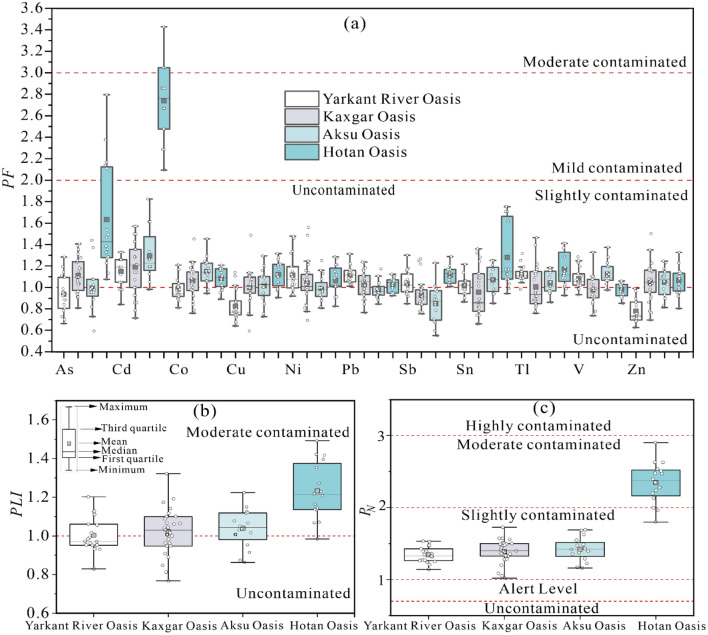
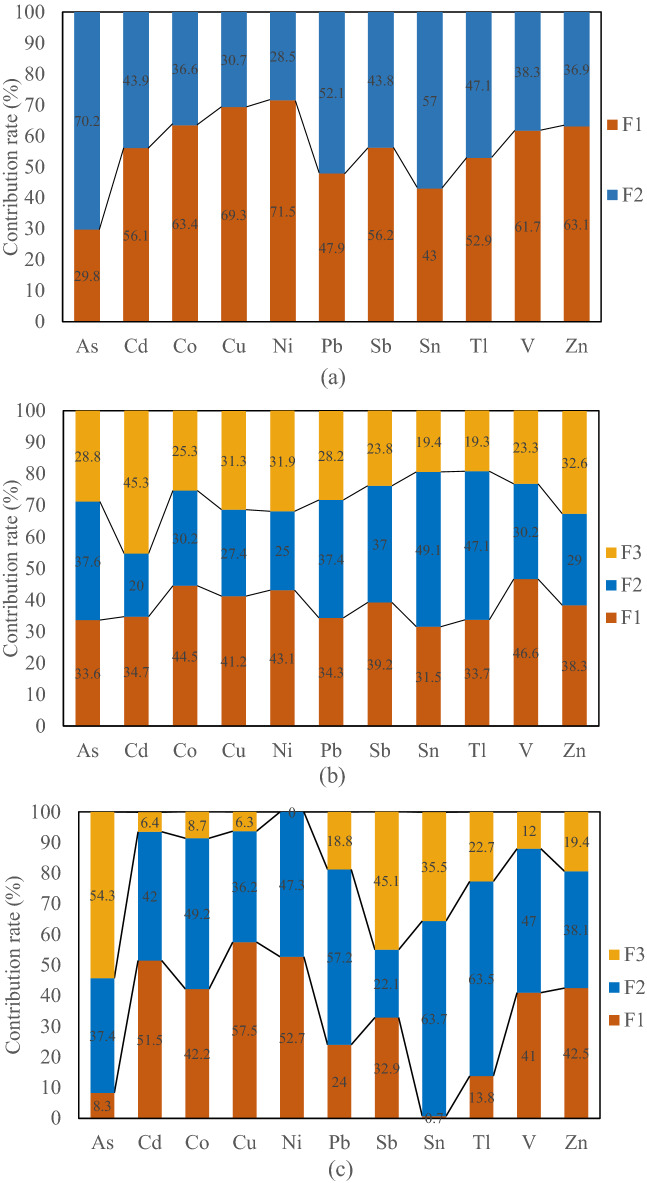
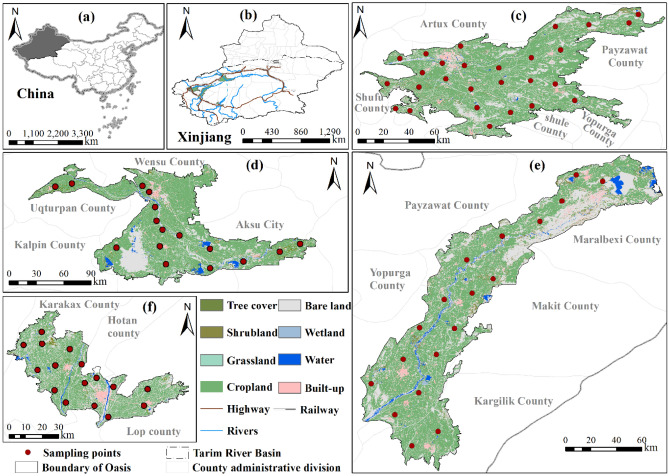
As rapidly developing area of intensive agriculture during the past half century, the oases in the source region of the Tarim River have encountered serious environmental challenges. Therefore, a comparative analysis of soil pollution characteristics and source-specific risks in different oases is an important measure to prevent and control soil pollution and provide guidance for extensive resource management in this area. In this study, the concentration of potential toxic elements (PTEs) was analyzed by collecting soil samples from the four oases in the source region of the Tarim River. The cumulative frequency curve method, pollution index method, positive matrix factorization (PMF) model, geographical detector method and health risk assessment model were used to analyze the pollution status and source-specific risk of potential toxic elements in different oases. The results showed that Cd was the most prominent PTE in the oasis agricultural soil in the source region of the Tarim River. Especially in Hotan Oasis, where 81.25% of the soil samples were moderately contaminated and 18.75% were highly contaminated with Cd. The PTEs in the Hotan Oasis corresponded to a moderate level of risk to the ecological environment, and the noncarcinogenic risk of soil PTEs in the four oases to local children exceeded the threshold (TH > 1), while the carcinogenic risk to local residents was acceptable (1E-06 < TCR < 1E-04). The research results suggested that the Hotan Oasis should be the key area for soil pollution control in the source region of the Tarim River, and agricultural activities and natural sources, industrial sources, and atmospheric dust fall are the priority sources that should be controlled in the Aksu Oasis, Kashgar Oasis and Yarkant River Oasis, respectively. The results of this study provide important decision-making support for the protection and management of regional agricultural soil and the environment.
期刊介绍:
We publish original research from all areas of the natural sciences, psychology, medicine and engineering. You can learn more about what we publish by browsing our specific scientific subject areas below or explore Scientific Reports by browsing all articles and collections.
Scientific Reports has a 2-year impact factor: 4.380 (2021), and is the 6th most-cited journal in the world, with more than 540,000 citations in 2020 (Clarivate Analytics, 2021).
•Engineering
Engineering covers all aspects of engineering, technology, and applied science. It plays a crucial role in the development of technologies to address some of the world''s biggest challenges, helping to save lives and improve the way we live.
•Physical sciences
Physical sciences are those academic disciplines that aim to uncover the underlying laws of nature — often written in the language of mathematics. It is a collective term for areas of study including astronomy, chemistry, materials science and physics.
•Earth and environmental sciences
Earth and environmental sciences cover all aspects of Earth and planetary science and broadly encompass solid Earth processes, surface and atmospheric dynamics, Earth system history, climate and climate change, marine and freshwater systems, and ecology. It also considers the interactions between humans and these systems.
•Biological sciences
Biological sciences encompass all the divisions of natural sciences examining various aspects of vital processes. The concept includes anatomy, physiology, cell biology, biochemistry and biophysics, and covers all organisms from microorganisms, animals to plants.
•Health sciences
The health sciences study health, disease and healthcare. This field of study aims to develop knowledge, interventions and technology for use in healthcare to improve the treatment of patients.



 京公网安备 11010802042870号
京ICP备2023020795号-1
京公网安备 11010802042870号
京ICP备2023020795号-1

 分享
分享
 求助内容:
求助内容: 应助结果提醒方式:
 扫码关注我们
