{"title":"Low Muscle Mass Is Associated with Readmission for Inflammatory Bowel Disease.","authors":"Sifan Liu, Zibin Tian, Yueping Jiang, Xueli Ding, Shengbo Jin, Xue Jing","doi":"10.5152/tjg.2022.21711","DOIUrl":null,"url":null,"abstract":"Background: Patients with inflammatory bowel disease tend to have malnutrition, frailty, and low muscle mass, which impact on poor clinical outcomes. Abdominal computed tomography is frequently used to assess body composition. This study aimed to evaluate the association of low muscle mass and readmission within 1 year in patients with inflammatory bowel disease during hospitalization and follow-up. Methods: A total of 211 patients with inflammatory bowel disease who had undergone computed tomography scans were included retrospectively. They were divided into subgroups based on disease activity. The male patients with skeletal muscle index ≤45.4 cm2/m2 and the female patients with skeletal muscle index ≤ 34.3 cm2/m2 were considered to have low muscle mass. Sociodemographic, clinical, and prognostic data were recorded. The analyses were done using the Statistical Package for the Social Sciences 25.0 software. Results: The prevalence rate of low muscle mass was 64.7%. Low body mass index and hemoglobin, high erythrocyte sedimentation rate, smoking, and gastrointestinal surgery history were risk factors for low muscle mass (P < .05). Patients using steroids and biologics and using them more than 7 months were prone to develop low muscle mass and readmission (P < .05), while patients using immunomodulators were not. Inflammatory bowel disease patients with visceral fat area/subcutaneous fat area ≥0.71 were likely to readmit within 1 year than those with visceral fat area/subcutaneous fat area <0.71 (P < .05). Overweight or obese inflammatory bowel disease patients with low muscle mass had a shorter time to readmission than those without low muscle mass (P < .05). Conclusions: Overweight/obese inflammatory bowel disease patients with low muscle mass and patients using steroids and biologics have shorter time to readmission within 1 year regardless of disease activity.","PeriodicalId":51205,"journal":{"name":"Turkish Journal of Gastroenterology","volume":"34 2","pages":"108-117"},"PeriodicalIF":1.6000,"publicationDate":"2023-02-01","publicationTypes":"Journal Article","fieldsOfStudy":null,"isOpenAccess":false,"openAccessPdf":"https://www.ncbi.nlm.nih.gov/pmc/articles/PMC10081095/pdf/","citationCount":"2","resultStr":null,"platform":"Semanticscholar","paperid":null,"PeriodicalName":"Turkish Journal of Gastroenterology","FirstCategoryId":"3","ListUrlMain":"https://doi.org/10.5152/tjg.2022.21711","RegionNum":4,"RegionCategory":"医学","ArticlePicture":[],"TitleCN":null,"AbstractTextCN":null,"PMCID":null,"EPubDate":"","PubModel":"","JCR":"Q4","JCRName":"GASTROENTEROLOGY & HEPATOLOGY","Score":null,"Total":0}
引用次数: 2
Abstract
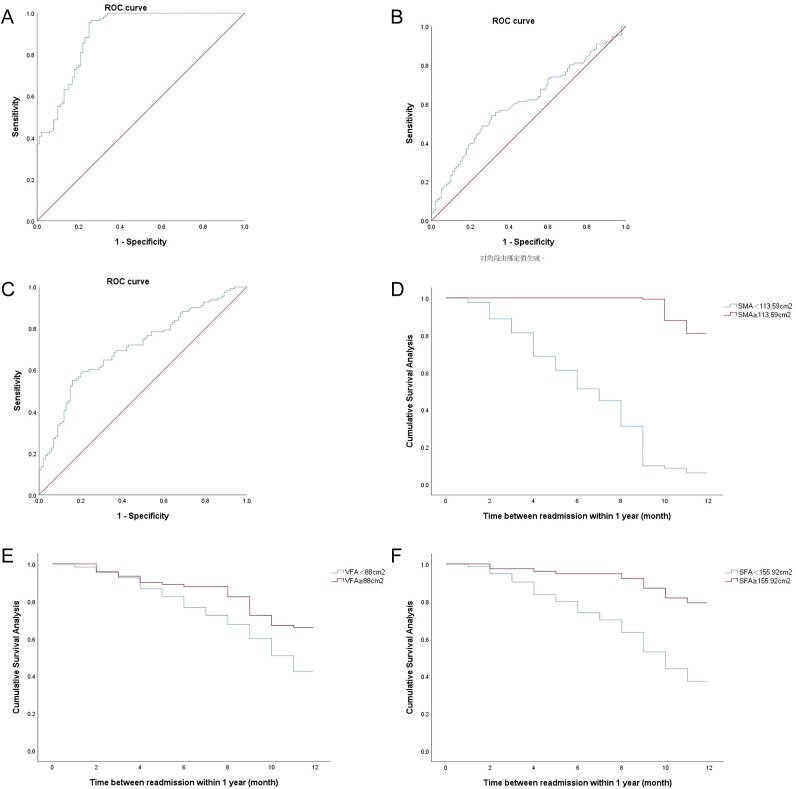
Background: Patients with inflammatory bowel disease tend to have malnutrition, frailty, and low muscle mass, which impact on poor clinical outcomes. Abdominal computed tomography is frequently used to assess body composition. This study aimed to evaluate the association of low muscle mass and readmission within 1 year in patients with inflammatory bowel disease during hospitalization and follow-up. Methods: A total of 211 patients with inflammatory bowel disease who had undergone computed tomography scans were included retrospectively. They were divided into subgroups based on disease activity. The male patients with skeletal muscle index ≤45.4 cm2/m2 and the female patients with skeletal muscle index ≤ 34.3 cm2/m2 were considered to have low muscle mass. Sociodemographic, clinical, and prognostic data were recorded. The analyses were done using the Statistical Package for the Social Sciences 25.0 software. Results: The prevalence rate of low muscle mass was 64.7%. Low body mass index and hemoglobin, high erythrocyte sedimentation rate, smoking, and gastrointestinal surgery history were risk factors for low muscle mass (P < .05). Patients using steroids and biologics and using them more than 7 months were prone to develop low muscle mass and readmission (P < .05), while patients using immunomodulators were not. Inflammatory bowel disease patients with visceral fat area/subcutaneous fat area ≥0.71 were likely to readmit within 1 year than those with visceral fat area/subcutaneous fat area <0.71 (P < .05). Overweight or obese inflammatory bowel disease patients with low muscle mass had a shorter time to readmission than those without low muscle mass (P < .05). Conclusions: Overweight/obese inflammatory bowel disease patients with low muscle mass and patients using steroids and biologics have shorter time to readmission within 1 year regardless of disease activity.
期刊介绍:
The Turkish Journal of Gastroenterology (Turk J Gastroenterol) is the double-blind peer-reviewed, open access, international publication organ of the Turkish Society of Gastroenterology. The journal is a bimonthly publication, published on January, March, May, July, September, November and its publication language is English.
The Turkish Journal of Gastroenterology aims to publish international at the highest clinical and scientific level on original issues of gastroenterology and hepatology. The journal publishes original papers, review articles, case reports and letters to the editor on clinical and experimental gastroenterology and hepatology.






 京公网安备 11010802042870号
京ICP备2023020795号-1
京公网安备 11010802042870号
京ICP备2023020795号-1

 分享
分享
 求助内容:
求助内容: 应助结果提醒方式:
 扫码关注我们
