Matthew Dean, Min Jung Kim, Sharon Dimauro, Susan Tannenbaum, Garth Graham, Bruce T Liang, Agnes S Kim
{"title":"Cardiac and noncardiac biomarkers in patients undergoing anthracycline chemotherapy - a prospective analysis.","authors":"Matthew Dean, Min Jung Kim, Sharon Dimauro, Susan Tannenbaum, Garth Graham, Bruce T Liang, Agnes S Kim","doi":"10.1186/s40959-023-00174-1","DOIUrl":null,"url":null,"abstract":"<p><strong>Background: </strong>Biomarkers represent a potential tool to identify individuals at risk for anthracycline-induced cardiotoxicity (AICT) prior to symptom onset or left ventricular dysfunction.</p><p><strong>Methods: </strong>This study examined the levels of cardiac and noncardiac biomarkers before, after the last dose of, and 3-6 months after completion of doxorubicin chemotherapy. Cardiac biomarkers included 5th generation high-sensitivity cardiac troponin T (cTnT), N-terminal pro-brain natriuretic peptide, growth/differentiation factor-15 (GDF-15), and soluble suppression of tumorigenesis-2 (sST2). Noncardiac biomarkers included activated caspase-1 (CASP-1), activated caspase-3, C-reactive protein, tumor necrosis factor-α, myeloperoxidase (MPO), galectin-3, and 8-hydroxy-2'-deoxyguanosine. Echocardiographic data (LVEF and LVGLS) were obtained at pre- and post-chemotherapy. Subanalysis examined interval changes in biomarkers among high (cumulative doxorubicin dose ≥ 250 mg/m<sup>2</sup>) and low exposure groups.</p><p><strong>Results: </strong>The cardiac biomarkers cTnT, GDF-15, and sST2 and the noncardiac biomarkers CASP-1 and MPO demonstrated significant changes over time. cTnT and GDF-15 levels increased after anthracycline exposure, while CASP-1 and MPO decreased significantly. Subanalysis by cumulative dose did not demonstrate a larger increase in any biomarker in the high-dose group.</p><p><strong>Conclusions: </strong>The results identify biomarkers with significant interval changes in response to anthracycline therapy. Further research is needed to understand the clinical utility of these novel biomarkers.</p>","PeriodicalId":72525,"journal":{"name":"","volume":"9 1","pages":"23"},"PeriodicalIF":0.0,"publicationDate":"2023-04-27","publicationTypes":"Journal Article","fieldsOfStudy":null,"isOpenAccess":false,"openAccessPdf":"https://www.ncbi.nlm.nih.gov/pmc/articles/PMC10133897/pdf/","citationCount":"0","resultStr":null,"platform":"Semanticscholar","paperid":null,"PeriodicalName":"","FirstCategoryId":"1085","ListUrlMain":"https://doi.org/10.1186/s40959-023-00174-1","RegionNum":0,"RegionCategory":null,"ArticlePicture":[],"TitleCN":null,"AbstractTextCN":null,"PMCID":null,"EPubDate":"","PubModel":"","JCR":"","JCRName":"","Score":null,"Total":0}
引用次数: 0
Abstract
Background: Biomarkers represent a potential tool to identify individuals at risk for anthracycline-induced cardiotoxicity (AICT) prior to symptom onset or left ventricular dysfunction.
Methods: This study examined the levels of cardiac and noncardiac biomarkers before, after the last dose of, and 3-6 months after completion of doxorubicin chemotherapy. Cardiac biomarkers included 5th generation high-sensitivity cardiac troponin T (cTnT), N-terminal pro-brain natriuretic peptide, growth/differentiation factor-15 (GDF-15), and soluble suppression of tumorigenesis-2 (sST2). Noncardiac biomarkers included activated caspase-1 (CASP-1), activated caspase-3, C-reactive protein, tumor necrosis factor-α, myeloperoxidase (MPO), galectin-3, and 8-hydroxy-2'-deoxyguanosine. Echocardiographic data (LVEF and LVGLS) were obtained at pre- and post-chemotherapy. Subanalysis examined interval changes in biomarkers among high (cumulative doxorubicin dose ≥ 250 mg/m2) and low exposure groups.
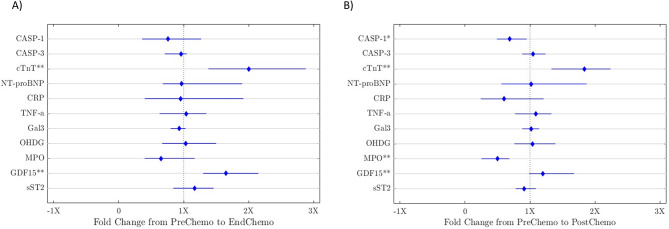
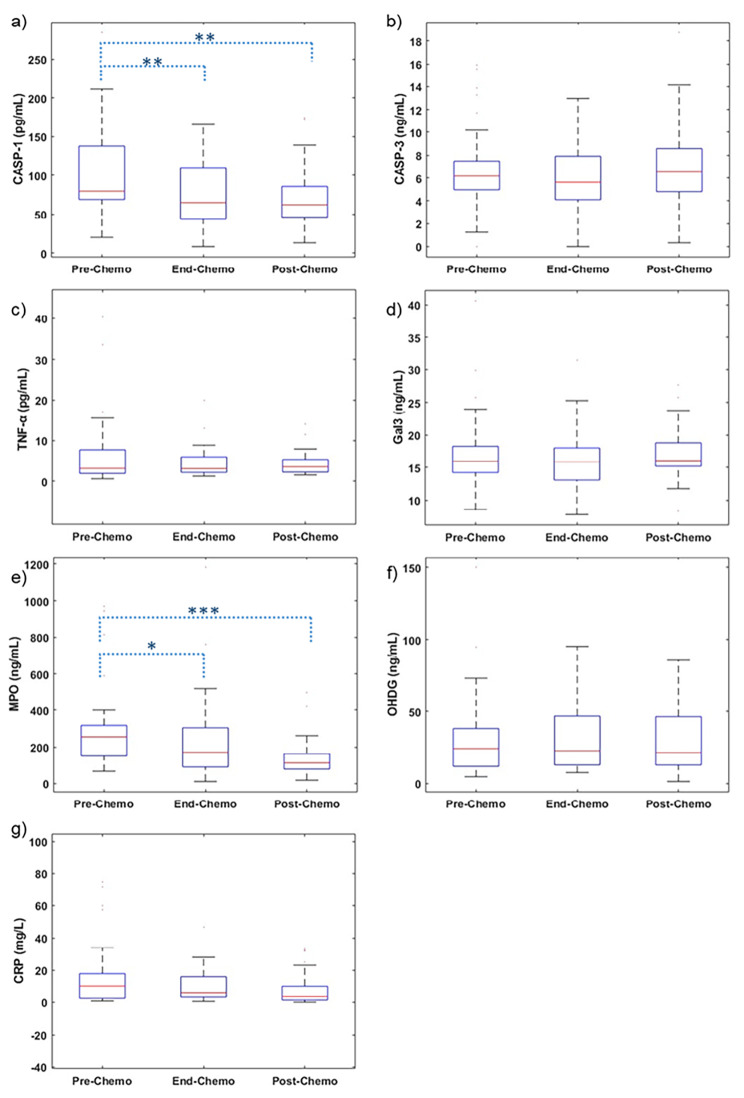
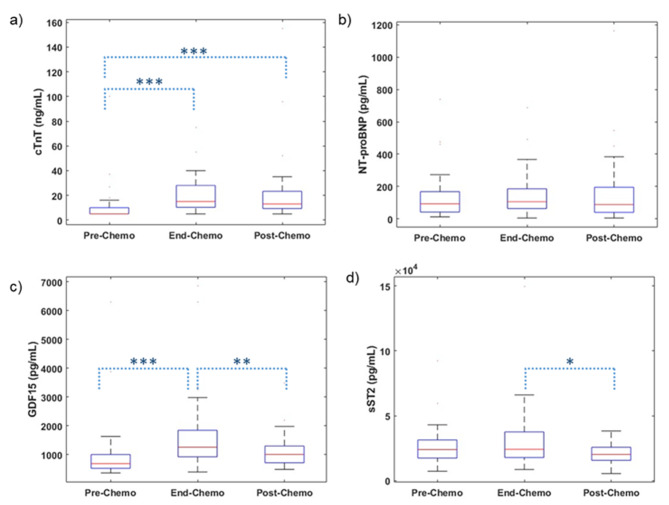
Results: The cardiac biomarkers cTnT, GDF-15, and sST2 and the noncardiac biomarkers CASP-1 and MPO demonstrated significant changes over time. cTnT and GDF-15 levels increased after anthracycline exposure, while CASP-1 and MPO decreased significantly. Subanalysis by cumulative dose did not demonstrate a larger increase in any biomarker in the high-dose group.
Conclusions: The results identify biomarkers with significant interval changes in response to anthracycline therapy. Further research is needed to understand the clinical utility of these novel biomarkers.



 京公网安备 11010802042870号
京ICP备2023020795号-1
京公网安备 11010802042870号
京ICP备2023020795号-1

 分享
分享
 求助内容:
求助内容: 应助结果提醒方式:
 扫码关注我们
