Hie Lim Kim, Mineyo Iwase, Takeshi Igawa, Tasuku Nishioka, Satoko Kaneko, Yukako Katsura, Naoyuki Takahata, Yoko Satta
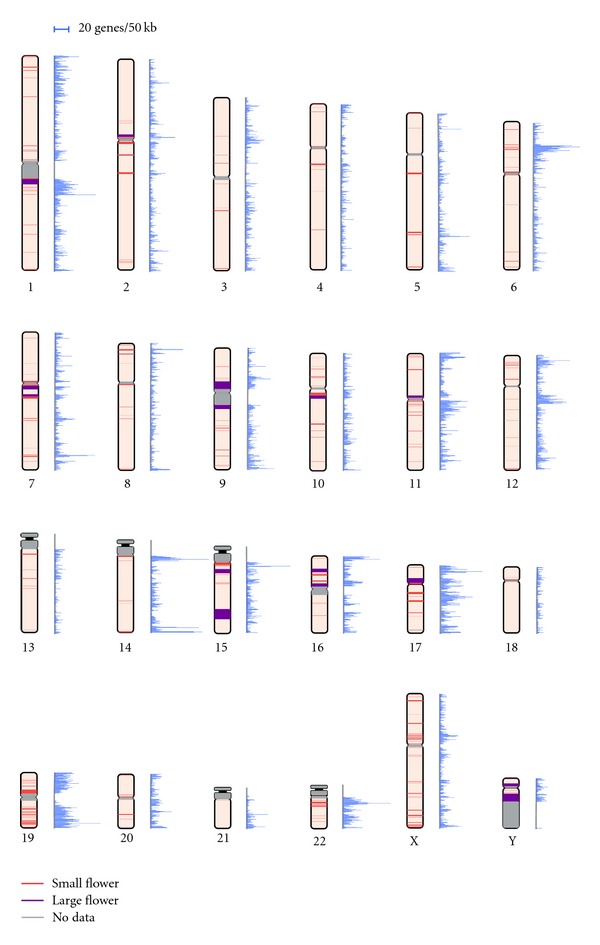
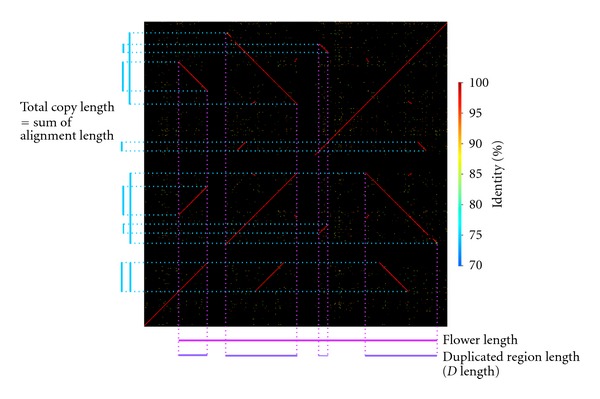
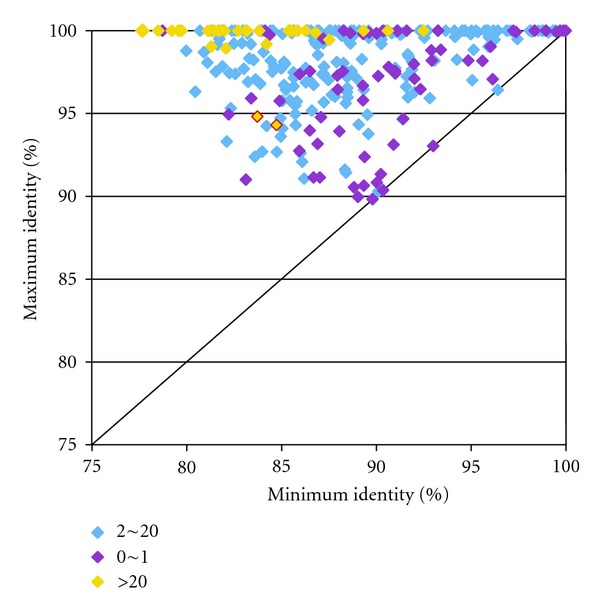
{"title":"Genomic structure and evolution of multigene families: \"flowers\" on the human genome.","authors":"Hie Lim Kim, Mineyo Iwase, Takeshi Igawa, Tasuku Nishioka, Satoko Kaneko, Yukako Katsura, Naoyuki Takahata, Yoko Satta","doi":"10.1155/2012/917678","DOIUrl":null,"url":null,"abstract":"<p><p>We report the results of an extensive investigation of genomic structures in the human genome, with a particular focus on relatively large repeats (>50 kb) in adjacent chromosomal regions. We named such structures \"Flowers\" because the pattern observed on dot plots resembles a flower. We detected a total of 291 Flowers in the human genome. They were predominantly located in euchromatic regions. Flowers are gene-rich compared to the average gene density of the genome. Genes involved in systems receiving environmental information, such as immunity and detoxification, were overrepresented in Flowers. Within a Flower, the mean number of duplication units was approximately four. The maximum and minimum identities between homologs in a Flower showed different distributions; the maximum identity was often concentrated to 100% identity, while the minimum identity was evenly distributed in the range of 78% to 100%. Using a gene conversion detection test, we found frequent and/or recent gene conversion events within the tested Flowers. Interestingly, many of those converted regions contained protein-coding genes. Computer simulation studies suggest that one role of such frequent gene conversions is the elongation of the life span of gene families in a Flower by the resurrection of pseudogenes.</p>","PeriodicalId":73449,"journal":{"name":"International journal of evolutionary biology","volume":"2012 ","pages":"917678"},"PeriodicalIF":0.0000,"publicationDate":"2012-01-01","publicationTypes":"Journal Article","fieldsOfStudy":null,"isOpenAccess":false,"openAccessPdf":"https://sci-hub-pdf.com/10.1155/2012/917678","citationCount":"10","resultStr":null,"platform":"Semanticscholar","paperid":null,"PeriodicalName":"International journal of evolutionary biology","FirstCategoryId":"1085","ListUrlMain":"https://doi.org/10.1155/2012/917678","RegionNum":0,"RegionCategory":null,"ArticlePicture":[],"TitleCN":null,"AbstractTextCN":null,"PMCID":null,"EPubDate":"","PubModel":"","JCR":"","JCRName":"","Score":null,"Total":0}
引用次数: 10
Abstract
We report the results of an extensive investigation of genomic structures in the human genome, with a particular focus on relatively large repeats (>50 kb) in adjacent chromosomal regions. We named such structures "Flowers" because the pattern observed on dot plots resembles a flower. We detected a total of 291 Flowers in the human genome. They were predominantly located in euchromatic regions. Flowers are gene-rich compared to the average gene density of the genome. Genes involved in systems receiving environmental information, such as immunity and detoxification, were overrepresented in Flowers. Within a Flower, the mean number of duplication units was approximately four. The maximum and minimum identities between homologs in a Flower showed different distributions; the maximum identity was often concentrated to 100% identity, while the minimum identity was evenly distributed in the range of 78% to 100%. Using a gene conversion detection test, we found frequent and/or recent gene conversion events within the tested Flowers. Interestingly, many of those converted regions contained protein-coding genes. Computer simulation studies suggest that one role of such frequent gene conversions is the elongation of the life span of gene families in a Flower by the resurrection of pseudogenes.



 京公网安备 11010802042870号
京ICP备2023020795号-1
京公网安备 11010802042870号
京ICP备2023020795号-1

 分享
分享

 求助内容:
求助内容: 应助结果提醒方式:
 扫码关注我们
