Michal Fila, Aleksandra Jablkowska, Elzbieta Pawlowska, Janusz Blasiak
{"title":"DNA Damage and Repair in Migraine: Oxidative Stress and Beyond.","authors":"Michal Fila, Aleksandra Jablkowska, Elzbieta Pawlowska, Janusz Blasiak","doi":"10.1177/10738584221090836","DOIUrl":null,"url":null,"abstract":"Energy generation in the brain to ameliorate energy deficit in migraine leads to oxidative stress as it is associated with reactive oxygen species (ROS) that may damage DNA and show a pronociceptive action in meninges mediated by transient receptor potential cation channel subfamily A member 1 (TRPA1). Recent studies show high levels of single-strand breaks (SSBs) at specific sites in the genome of postmitotic neurons and point at SSB repair (SSBR) as an important element of homeostasis of the central nervous system. DNA topoisomerase 1 (TOP1) is stabilized in the DNA damage-inducing state by neuronal stimulation, including cortical spreading depression. Impairment in poly (ADP-ribose) polymerase 1 (PARP-1) and X-ray repair cross complementing 1 (XRCC1), key SSBR proteins, may be linked with migraine by transient receptor potential melastatin 2 (TRPM2). TRPM2 may also mediate the involvement of migraine-related neuroinflammation with PARP-1 activated by oxidative stress–related SSBs. In conclusion, aberrant activity of SSBR evoked by compromised PARP-1 and XRCC1 may contribute to pathological phenomena in the migraine brain. Such aberrant SSBR results in the lack of repair or misrepair of SSBs induced by ROS or resulting from impaired TOP1. Therefore, components of SSBR may be considered a prospective druggable target in migraine.","PeriodicalId":49753,"journal":{"name":"Neuroscientist","volume":"29 3","pages":"277-286"},"PeriodicalIF":3.9000,"publicationDate":"2023-06-01","publicationTypes":"Journal Article","fieldsOfStudy":null,"isOpenAccess":false,"openAccessPdf":"","citationCount":"10","resultStr":null,"platform":"Semanticscholar","paperid":null,"PeriodicalName":"Neuroscientist","FirstCategoryId":"3","ListUrlMain":"https://doi.org/10.1177/10738584221090836","RegionNum":3,"RegionCategory":"医学","ArticlePicture":[],"TitleCN":null,"AbstractTextCN":null,"PMCID":null,"EPubDate":"","PubModel":"","JCR":"Q1","JCRName":"CLINICAL NEUROLOGY","Score":null,"Total":0}
引用次数: 10
Abstract
Energy generation in the brain to ameliorate energy deficit in migraine leads to oxidative stress as it is associated with reactive oxygen species (ROS) that may damage DNA and show a pronociceptive action in meninges mediated by transient receptor potential cation channel subfamily A member 1 (TRPA1). Recent studies show high levels of single-strand breaks (SSBs) at specific sites in the genome of postmitotic neurons and point at SSB repair (SSBR) as an important element of homeostasis of the central nervous system. DNA topoisomerase 1 (TOP1) is stabilized in the DNA damage-inducing state by neuronal stimulation, including cortical spreading depression. Impairment in poly (ADP-ribose) polymerase 1 (PARP-1) and X-ray repair cross complementing 1 (XRCC1), key SSBR proteins, may be linked with migraine by transient receptor potential melastatin 2 (TRPM2). TRPM2 may also mediate the involvement of migraine-related neuroinflammation with PARP-1 activated by oxidative stress–related SSBs. In conclusion, aberrant activity of SSBR evoked by compromised PARP-1 and XRCC1 may contribute to pathological phenomena in the migraine brain. Such aberrant SSBR results in the lack of repair or misrepair of SSBs induced by ROS or resulting from impaired TOP1. Therefore, components of SSBR may be considered a prospective druggable target in migraine.
期刊介绍:
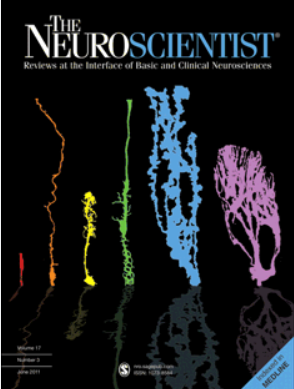
Edited by Stephen G. Waxman, The Neuroscientist (NRO) reviews and evaluates the noteworthy advances and key trends in molecular, cellular, developmental, behavioral systems, and cognitive neuroscience in a unique disease-relevant format. Aimed at basic neuroscientists, neurologists, neurosurgeons, and psychiatrists in research, academic, and clinical settings, The Neuroscientist reviews and updates the most important new and emerging basic and clinical neuroscience research.



 京公网安备 11010802042870号
京ICP备2023020795号-1
京公网安备 11010802042870号
京ICP备2023020795号-1

 分享
分享
 求助内容:
求助内容: 应助结果提醒方式:
 扫码关注我们
