Ayleen Rivera-Tenorio, Héctor Hernández Díaz, Pablo Andrés Triana, Juliana Gutiérrez-Posso, Ana María Osorio-Gómez, Julio Ernesto Saez Velandia, William Salazar Acosta, José Darío Portillo-Miño
{"title":"Drug-induced liver injury after covid-19 mRNA vaccine: case report.","authors":"Ayleen Rivera-Tenorio, Héctor Hernández Díaz, Pablo Andrés Triana, Juliana Gutiérrez-Posso, Ana María Osorio-Gómez, Julio Ernesto Saez Velandia, William Salazar Acosta, José Darío Portillo-Miño","doi":"10.25100/cm.v53i3.5187","DOIUrl":null,"url":null,"abstract":"<p><strong>Case description: </strong>A 22-year-old female patient received the first dose of Pfizer-BioNTech vaccine (RNAm) against COVID-19; 6 days later, she presented abdominal pain located in the right hypochondrium and epigastrium, associated with emetic episodes. Re-consultation 21 days later due to the same symptoms; three days after the second dose of the vaccine was administered.</p><p><strong>Clinical findings: </strong>Pain on palpation in the right hypochondrium. Laboratories reported hepatocellular lesion and cholestasis, with negative amylase, hepatotropic virus and autoimmune hepatitis tests. Liver and biliary tract ultrasound and cholangioresonance were normal.</p><p><strong>Treatment and results: </strong>Hyoscine and intravenous fluids as support therapy. She presented improvement in abdominal pain and progressive decrease of transaminases and bilirubin levels until normalization, and was discharged on the fifth day of hospitalization. A drug-associated hepatotoxicity (DILI) diagnosis was considered probable, in this case, secondary to vaccination against COVID-19.</p><p><strong>Clinical relevance: </strong>The current SARS CoV-2 pandemic has spurred the development of new vaccines, the safety of which remains a concern. There is a likely causal relationship between vaccination and liver involvement in this clinical case, rather than simply a sporadic occurrence.</p>","PeriodicalId":72638,"journal":{"name":"","volume":"53 3","pages":"e5005187"},"PeriodicalIF":0.0,"publicationDate":"2022-07-01","publicationTypes":"Journal Article","fieldsOfStudy":null,"isOpenAccess":false,"openAccessPdf":"https://ftp.ncbi.nlm.nih.gov/pub/pmc/oa_pdf/f4/37/1657-9534-cm-53-03-e5005187.PMC10162502.pdf","citationCount":"1","resultStr":null,"platform":"Semanticscholar","paperid":null,"PeriodicalName":"","FirstCategoryId":"3","ListUrlMain":"https://doi.org/10.25100/cm.v53i3.5187","RegionNum":0,"RegionCategory":null,"ArticlePicture":[],"TitleCN":null,"AbstractTextCN":null,"PMCID":null,"EPubDate":"","PubModel":"","JCR":"","JCRName":"","Score":null,"Total":0}
引用次数: 1
Abstract
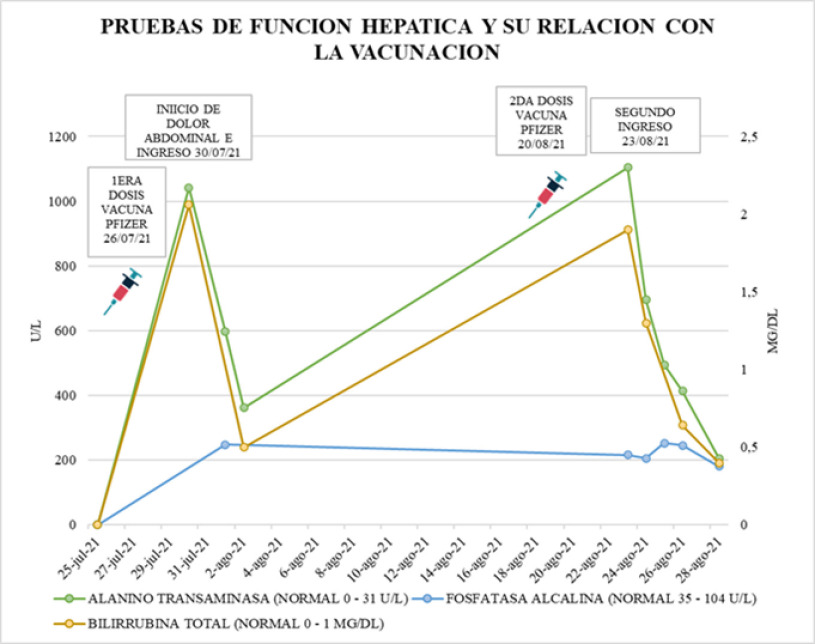
Case description: A 22-year-old female patient received the first dose of Pfizer-BioNTech vaccine (RNAm) against COVID-19; 6 days later, she presented abdominal pain located in the right hypochondrium and epigastrium, associated with emetic episodes. Re-consultation 21 days later due to the same symptoms; three days after the second dose of the vaccine was administered.
Clinical findings: Pain on palpation in the right hypochondrium. Laboratories reported hepatocellular lesion and cholestasis, with negative amylase, hepatotropic virus and autoimmune hepatitis tests. Liver and biliary tract ultrasound and cholangioresonance were normal.
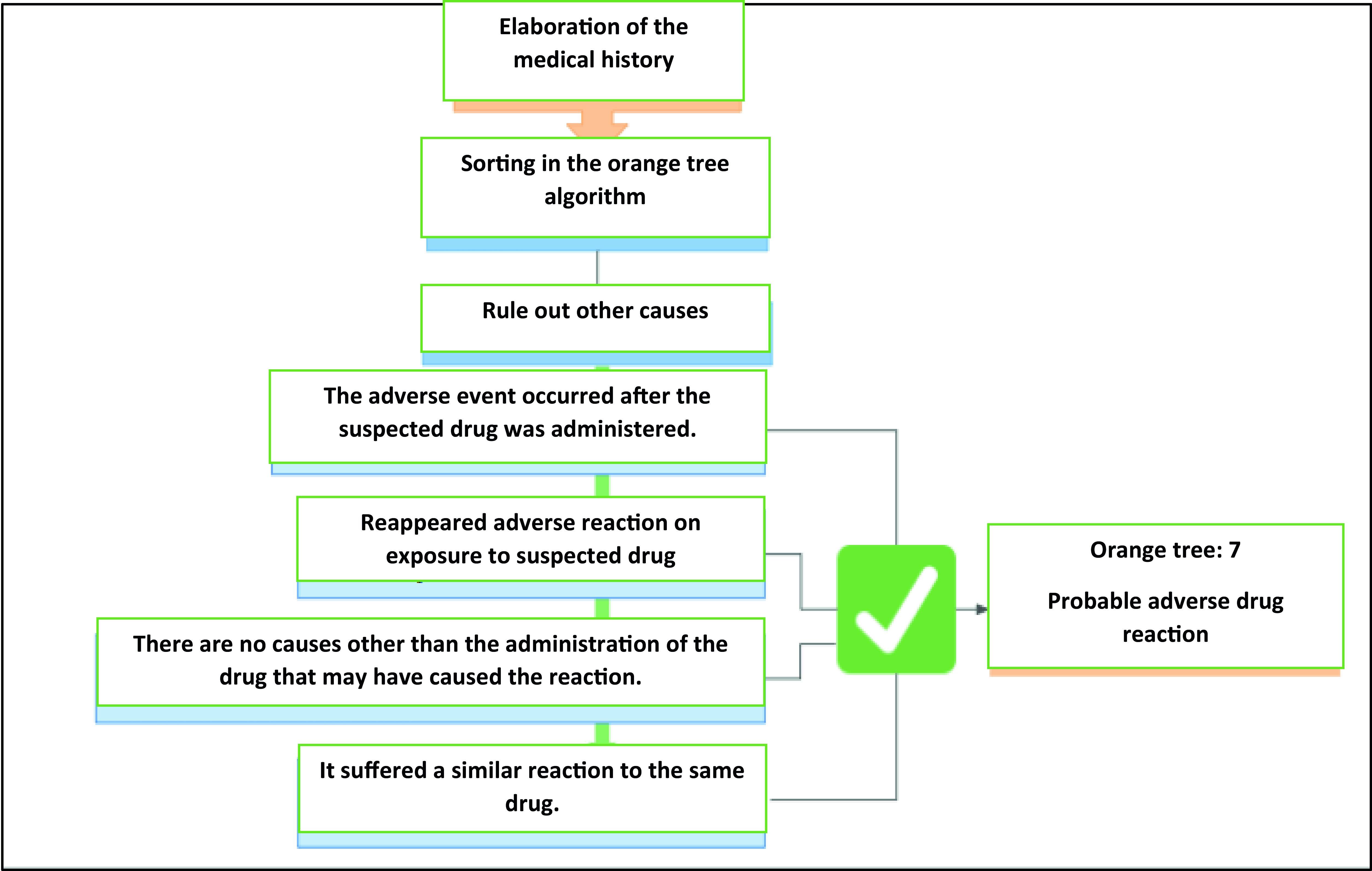
Treatment and results: Hyoscine and intravenous fluids as support therapy. She presented improvement in abdominal pain and progressive decrease of transaminases and bilirubin levels until normalization, and was discharged on the fifth day of hospitalization. A drug-associated hepatotoxicity (DILI) diagnosis was considered probable, in this case, secondary to vaccination against COVID-19.
Clinical relevance: The current SARS CoV-2 pandemic has spurred the development of new vaccines, the safety of which remains a concern. There is a likely causal relationship between vaccination and liver involvement in this clinical case, rather than simply a sporadic occurrence.



 京公网安备 11010802042870号
京ICP备2023020795号-1
京公网安备 11010802042870号
京ICP备2023020795号-1

 分享
分享
 求助内容:
求助内容: 应助结果提醒方式:
 扫码关注我们
