Development of a Metabolic Syndrome Classification and Prediction Model for Koreans Using Deep Learning Technology: The Korea National Health and Nutrition Examination Survey (KNHANES) (2013-2018).
{"title":"Development of a Metabolic Syndrome Classification and Prediction Model for Koreans Using Deep Learning Technology: The Korea National Health and Nutrition Examination Survey (KNHANES) (2013-2018).","authors":"Hyerim Kim, Ji Hye Heo, Dong Hoon Lim, Yoona Kim","doi":"10.7762/cnr.2023.12.2.138","DOIUrl":null,"url":null,"abstract":"<p><p>The prevalence of metabolic syndrome (MetS) and its cost are increasing due to lifestyle changes and aging. This study aimed to develop a deep neural network model for prediction and classification of MetS according to nutrient intake and other MetS-related factors. This study included 17,848 individuals aged 40-69 years from the Korea National Health and Nutrition Examination Survey (2013-2018). We set MetS (3-5 risk factors present) as the dependent variable and 52 MetS-related factors and nutrient intake variables as independent variables in a regression analysis. The analysis compared and analyzed model accuracy, precision and recall by conventional logistic regression, machine learning-based logistic regression and deep learning. The accuracy of train data was 81.2089, and the accuracy of test data was 81.1485 in a MetS classification and prediction model developed in this study. These accuracies were higher than those obtained by conventional logistic regression or machine learning-based logistic regression. Precision, recall, and F1-score also showed the high accuracy in the deep learning model. Blood alanine aminotransferase (β = 12.2035) level showed the highest regression coefficient followed by blood aspartate aminotransferase (β = 11.771) level, waist circumference (β = 10.8555), body mass index (β = 10.3842), and blood glycated hemoglobin (β = 10.1802) level. Fats (cholesterol [β = -2.0545] and saturated fatty acid [β = -2.0483]) showed high regression coefficients among nutrient intakes. The deep learning model for classification and prediction on MetS showed a higher accuracy than conventional logistic regression or machine learning-based logistic regression.</p>","PeriodicalId":72617,"journal":{"name":"Clinical nutrition research","volume":"12 2","pages":"138-153"},"PeriodicalIF":0.0000,"publicationDate":"2023-04-01","publicationTypes":"Journal Article","fieldsOfStudy":null,"isOpenAccess":false,"openAccessPdf":"https://ftp.ncbi.nlm.nih.gov/pub/pmc/oa_pdf/53/42/cnr-12-138.PMC10193438.pdf","citationCount":"0","resultStr":null,"platform":"Semanticscholar","paperid":null,"PeriodicalName":"Clinical nutrition research","FirstCategoryId":"1085","ListUrlMain":"https://doi.org/10.7762/cnr.2023.12.2.138","RegionNum":0,"RegionCategory":null,"ArticlePicture":[],"TitleCN":null,"AbstractTextCN":null,"PMCID":null,"EPubDate":"","PubModel":"","JCR":"","JCRName":"","Score":null,"Total":0}
引用次数: 0
Abstract
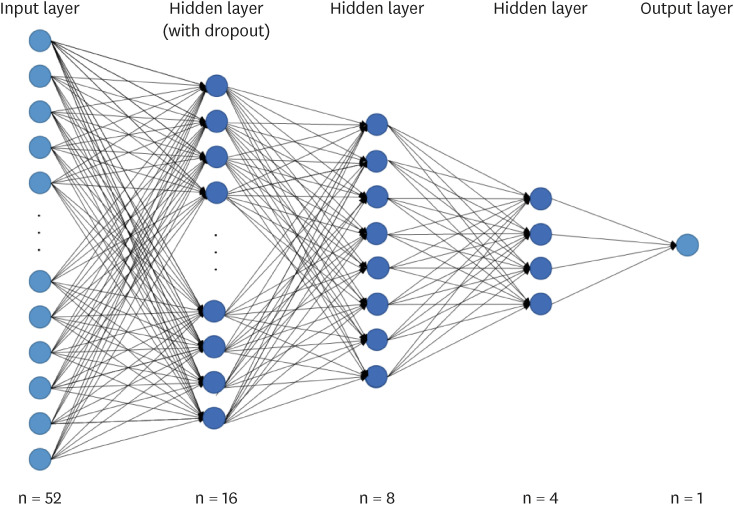
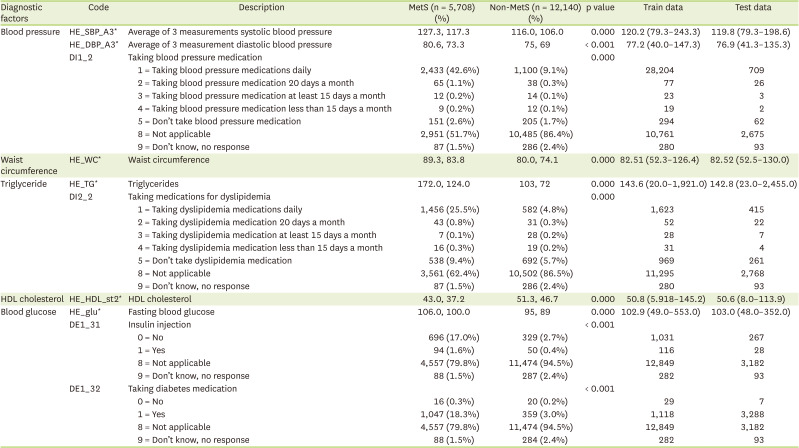
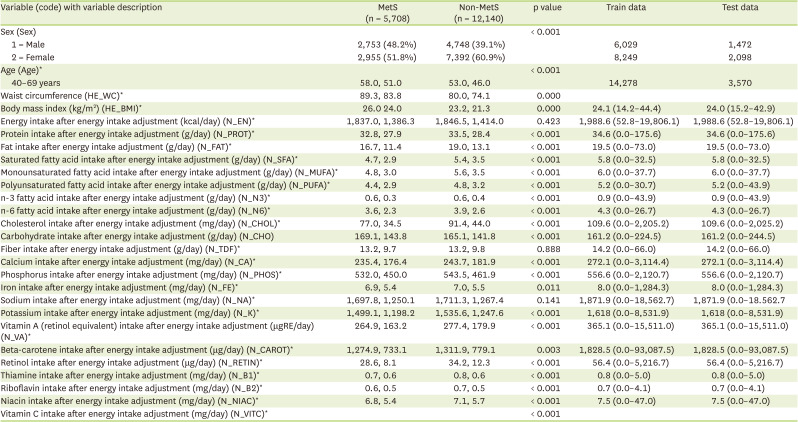
The prevalence of metabolic syndrome (MetS) and its cost are increasing due to lifestyle changes and aging. This study aimed to develop a deep neural network model for prediction and classification of MetS according to nutrient intake and other MetS-related factors. This study included 17,848 individuals aged 40-69 years from the Korea National Health and Nutrition Examination Survey (2013-2018). We set MetS (3-5 risk factors present) as the dependent variable and 52 MetS-related factors and nutrient intake variables as independent variables in a regression analysis. The analysis compared and analyzed model accuracy, precision and recall by conventional logistic regression, machine learning-based logistic regression and deep learning. The accuracy of train data was 81.2089, and the accuracy of test data was 81.1485 in a MetS classification and prediction model developed in this study. These accuracies were higher than those obtained by conventional logistic regression or machine learning-based logistic regression. Precision, recall, and F1-score also showed the high accuracy in the deep learning model. Blood alanine aminotransferase (β = 12.2035) level showed the highest regression coefficient followed by blood aspartate aminotransferase (β = 11.771) level, waist circumference (β = 10.8555), body mass index (β = 10.3842), and blood glycated hemoglobin (β = 10.1802) level. Fats (cholesterol [β = -2.0545] and saturated fatty acid [β = -2.0483]) showed high regression coefficients among nutrient intakes. The deep learning model for classification and prediction on MetS showed a higher accuracy than conventional logistic regression or machine learning-based logistic regression.



 京公网安备 11010802042870号
京ICP备2023020795号-1
京公网安备 11010802042870号
京ICP备2023020795号-1

 分享
分享

 求助内容:
求助内容: 应助结果提醒方式:
 扫码关注我们
