Global Coronal Malalignment in Degenerative Lumbar Scoliosis and Priority-Matching Correction Technique to Prevent Postoperative Coronal Decompensation.
{"title":"Global Coronal Malalignment in Degenerative Lumbar Scoliosis and Priority-Matching Correction Technique to Prevent Postoperative Coronal Decompensation.","authors":"Shibao Lu, Weiguo Zhu, Ashish D Diwan, Jeffrey C Wang, Guoguang Zhao, Zorica Buser, Dongfan Wang, Peng Cui, Yu Wang, Chao Kong, Wei Wang, Xiaolong Chen","doi":"10.1177/21925682231178202","DOIUrl":null,"url":null,"abstract":"<p><strong>Study design: </strong>A prospective case-control study.</p><p><strong>Objective: </strong>To analyze global coronal malalignment (GCM) in degenerative lumbar scoliosis (DLS) and to prospectively investigate the performance of priority-matching correction technique on preventing postoperative coronal imbalance.</p><p><strong>Methods: </strong>A total of 444 DLS inpatients and outpatients were recruited. GCMs were classified into 2 types: Type 1, GCM with thoracolumbar (TL/L) curve as the main contribution on coronal imbalance; Type 2, GCM with lumbosacral (LS) curve as the main contribution on coronal imbalance. Patients receiving priority-matching correction were assigned to Group P-M and receiving traditional correction were assigned to Group T form August 2020. The fundamental principle of priority-matching technique was to first correct the key curve contributing to coronal imbalance rather than the curve with greater magnitude.</p><p><strong>Results: </strong>Type 1 GCM accounted for 45% and Type 2 GCM accounted for 55% of patients. Type 2 GCM was detected to have greater LS Cobb angle and L4 tilt. At 1-year follow-up, 29.8% of patients with Type 2 GCM, whereas 11.7% of patients with Type 1 GCM were observed to have postoperative coronal decompensation. Patients with postoperative imbalance were revealed to have greater preoperative LS Cobb angle and L4 tilt and smaller correction extent of LS curve and L4 tilt. 6.25% of patients developed postoperative coronal imbalance in Group P-M, whereas 40.5% developed in Group T.</p><p><strong>Conclusion: </strong>Highlighting priority and aggressive correction of the key curve to coronal imbalance, priority-matching technique was proved to be able to limit the development of postoperative coronal decompensation.</p>","PeriodicalId":12680,"journal":{"name":"Global Spine Journal","volume":" ","pages":"2327-2339"},"PeriodicalIF":3.0000,"publicationDate":"2024-11-01","publicationTypes":"Journal Article","fieldsOfStudy":null,"isOpenAccess":false,"openAccessPdf":"https://www.ncbi.nlm.nih.gov/pmc/articles/PMC11531056/pdf/","citationCount":"0","resultStr":null,"platform":"Semanticscholar","paperid":null,"PeriodicalName":"Global Spine Journal","FirstCategoryId":"3","ListUrlMain":"https://doi.org/10.1177/21925682231178202","RegionNum":3,"RegionCategory":"医学","ArticlePicture":[],"TitleCN":null,"AbstractTextCN":null,"PMCID":null,"EPubDate":"2023/5/22 0:00:00","PubModel":"Epub","JCR":"Q2","JCRName":"CLINICAL NEUROLOGY","Score":null,"Total":0}
引用次数: 0
Abstract
Study design: A prospective case-control study.
Objective: To analyze global coronal malalignment (GCM) in degenerative lumbar scoliosis (DLS) and to prospectively investigate the performance of priority-matching correction technique on preventing postoperative coronal imbalance.
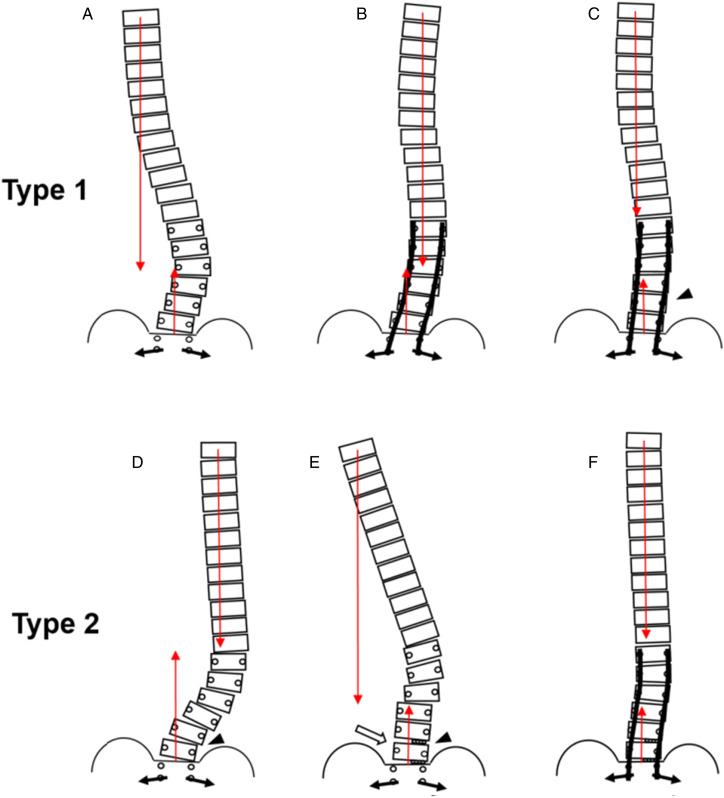
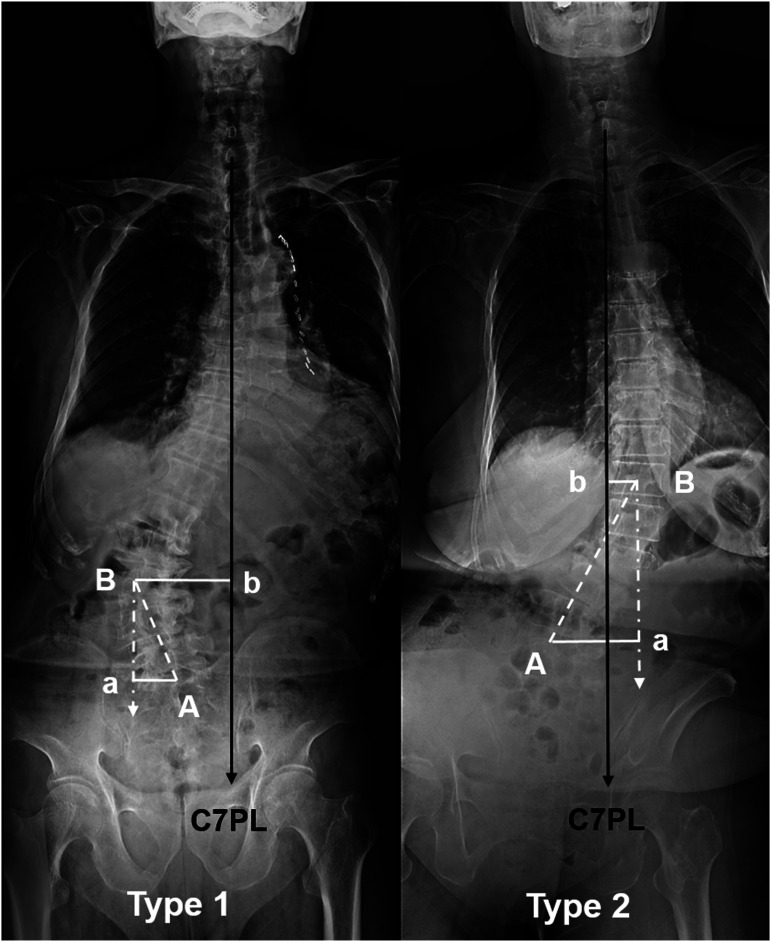
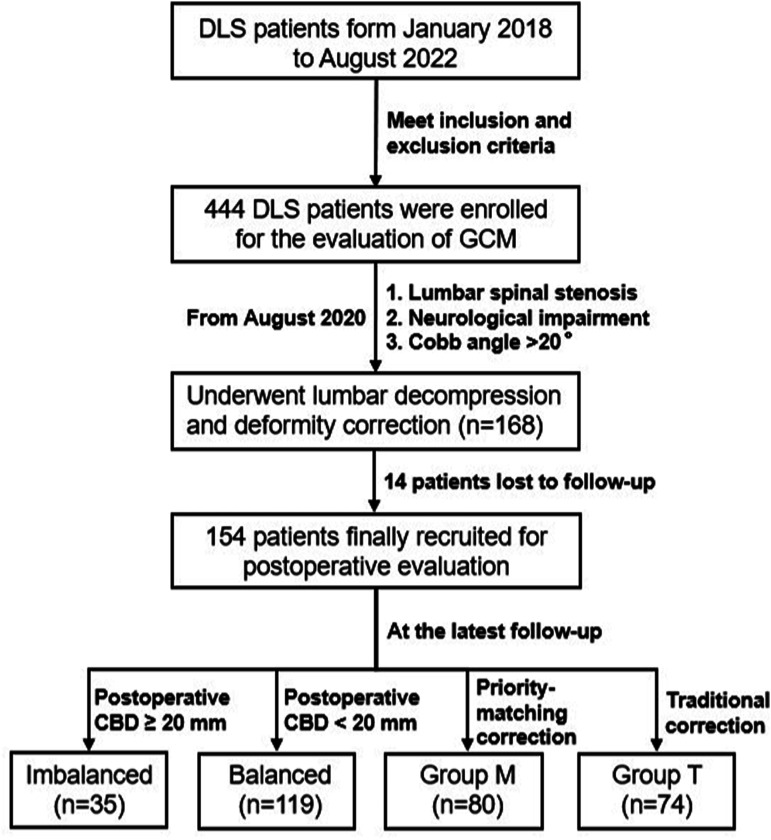
Methods: A total of 444 DLS inpatients and outpatients were recruited. GCMs were classified into 2 types: Type 1, GCM with thoracolumbar (TL/L) curve as the main contribution on coronal imbalance; Type 2, GCM with lumbosacral (LS) curve as the main contribution on coronal imbalance. Patients receiving priority-matching correction were assigned to Group P-M and receiving traditional correction were assigned to Group T form August 2020. The fundamental principle of priority-matching technique was to first correct the key curve contributing to coronal imbalance rather than the curve with greater magnitude.
Results: Type 1 GCM accounted for 45% and Type 2 GCM accounted for 55% of patients. Type 2 GCM was detected to have greater LS Cobb angle and L4 tilt. At 1-year follow-up, 29.8% of patients with Type 2 GCM, whereas 11.7% of patients with Type 1 GCM were observed to have postoperative coronal decompensation. Patients with postoperative imbalance were revealed to have greater preoperative LS Cobb angle and L4 tilt and smaller correction extent of LS curve and L4 tilt. 6.25% of patients developed postoperative coronal imbalance in Group P-M, whereas 40.5% developed in Group T.
Conclusion: Highlighting priority and aggressive correction of the key curve to coronal imbalance, priority-matching technique was proved to be able to limit the development of postoperative coronal decompensation.
期刊介绍:
Global Spine Journal (GSJ) is the official scientific publication of AOSpine. A peer-reviewed, open access journal, devoted to the study and treatment of spinal disorders, including diagnosis, operative and non-operative treatment options, surgical techniques, and emerging research and clinical developments.GSJ is indexed in PubMedCentral, SCOPUS, and Emerging Sources Citation Index (ESCI).



 京公网安备 11010802042870号
京ICP备2023020795号-1
京公网安备 11010802042870号
京ICP备2023020795号-1

 分享
分享
 求助内容:
求助内容: 应助结果提醒方式:
 扫码关注我们
