{"title":"Cognitive effects of individual anticholinergic drugs: a systematic review and meta-analysis.","authors":"Amirreza Naseri, Saeed Sadigh-Eteghad, Sepideh Seyedi-Sahebari, Mohammad-Salar Hosseini, Sakineh Hajebrahimi, Hanieh Salehi-Pourmehr","doi":"10.1590/1980-5764-DN-2022-0053","DOIUrl":null,"url":null,"abstract":"<p><p>Anticholinergics (ACs) are among the most prescribed drugs. Investigating the impaired cognitive domains due to individual ACs usage is associated with controversial findings.</p><p><strong>Objective: </strong>The objective of this study was to investigate the effects of individual ACs on different aspects of cognitive function based on clinical trial studies.</p><p><strong>Methods: </strong>This systematic review was conducted following the PRISMA statement. A systematic search was performed in Embase, PubMed, Cochrane Library, Scopus, and Web of Science databases. Risk of bias (RoB) was assessed by the Joanna Briggs Institute checklists and the meta-analysis was performed using the CMA software.</p><p><strong>Results: </strong>Out of 3,026 results of searching, 138 studies were included. A total of 38 studies that assess the cognitive impacts of scopolamine were included in the meta-analysis. Included studies reported cognitive effects of scopolamine, mecamylamine, atropine, biperiden, oxybutynin, trihexyphenidyl, benzhexol, and dicyclomine; however, glycopyrrolate, trospium, tolterodine, darifenacin, fesoterodine, tiotropium, and ipratropium were not associated with cognitive decline. Based on the meta-analyses, scopolamine was associated with reduced recognition (SDM -1.84; 95%CI -2.48 to -1.21; p<0.01), immediate recall (SDM -1.82; 95%CI -2.35 to -1.30; p<0.01), matching to sample (SDM -1.76; 95%CI -2.57 to -0.96; p<0.01), delayed recall (SDM -1.54; 95%CI -1.97 to -1.10; p<0.01), complex memory tasks (SDM -1.31; 95%CI -1.78 to -0.84; p<0.01), free recall (SDM -1.18; 95%CI -1.63 to -0.73; p<0.01), cognitive function (SDM -0.95; 95%CI -1.46 to -0.44; p<0.01), attention (SDM -0.85; 95%CI -1.38 to -0.33; p<0.01), and digit span (SDM -0.65; 95%CI -1.21 to -0.10; p=0.02). There was a high RoB in our included study, especially in terms of dealing with possible cofounders.</p><p><strong>Conclusion: </strong>The limitations of this study suggest a need for more well-designed studies with a longer duration of follow-up on this topic to reach more reliable evidence.</p>","PeriodicalId":72777,"journal":{"name":"","volume":"17 ","pages":"e20220053"},"PeriodicalIF":0.0,"publicationDate":"2023-01-01","publicationTypes":"Journal Article","fieldsOfStudy":null,"isOpenAccess":false,"openAccessPdf":"https://www.ncbi.nlm.nih.gov/pmc/articles/PMC10229087/pdf/","citationCount":"0","resultStr":null,"platform":"Semanticscholar","paperid":null,"PeriodicalName":"","FirstCategoryId":"1085","ListUrlMain":"https://doi.org/10.1590/1980-5764-DN-2022-0053","RegionNum":0,"RegionCategory":null,"ArticlePicture":[],"TitleCN":null,"AbstractTextCN":null,"PMCID":null,"EPubDate":"","PubModel":"","JCR":"","JCRName":"","Score":null,"Total":0}
引用次数: 0
Abstract
Anticholinergics (ACs) are among the most prescribed drugs. Investigating the impaired cognitive domains due to individual ACs usage is associated with controversial findings.
Objective: The objective of this study was to investigate the effects of individual ACs on different aspects of cognitive function based on clinical trial studies.
Methods: This systematic review was conducted following the PRISMA statement. A systematic search was performed in Embase, PubMed, Cochrane Library, Scopus, and Web of Science databases. Risk of bias (RoB) was assessed by the Joanna Briggs Institute checklists and the meta-analysis was performed using the CMA software.
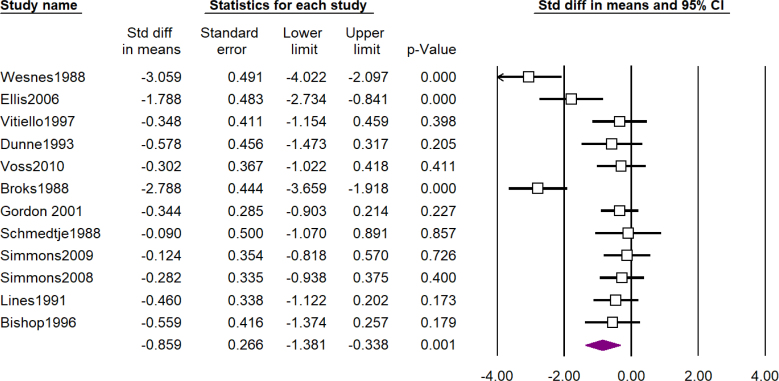
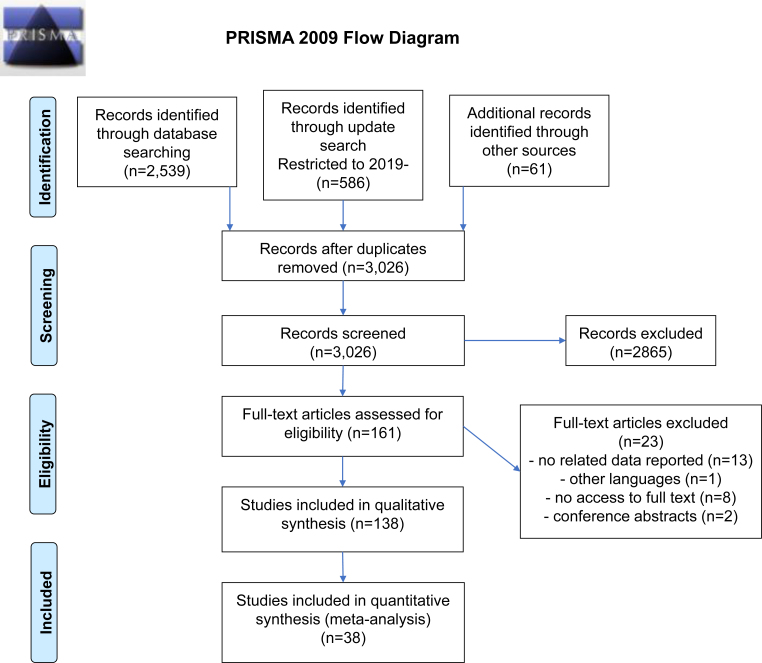
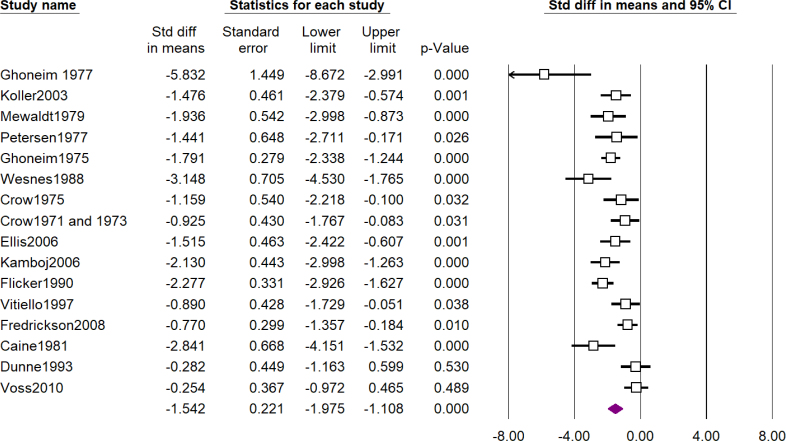
Results: Out of 3,026 results of searching, 138 studies were included. A total of 38 studies that assess the cognitive impacts of scopolamine were included in the meta-analysis. Included studies reported cognitive effects of scopolamine, mecamylamine, atropine, biperiden, oxybutynin, trihexyphenidyl, benzhexol, and dicyclomine; however, glycopyrrolate, trospium, tolterodine, darifenacin, fesoterodine, tiotropium, and ipratropium were not associated with cognitive decline. Based on the meta-analyses, scopolamine was associated with reduced recognition (SDM -1.84; 95%CI -2.48 to -1.21; p<0.01), immediate recall (SDM -1.82; 95%CI -2.35 to -1.30; p<0.01), matching to sample (SDM -1.76; 95%CI -2.57 to -0.96; p<0.01), delayed recall (SDM -1.54; 95%CI -1.97 to -1.10; p<0.01), complex memory tasks (SDM -1.31; 95%CI -1.78 to -0.84; p<0.01), free recall (SDM -1.18; 95%CI -1.63 to -0.73; p<0.01), cognitive function (SDM -0.95; 95%CI -1.46 to -0.44; p<0.01), attention (SDM -0.85; 95%CI -1.38 to -0.33; p<0.01), and digit span (SDM -0.65; 95%CI -1.21 to -0.10; p=0.02). There was a high RoB in our included study, especially in terms of dealing with possible cofounders.
Conclusion: The limitations of this study suggest a need for more well-designed studies with a longer duration of follow-up on this topic to reach more reliable evidence.



 京公网安备 11010802042870号
京ICP备2023020795号-1
京公网安备 11010802042870号
京ICP备2023020795号-1

 分享
分享
 求助内容:
求助内容: 应助结果提醒方式:
 扫码关注我们
