María Camila Pinzón-Segura, Magnolia Del Pilar Ballesteros-Cabrera, Yefry Andrés Aragón-Joya, Luisa Fernanda Cajamarca-Loaiza, André Noël Roth-Deubel
{"title":"Deliberative dialogue on euthanasia in girls, boys and adolescents. Prequel to the Cabildo Ciudadano (Citizen Council) carried out in Colombia.","authors":"María Camila Pinzón-Segura, Magnolia Del Pilar Ballesteros-Cabrera, Yefry Andrés Aragón-Joya, Luisa Fernanda Cajamarca-Loaiza, André Noël Roth-Deubel","doi":"10.25100/cm.v53i4.5148","DOIUrl":null,"url":null,"abstract":"<p><strong>Background: </strong>To date, there is a lack of published information on the utilization of the Deliberative dialogue methodology and the right to a dignified death in minors under 18 years of age in Colombia and Latin America.</p><p><strong>Objective: </strong>To examine the issue of children and adolescents' entitlement to a dignified death, including the criteria for exclusion, and to formulate a comprehensive plan for pediatric palliative care. A public policy document will be created with the aim of supporting the implementation of Resolution 825/2018.</p><p><strong>Methods: </strong>Participatory Action Research utilizing a Deliberative dialogue methods that has been adapted based on feminist epistemological principles.</p><p><strong>Results: </strong>The outcome of the exercise was the production of a document containing Public Policy recommendations regarding euthanasia in minors and its submission to the Ministry of Health and Social Protection of Colombia a few days prior to the release of the Resolution regulating the right to a dignified death for this population. Additionally, the conclusions of this event enabled the creation of a guide for the implementation of <i>(Cabildos Ciudadanos)</i> Citizen Council, in which girls, boys, and adolescents are included, trans-disciplinarity is encouraged, and feminist epistemological foundations are explored.</p><p><strong>Conclusions: </strong>The deliberative dialogue method may serve as a cost-efficient alternative to replace or complement participatory approaches utilized in the development of public health guidelines and policies.</p>","PeriodicalId":72638,"journal":{"name":"","volume":"53 4","pages":"e2015148"},"PeriodicalIF":0.0,"publicationDate":"2022-10-01","publicationTypes":"Journal Article","fieldsOfStudy":null,"isOpenAccess":false,"openAccessPdf":"https://ftp.ncbi.nlm.nih.gov/pub/pmc/oa_pdf/4b/08/1657-9534-cm-53-04-e2015148.PMC10241037.pdf","citationCount":"0","resultStr":null,"platform":"Semanticscholar","paperid":null,"PeriodicalName":"","FirstCategoryId":"3","ListUrlMain":"https://doi.org/10.25100/cm.v53i4.5148","RegionNum":0,"RegionCategory":null,"ArticlePicture":[],"TitleCN":null,"AbstractTextCN":null,"PMCID":null,"EPubDate":"","PubModel":"","JCR":"","JCRName":"","Score":null,"Total":0}
引用次数: 0
Abstract
Background: To date, there is a lack of published information on the utilization of the Deliberative dialogue methodology and the right to a dignified death in minors under 18 years of age in Colombia and Latin America.
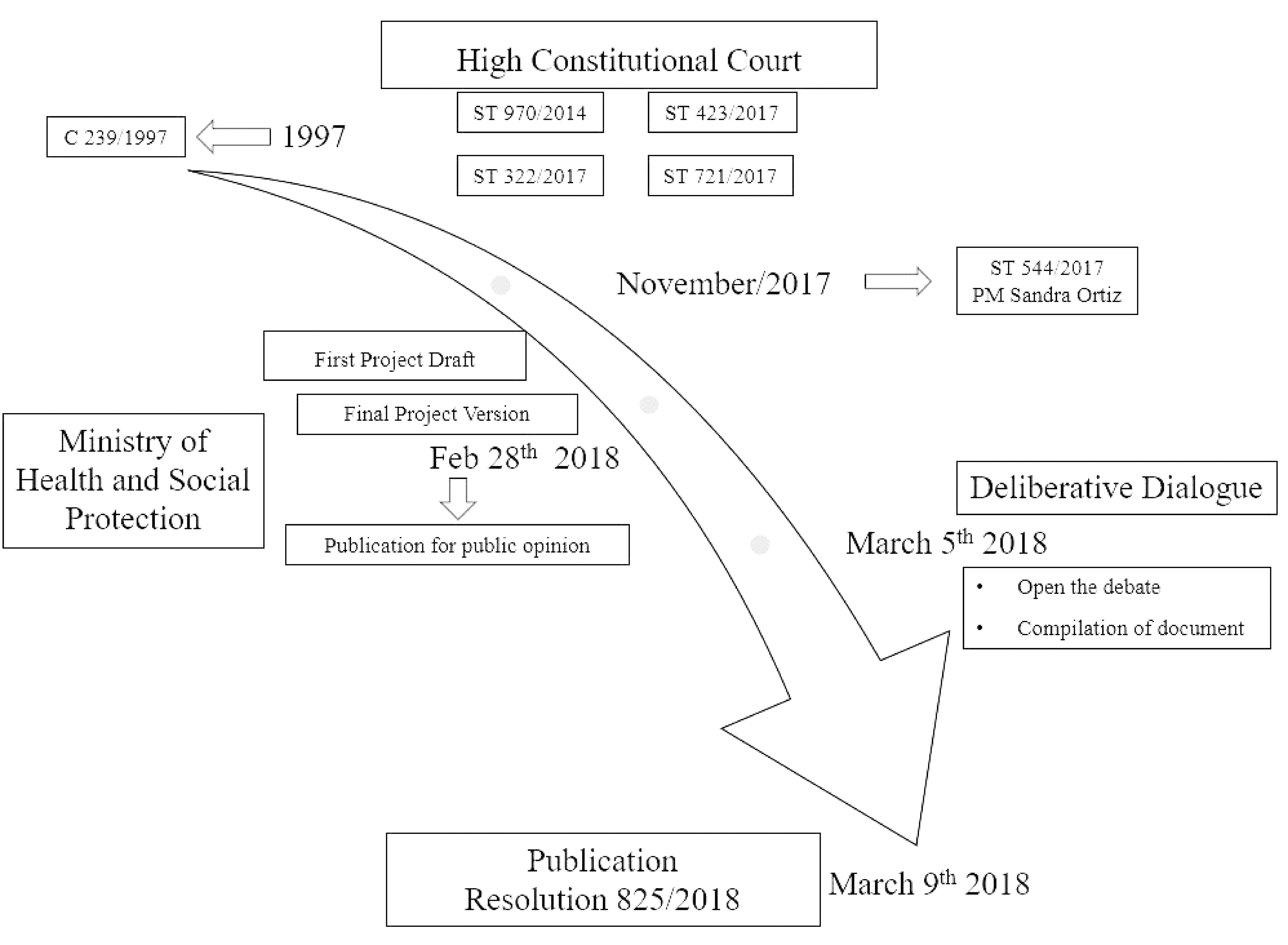
Objective: To examine the issue of children and adolescents' entitlement to a dignified death, including the criteria for exclusion, and to formulate a comprehensive plan for pediatric palliative care. A public policy document will be created with the aim of supporting the implementation of Resolution 825/2018.
Methods: Participatory Action Research utilizing a Deliberative dialogue methods that has been adapted based on feminist epistemological principles.
Results: The outcome of the exercise was the production of a document containing Public Policy recommendations regarding euthanasia in minors and its submission to the Ministry of Health and Social Protection of Colombia a few days prior to the release of the Resolution regulating the right to a dignified death for this population. Additionally, the conclusions of this event enabled the creation of a guide for the implementation of (Cabildos Ciudadanos) Citizen Council, in which girls, boys, and adolescents are included, trans-disciplinarity is encouraged, and feminist epistemological foundations are explored.
Conclusions: The deliberative dialogue method may serve as a cost-efficient alternative to replace or complement participatory approaches utilized in the development of public health guidelines and policies.



 京公网安备 11010802042870号
京ICP备2023020795号-1
京公网安备 11010802042870号
京ICP备2023020795号-1

 分享
分享
 求助内容:
求助内容: 应助结果提醒方式:
 扫码关注我们
