Tyler J Humphrey, Colin M Baker, Paul M Courtney, Wayne G Paprosky, Hany S Bedair, Neil P Sheth, Christopher M Melnic
{"title":"The Dome Technique for Managing Massive Anterosuperior Medial Acetabular Bone Loss in Revision Total Hip Arthroplasty: Short-Term Outcomes.","authors":"Tyler J Humphrey, Colin M Baker, Paul M Courtney, Wayne G Paprosky, Hany S Bedair, Neil P Sheth, Christopher M Melnic","doi":"10.5371/hp.2023.35.2.122","DOIUrl":null,"url":null,"abstract":"<p><strong>Purpose: </strong>The dome technique is a technique used in performance of revision total hip arthroplasty (THA) involving intraoperative joining of two porous metal acetabular augments to fill a massive anterosuperior medial acetabular bone defect. While excellent outcomes were achieved using this surgical technique in a series of three cases, short-term results have not been reported. We hypothesized that excellent short-term clinical and patient reported outcomes could be achieved with use of the dome technique.</p><p><strong>Materials and methods: </strong>A multicenter case series was conducted for evaluation of patients who underwent revision THA using the dome technique for management of Paprosky 3B anterosuperior medial acetabular bone loss from 2013-2019 with a minimum clinical follow-up period of two years. Twelve cases in 12 patients were identified. Baseline demographics, intraoperative variables, surgical outcomes, and patient reported outcomes were acquired.</p><p><strong>Results: </strong>The implant survivorship was 91% with component failure requiring re-revision in only one patient at a mean follow-up period of 36.2 months (range, 24-72 months). Three patients (25.0%) experienced complications, including re-revision for component failure, inter-prosthetic dual-mobility dissociation, and periprosthetic joint infection. Of seven patients who completed the HOOS, JR (hip disability and osteoarthritis outcome score, joint replacement) survey, five patients showed improvement.</p><p><strong>Conclusion: </strong>Excellent outcomes can be achieved using the dome technique for management of massive anterosuperior medial acetabular defects in revision THA with survivorship of 91% at a mean follow-up period of three years. Conduct of future studies will be required in order to evaluate mid- to long-term outcomes for this technique.</p>","PeriodicalId":73239,"journal":{"name":"Hip & pelvis","volume":"35 2","pages":"122-132"},"PeriodicalIF":0.0000,"publicationDate":"2023-06-01","publicationTypes":"Journal Article","fieldsOfStudy":null,"isOpenAccess":false,"openAccessPdf":"https://ftp.ncbi.nlm.nih.gov/pub/pmc/oa_pdf/db/10/hp-35-122.PMC10264228.pdf","citationCount":"0","resultStr":null,"platform":"Semanticscholar","paperid":null,"PeriodicalName":"Hip & pelvis","FirstCategoryId":"1085","ListUrlMain":"https://doi.org/10.5371/hp.2023.35.2.122","RegionNum":0,"RegionCategory":null,"ArticlePicture":[],"TitleCN":null,"AbstractTextCN":null,"PMCID":null,"EPubDate":"","PubModel":"","JCR":"","JCRName":"","Score":null,"Total":0}
引用次数: 0
Abstract
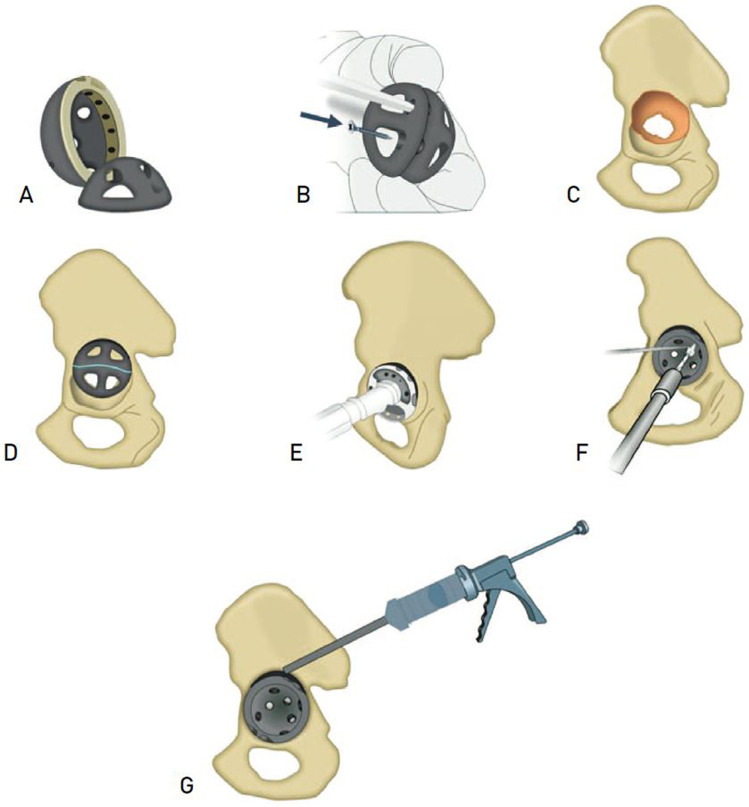
Purpose: The dome technique is a technique used in performance of revision total hip arthroplasty (THA) involving intraoperative joining of two porous metal acetabular augments to fill a massive anterosuperior medial acetabular bone defect. While excellent outcomes were achieved using this surgical technique in a series of three cases, short-term results have not been reported. We hypothesized that excellent short-term clinical and patient reported outcomes could be achieved with use of the dome technique.
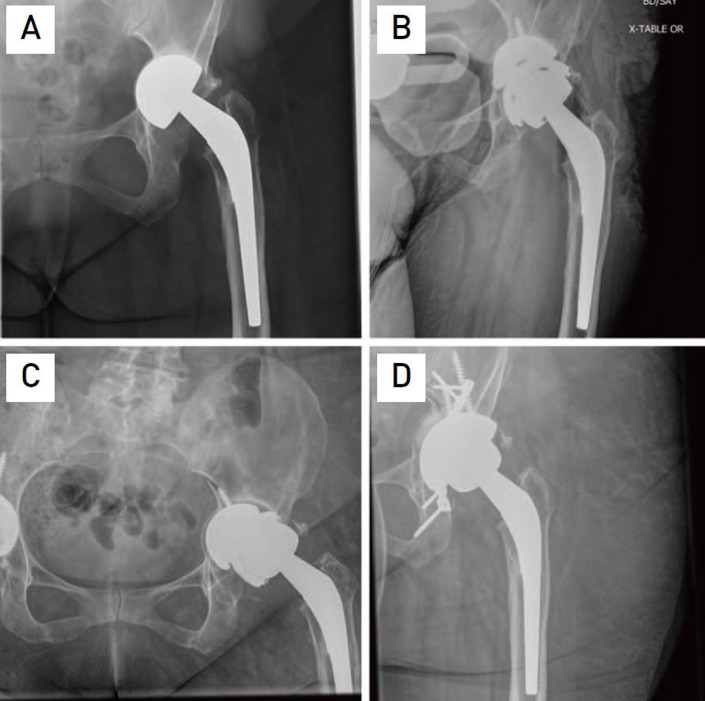
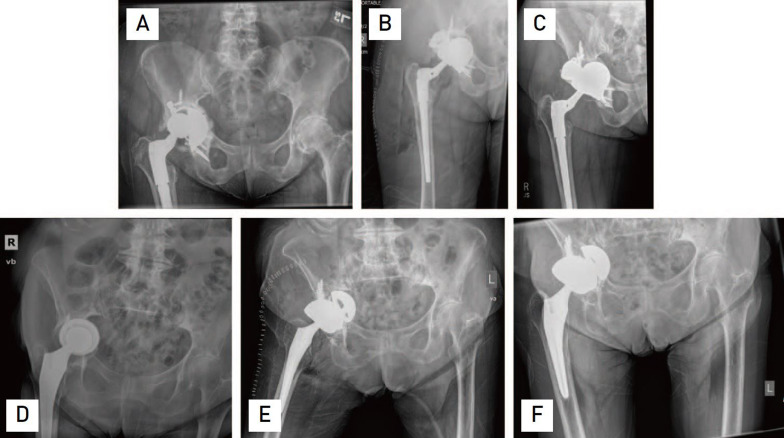
Materials and methods: A multicenter case series was conducted for evaluation of patients who underwent revision THA using the dome technique for management of Paprosky 3B anterosuperior medial acetabular bone loss from 2013-2019 with a minimum clinical follow-up period of two years. Twelve cases in 12 patients were identified. Baseline demographics, intraoperative variables, surgical outcomes, and patient reported outcomes were acquired.
Results: The implant survivorship was 91% with component failure requiring re-revision in only one patient at a mean follow-up period of 36.2 months (range, 24-72 months). Three patients (25.0%) experienced complications, including re-revision for component failure, inter-prosthetic dual-mobility dissociation, and periprosthetic joint infection. Of seven patients who completed the HOOS, JR (hip disability and osteoarthritis outcome score, joint replacement) survey, five patients showed improvement.
Conclusion: Excellent outcomes can be achieved using the dome technique for management of massive anterosuperior medial acetabular defects in revision THA with survivorship of 91% at a mean follow-up period of three years. Conduct of future studies will be required in order to evaluate mid- to long-term outcomes for this technique.



 京公网安备 11010802042870号
京ICP备2023020795号-1
京公网安备 11010802042870号
京ICP备2023020795号-1

 分享
分享

 求助内容:
求助内容: 应助结果提醒方式:
 扫码关注我们
