Oguzhan Okcu, Bayram Sen, Cigdem Ozturk, Gulname Findik Guvendi, Recep Bedir
{"title":"GLUT-1 Expression in Breast Cancer.","authors":"Oguzhan Okcu, Bayram Sen, Cigdem Ozturk, Gulname Findik Guvendi, Recep Bedir","doi":"10.5146/tjpath.2021.01557","DOIUrl":null,"url":null,"abstract":"<p><strong>Objective: </strong>Numerous studies have been conducted to predict the prognosis of breast cancers. The effect of glucose transporter protein 1 (GLUT-1), the main carrier protein responsible for glucose transport, was investigated in breast cancer patients.</p><p><strong>Material and method: </strong>170 patients operated for breast carcinoma were included in this study. We analysed the prognostic significance of GLUT-1 immune-expression in 149 patients without neoadjuvant therapy, and in 21 patients with neoadjuvant therapy.</p><p><strong>Results: </strong>GLUT-1 expression was correlated with poor prognostic factors such as estrogen receptor and progesterone receptor negativity, high Ki-67 proliferation index, and high histological and nuclear grade (p < 0.001). GLUT-1 was expressed at a statistically higher rate in invasive ductal carcinomas, compared to invasive lobular carcinomas (p < 0.001), and was expressed at a higher rate in luminal B, human epidermal growth factor receptor 2 and triple-negative molecular subtypes compared to luminal A subtype tumors (p < 0.001). There was no statistically significant difference between GLUT-1 expression and presence of neoadjuvant therapy. Univariate survival analysis showed high GLUT1 expression was associated with low disease-free survival.</p><p><strong>Conclusion: </strong>GLUT-1 expression was found to be associated with poor pathological prognostic factors in breast carcinoma patients. The results suggest that GLUT-1 expression can be considered as a prognostic marker in breast cancers, and it may be used as a target molecule in personalized treatment approaches.</p>","PeriodicalId":45415,"journal":{"name":"Turkish Journal of Pathology","volume":"38 2","pages":"114-121"},"PeriodicalIF":2.1000,"publicationDate":"2022-01-01","publicationTypes":"Journal Article","fieldsOfStudy":null,"isOpenAccess":false,"openAccessPdf":"https://www.ncbi.nlm.nih.gov/pmc/articles/PMC9999698/pdf/","citationCount":"3","resultStr":null,"platform":"Semanticscholar","paperid":null,"PeriodicalName":"Turkish Journal of Pathology","FirstCategoryId":"1085","ListUrlMain":"https://doi.org/10.5146/tjpath.2021.01557","RegionNum":0,"RegionCategory":null,"ArticlePicture":[],"TitleCN":null,"AbstractTextCN":null,"PMCID":null,"EPubDate":"","PubModel":"","JCR":"Q4","JCRName":"PATHOLOGY","Score":null,"Total":0}
引用次数: 3
Abstract
Objective: Numerous studies have been conducted to predict the prognosis of breast cancers. The effect of glucose transporter protein 1 (GLUT-1), the main carrier protein responsible for glucose transport, was investigated in breast cancer patients.
Material and method: 170 patients operated for breast carcinoma were included in this study. We analysed the prognostic significance of GLUT-1 immune-expression in 149 patients without neoadjuvant therapy, and in 21 patients with neoadjuvant therapy.
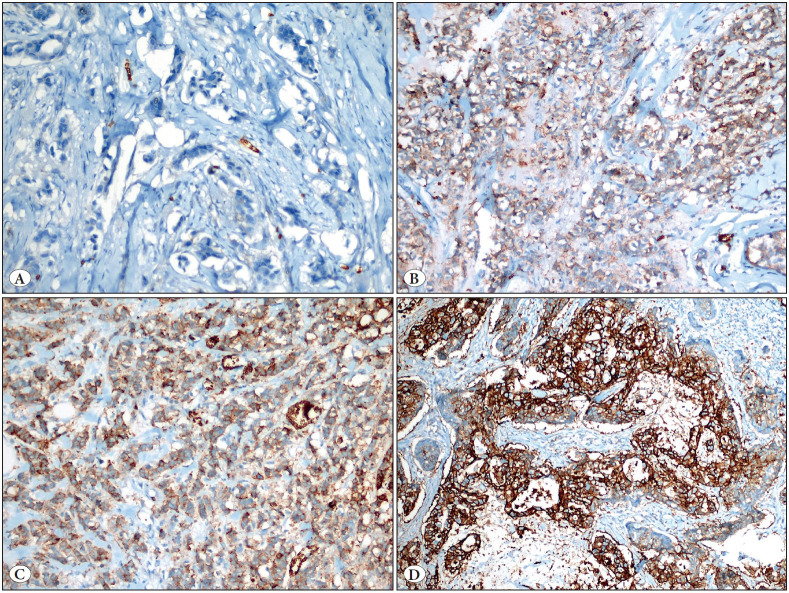
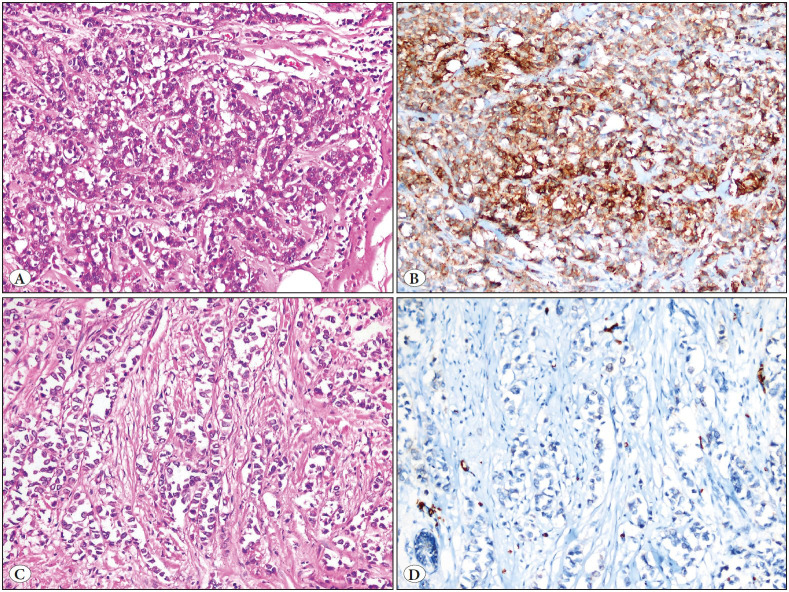
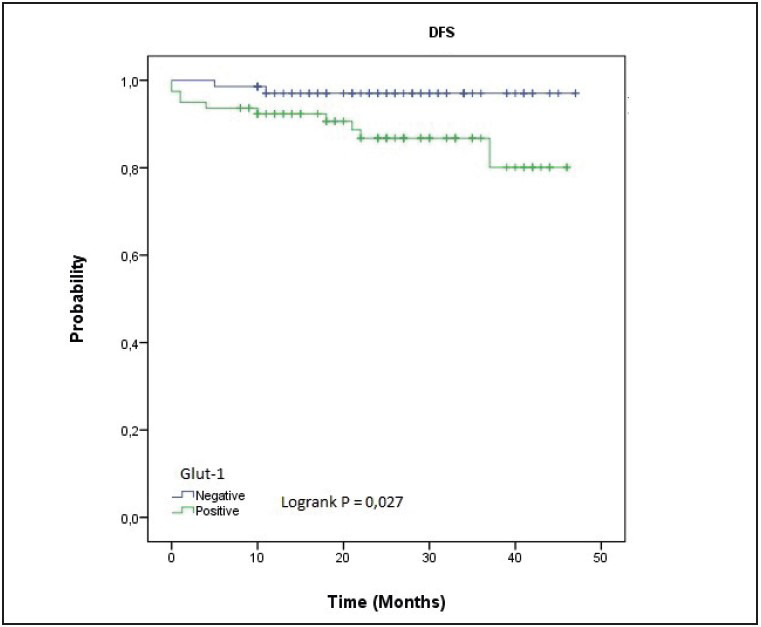
Results: GLUT-1 expression was correlated with poor prognostic factors such as estrogen receptor and progesterone receptor negativity, high Ki-67 proliferation index, and high histological and nuclear grade (p < 0.001). GLUT-1 was expressed at a statistically higher rate in invasive ductal carcinomas, compared to invasive lobular carcinomas (p < 0.001), and was expressed at a higher rate in luminal B, human epidermal growth factor receptor 2 and triple-negative molecular subtypes compared to luminal A subtype tumors (p < 0.001). There was no statistically significant difference between GLUT-1 expression and presence of neoadjuvant therapy. Univariate survival analysis showed high GLUT1 expression was associated with low disease-free survival.
Conclusion: GLUT-1 expression was found to be associated with poor pathological prognostic factors in breast carcinoma patients. The results suggest that GLUT-1 expression can be considered as a prognostic marker in breast cancers, and it may be used as a target molecule in personalized treatment approaches.




 京公网安备 11010802042870号
京ICP备2023020795号-1
京公网安备 11010802042870号
京ICP备2023020795号-1

 分享
分享
 求助内容:
求助内容: 应助结果提醒方式:
 扫码关注我们
