Kaela Byers, Jared Barton, Whitney Grube, Jessica Wesley, Becci A Akin, Emily Hermesch, Erin Felzke, Rachelle Roosevelt
{"title":"\"I Ran to Make a Point\": Predicting and Preventing Youth Runaway from Foster Care.","authors":"Kaela Byers, Jared Barton, Whitney Grube, Jessica Wesley, Becci A Akin, Emily Hermesch, Erin Felzke, Rachelle Roosevelt","doi":"10.1007/s10560-023-00930-3","DOIUrl":null,"url":null,"abstract":"<p><p>Youth who run away from foster care experience danger to health and safety and increased risk of adverse child welfare outcomes. By applying a concurrent mixed-methods approach, this study aimed to develop a deeper understanding of runaway risk that used a person-centered lens and amplified youth voices. Collectively, this approach can inform service innovations to support youth placed in out-of-home care. Working with a foster care agency in Kansas, data sources comprised administrative data for youth ages 12 + in care, and interview data with 20 youth, 12 + in care. Quantitative analyses involved latent class analysis followed by multinomial logistic regression to investigate whether the population of youth in care was comprised of subpopulations with differential runaway risk and whether subpopulations would predict runaway behaviors. Qualitative analyses applied modified analytic inductive thematic analysis to explore critical life experiences that may act as risk or protective factors of running away from care. Results revealed four sub-populations which were characterized by their previous family and system experiences. Additionally, class membership, gender, number of siblings, and age were statistically significant predictors of runway behaviors. Youth interviews revealed five key themes on life experiences that mitigate or exacerbate youths' runaway behaviors. Recommendations resulting from this study were provided in three key areas: (1) improving family visitation and maintaining youth connections with self-identified family and non-relative kin; (2) supporting service approaches for youth that honor and amplify their voices, choices, and family connections; and (3) improving placement quality and individualization of services.</p>","PeriodicalId":72568,"journal":{"name":"","volume":" ","pages":"1-24"},"PeriodicalIF":0.0,"publicationDate":"2023-06-07","publicationTypes":"Journal Article","fieldsOfStudy":null,"isOpenAccess":false,"openAccessPdf":"https://www.ncbi.nlm.nih.gov/pmc/articles/PMC10244860/pdf/","citationCount":"0","resultStr":null,"platform":"Semanticscholar","paperid":null,"PeriodicalName":"","FirstCategoryId":"3","ListUrlMain":"https://doi.org/10.1007/s10560-023-00930-3","RegionNum":0,"RegionCategory":null,"ArticlePicture":[],"TitleCN":null,"AbstractTextCN":null,"PMCID":null,"EPubDate":"","PubModel":"","JCR":"","JCRName":"","Score":null,"Total":0}
引用次数: 0
Abstract
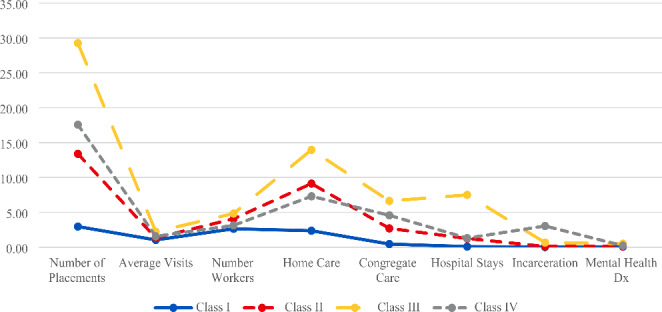
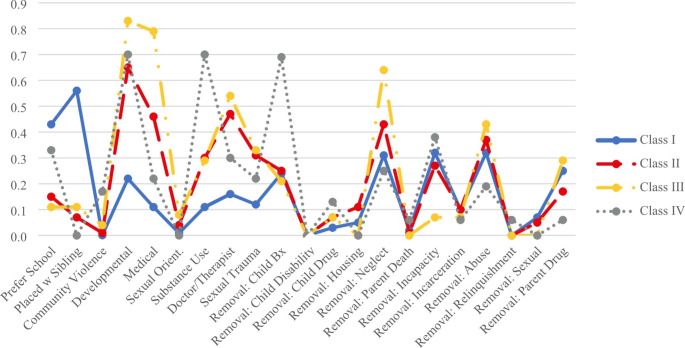
Youth who run away from foster care experience danger to health and safety and increased risk of adverse child welfare outcomes. By applying a concurrent mixed-methods approach, this study aimed to develop a deeper understanding of runaway risk that used a person-centered lens and amplified youth voices. Collectively, this approach can inform service innovations to support youth placed in out-of-home care. Working with a foster care agency in Kansas, data sources comprised administrative data for youth ages 12 + in care, and interview data with 20 youth, 12 + in care. Quantitative analyses involved latent class analysis followed by multinomial logistic regression to investigate whether the population of youth in care was comprised of subpopulations with differential runaway risk and whether subpopulations would predict runaway behaviors. Qualitative analyses applied modified analytic inductive thematic analysis to explore critical life experiences that may act as risk or protective factors of running away from care. Results revealed four sub-populations which were characterized by their previous family and system experiences. Additionally, class membership, gender, number of siblings, and age were statistically significant predictors of runway behaviors. Youth interviews revealed five key themes on life experiences that mitigate or exacerbate youths' runaway behaviors. Recommendations resulting from this study were provided in three key areas: (1) improving family visitation and maintaining youth connections with self-identified family and non-relative kin; (2) supporting service approaches for youth that honor and amplify their voices, choices, and family connections; and (3) improving placement quality and individualization of services.



 京公网安备 11010802042870号
京ICP备2023020795号-1
京公网安备 11010802042870号
京ICP备2023020795号-1

 分享
分享
 求助内容:
求助内容: 应助结果提醒方式:
 扫码关注我们
