Gender Inclusivity of India's Digital Financial Revolution for Attainment of SDGs: Macro Achievements and the Micro Experiences of Targeted Initiatives.
{"title":"Gender Inclusivity of India's Digital Financial Revolution for Attainment of SDGs: Macro Achievements and the Micro Experiences of Targeted Initiatives.","authors":"Maren Duvendack, Lina Sonne, Supriya Garikipati","doi":"10.1057/s41287-023-00585-x","DOIUrl":null,"url":null,"abstract":"<p><p>For decades, India has led the drive for financial inclusion of poor rural women to facilitate attainment of development objectives like poverty alleviation and women's empowerment. More recently, it has promoted digital financial inclusion to further its fight against poverty and gender inequality and support the attainment of UN's Sustainable Development Goals (SDGs). In this paper we take stock of how India's digital financial revolution has affected financial transactions and services with a focus on gender inclusivity for the attainment of the SDGs. We propose a framework to understand the gender inclusivity of digital financial inclusion initiatives that connects the macro developments in the sector with the micro-level experiences of improving women's access and use of these services. We draw on India's nationwide developments and present a case study of an initiative that specifically promotes gender inclusive finance. Our findings suggest that India has made great advances in promoting digital financial inclusion but at the same time, the country has struggled to achieve gender parity even within specific finance-focused programmes designed to improve gender inclusivity. We reflect on policy implications of these findings.</p>","PeriodicalId":75001,"journal":{"name":"","volume":" ","pages":"1-23"},"PeriodicalIF":0.0,"publicationDate":"2023-04-25","publicationTypes":"Journal Article","fieldsOfStudy":null,"isOpenAccess":false,"openAccessPdf":"https://www.ncbi.nlm.nih.gov/pmc/articles/PMC10127960/pdf/","citationCount":"0","resultStr":null,"platform":"Semanticscholar","paperid":null,"PeriodicalName":"","FirstCategoryId":"90","ListUrlMain":"https://doi.org/10.1057/s41287-023-00585-x","RegionNum":0,"RegionCategory":null,"ArticlePicture":[],"TitleCN":null,"AbstractTextCN":null,"PMCID":null,"EPubDate":"","PubModel":"","JCR":"","JCRName":"","Score":null,"Total":0}
引用次数: 0
Abstract
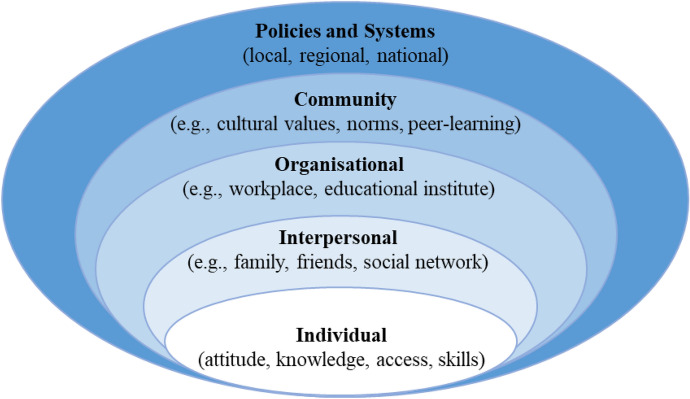
For decades, India has led the drive for financial inclusion of poor rural women to facilitate attainment of development objectives like poverty alleviation and women's empowerment. More recently, it has promoted digital financial inclusion to further its fight against poverty and gender inequality and support the attainment of UN's Sustainable Development Goals (SDGs). In this paper we take stock of how India's digital financial revolution has affected financial transactions and services with a focus on gender inclusivity for the attainment of the SDGs. We propose a framework to understand the gender inclusivity of digital financial inclusion initiatives that connects the macro developments in the sector with the micro-level experiences of improving women's access and use of these services. We draw on India's nationwide developments and present a case study of an initiative that specifically promotes gender inclusive finance. Our findings suggest that India has made great advances in promoting digital financial inclusion but at the same time, the country has struggled to achieve gender parity even within specific finance-focused programmes designed to improve gender inclusivity. We reflect on policy implications of these findings.



 京公网安备 11010802042870号
京ICP备2023020795号-1
京公网安备 11010802042870号
京ICP备2023020795号-1

 分享
分享
 求助内容:
求助内容: 应助结果提醒方式:
 扫码关注我们
