Monique M. Ridosh, William Adams, Fabiola Magaña, Kathleen J. Sawin, Grayson N. Holmbeck
{"title":"Trajectories of self-management and independence in youth with spina bifida: Demographic predictors of growth","authors":"Monique M. Ridosh, William Adams, Fabiola Magaña, Kathleen J. Sawin, Grayson N. Holmbeck","doi":"10.1111/cch.13065","DOIUrl":null,"url":null,"abstract":"<div>\n \n \n <section>\n \n <h3> Aim</h3>\n \n <p>The purpose of this study was to examine the trajectories of condition and independent living self-management in youth with spina bifida (SB).</p>\n </section>\n \n <section>\n \n <h3> Methods</h3>\n \n <p>A diverse sample of adolescents and young adults (AYAs) with SB completed the Adolescent/Young Adult Self-Management and Independence Scale (AMIS-II) across four time points. Parents reported on demographic characteristics including age, sex, race/ethnicity, and family income. Growth in self-management and its subscales (condition and independent living) were estimated using linear mixed-effect models as a function of respondents' demographics.</p>\n </section>\n \n <section>\n \n <h3> Results</h3>\n \n <p>This study included 99 respondents age 18 to 27 years old. About half were female (52.5%) and White (52.5%); 15.2% were Black, and about a third were Hispanic/Latino (32.3%). Eighty-seven AYAs (87.9%) had myelomeningocele. The lesion level was 31.3% sacral, 48.5% lumbar and 18.2% thoracic. A third of the families earned less than 50K. Overall, self-management growth was dependent on age, sex, and race/ethnicity, but not income. Growth in condition self-management depended on sex; only males demonstrated increasing growth (\n<math>\n <mover>\n <mi>β</mi>\n <mo>̂</mo>\n </mover></math> = 0.11, <i>p</i> < 0.001). Black participants endorsed higher increasing total and condition self-management when compared with White (\n<math>\n <mover>\n <mi>β</mi>\n <mo>̂</mo>\n </mover></math><sub>diff</sub> = 0.17 and 0.17, respectively, both <i>p</i> < 0.05) and Hispanic/Latino (\n<math>\n <mover>\n <mi>β</mi>\n <mo>̂</mo>\n </mover></math><sub>diff</sub> = 0.18 and 0.21, respectively, both <i>p</i> = 0.02) respondents.</p>\n </section>\n \n <section>\n \n <h3> Conclusion</h3>\n \n <p>This study provides evidence of differences in growth of self-management by demographic/social determinants of health. Possible reasons for differences are discussed. Predictors of changes in self-management behaviours over time in young adults with SB can identify subgroups in need of further study.</p>\n </section>\n </div>","PeriodicalId":55262,"journal":{"name":"Child Care Health and Development","volume":"49 3","pages":"508-517"},"PeriodicalIF":2.0000,"publicationDate":"2022-10-07","publicationTypes":"Journal Article","fieldsOfStudy":null,"isOpenAccess":false,"openAccessPdf":"https://www.ncbi.nlm.nih.gov/pmc/articles/PMC10079778/pdf/nihms-1849978.pdf","citationCount":"0","resultStr":null,"platform":"Semanticscholar","paperid":null,"PeriodicalName":"Child Care Health and Development","FirstCategoryId":"3","ListUrlMain":"https://onlinelibrary.wiley.com/doi/10.1111/cch.13065","RegionNum":4,"RegionCategory":"医学","ArticlePicture":[],"TitleCN":null,"AbstractTextCN":null,"PMCID":null,"EPubDate":"","PubModel":"","JCR":"Q2","JCRName":"PEDIATRICS","Score":null,"Total":0}
引用次数: 0
Abstract
Aim
The purpose of this study was to examine the trajectories of condition and independent living self-management in youth with spina bifida (SB).
Methods
A diverse sample of adolescents and young adults (AYAs) with SB completed the Adolescent/Young Adult Self-Management and Independence Scale (AMIS-II) across four time points. Parents reported on demographic characteristics including age, sex, race/ethnicity, and family income. Growth in self-management and its subscales (condition and independent living) were estimated using linear mixed-effect models as a function of respondents' demographics.
Results
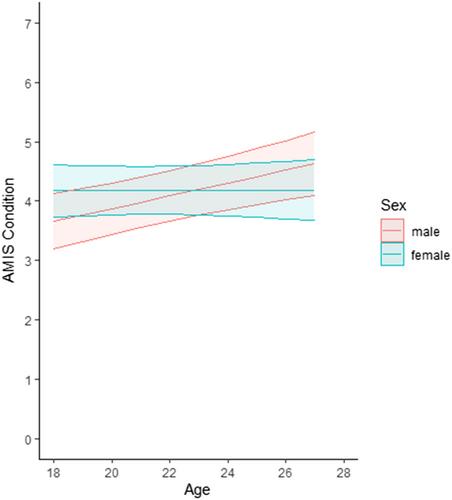
This study included 99 respondents age 18 to 27 years old. About half were female (52.5%) and White (52.5%); 15.2% were Black, and about a third were Hispanic/Latino (32.3%). Eighty-seven AYAs (87.9%) had myelomeningocele. The lesion level was 31.3% sacral, 48.5% lumbar and 18.2% thoracic. A third of the families earned less than 50K. Overall, self-management growth was dependent on age, sex, and race/ethnicity, but not income. Growth in condition self-management depended on sex; only males demonstrated increasing growth (
= 0.11, p < 0.001). Black participants endorsed higher increasing total and condition self-management when compared with White (
diff = 0.17 and 0.17, respectively, both p < 0.05) and Hispanic/Latino (
diff = 0.18 and 0.21, respectively, both p = 0.02) respondents.
Conclusion
This study provides evidence of differences in growth of self-management by demographic/social determinants of health. Possible reasons for differences are discussed. Predictors of changes in self-management behaviours over time in young adults with SB can identify subgroups in need of further study.
期刊介绍:
Child: care, health and development is an international, peer-reviewed journal which publishes papers dealing with all aspects of the health and development of children and young people. We aim to attract quantitative and qualitative research papers relevant to people from all disciplines working in child health. We welcome studies which examine the effects of social and environmental factors on health and development as well as those dealing with clinical issues, the organization of services and health policy. We particularly encourage the submission of studies related to those who are disadvantaged by physical, developmental, emotional and social problems. The journal also aims to collate important research findings and to provide a forum for discussion of global child health issues.



 京公网安备 11010802042870号
京ICP备2023020795号-1
京公网安备 11010802042870号
京ICP备2023020795号-1

 分享
分享
 求助内容:
求助内容: 应助结果提醒方式:
 扫码关注我们
