Matthew L Farmer, Adam M Conley, Joseph F Dilustro
{"title":"Delayed fatal intracranial hemorrhage in a pediatric patient following resection and adjuvant cranial radiotherapy for ependymoma: illustrative case.","authors":"Matthew L Farmer, Adam M Conley, Joseph F Dilustro","doi":"10.3171/CASE22470","DOIUrl":null,"url":null,"abstract":"<p><strong>Background: </strong>Cranial radiotherapy (CRT) is an important treatment modality for malignancies of the central nervous system. CRT has deleterious effects that are commonly classified into acute, early delayed, and late delayed. Late-delayed effects include weakening of the cerebral vasculature and the development of structurally abnormal vasculature, potentially leading to ischemic or hemorrhagic events within the brain parenchyma. Such events are not well reported in the pediatric population.</p><p><strong>Observations: </strong>The authors present the case of a 14-year-old patient 8.2 years after CRT who experienced intracerebral hemorrhage. Autopsy demonstrated minimal pathological change without evidence of vascular malformation or aneurysm. These findings were unexpected given the degree of hemorrhage in this case. However, in the absence of other etiologies, it was believed that late-delayed radiation effect was the cause of this patient's fatal hemorrhage.</p><p><strong>Lessons: </strong>Although not all cases of pediatric spontaneous intracerebral hemorrhage will have a determined etiology, the authors' patient's previous CRT may represent a poorly defined risk for late-delayed hemorrhage. This correlation has not been previously reported and should be considered in pediatric patients presenting with spontaneous hemorrhage in a delayed fashion after CRT. Neurosurgeons must not be dismissive of unexpected events in the remote postoperative period.</p>","PeriodicalId":16554,"journal":{"name":"Journal of Neurosurgery: Case Lessons","volume":"5 19","pages":""},"PeriodicalIF":0.0000,"publicationDate":"2023-05-08","publicationTypes":"Journal Article","fieldsOfStudy":null,"isOpenAccess":false,"openAccessPdf":"https://ftp.ncbi.nlm.nih.gov/pub/pmc/oa_pdf/b5/b6/CASE22470.PMC10550690.pdf","citationCount":"0","resultStr":null,"platform":"Semanticscholar","paperid":null,"PeriodicalName":"Journal of Neurosurgery: Case Lessons","FirstCategoryId":"1085","ListUrlMain":"https://doi.org/10.3171/CASE22470","RegionNum":0,"RegionCategory":null,"ArticlePicture":[],"TitleCN":null,"AbstractTextCN":null,"PMCID":null,"EPubDate":"","PubModel":"","JCR":"","JCRName":"","Score":null,"Total":0}
引用次数: 0
Abstract
Background: Cranial radiotherapy (CRT) is an important treatment modality for malignancies of the central nervous system. CRT has deleterious effects that are commonly classified into acute, early delayed, and late delayed. Late-delayed effects include weakening of the cerebral vasculature and the development of structurally abnormal vasculature, potentially leading to ischemic or hemorrhagic events within the brain parenchyma. Such events are not well reported in the pediatric population.
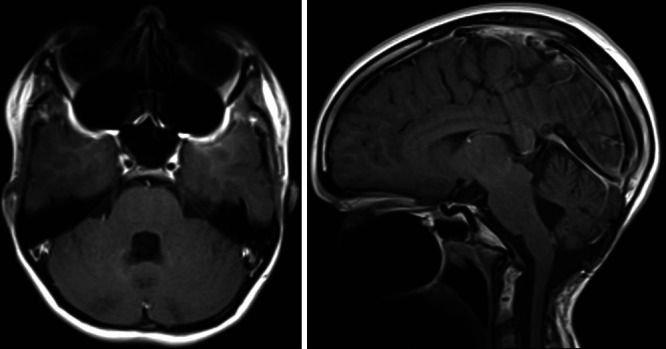
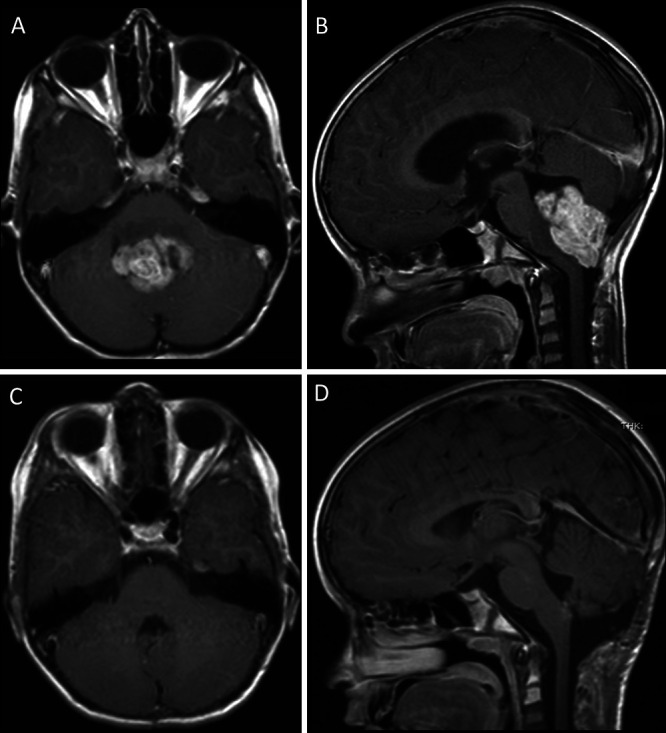
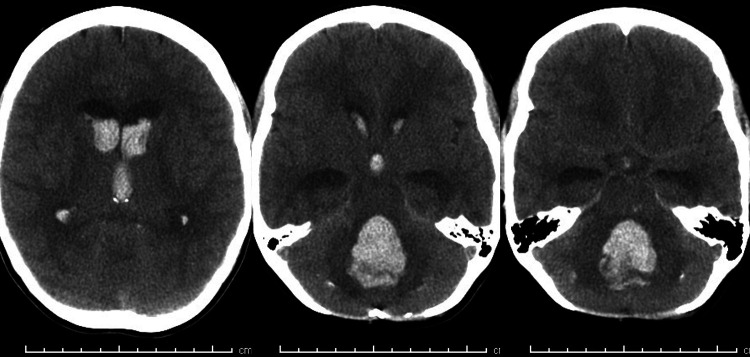
Observations: The authors present the case of a 14-year-old patient 8.2 years after CRT who experienced intracerebral hemorrhage. Autopsy demonstrated minimal pathological change without evidence of vascular malformation or aneurysm. These findings were unexpected given the degree of hemorrhage in this case. However, in the absence of other etiologies, it was believed that late-delayed radiation effect was the cause of this patient's fatal hemorrhage.
Lessons: Although not all cases of pediatric spontaneous intracerebral hemorrhage will have a determined etiology, the authors' patient's previous CRT may represent a poorly defined risk for late-delayed hemorrhage. This correlation has not been previously reported and should be considered in pediatric patients presenting with spontaneous hemorrhage in a delayed fashion after CRT. Neurosurgeons must not be dismissive of unexpected events in the remote postoperative period.



 京公网安备 11010802042870号
京ICP备2023020795号-1
京公网安备 11010802042870号
京ICP备2023020795号-1

 分享
分享

 求助内容:
求助内容: 应助结果提醒方式:
 扫码关注我们
