Peripheral Blood Eosinophilia and Neutrophil Lymphocyte Ratio in the Choice of Antibiotic and/or Steroid in Patients Hospitalized with Acute Exacerbations of Chronic Obstructive Pulmonary Disease.
{"title":"Peripheral Blood Eosinophilia and Neutrophil Lymphocyte Ratio in the Choice of Antibiotic and/or Steroid in Patients Hospitalized with Acute Exacerbations of Chronic Obstructive Pulmonary Disease.","authors":"Neslihan Köse Kabil, Zuhal Karakurt, Baran Gündoğuş, Aylin Güngör, Kübra Akyüz, Hatice Türker","doi":"10.5152/ThoracResPract.2023.21281","DOIUrl":null,"url":null,"abstract":"<p><strong>Objective: </strong>The choice of steroids and antibiotics is optional for the management of acute exacerbation of chronic obstructive pul- monary diseases according to international guidelines. The study hypothesized that the steroid and antibiotic choice can be decided by using the neutrophil-lymphocyte ratio and peripheral blood eosinophilia in patients with acute exacerbation of chronic obstructive pulmonary diseases. This would reduce the rate of re-hospitalization in 28 days.</p><p><strong>Material and methods: </strong>Patients were hospitalized due to acute exacerbation of chronic obstructive pulmonary diseases from February 1, 2018, to January 31, 2019. Patients were divided into 2 groups: Sureyyapasa protocol group and conventional group. In the Sureyyapasa protocol group, patients were divided into 4 subgroups according to peripheral blood eosinophilia and neutrophil-lympho- cyte ratio values. Treatment success was defined as 5-7 days acute exacerbation of chronic obstructive pulmonary diseases treatment was enough to discharge and no re-hospitalization within 28 days. Treatment failure was defined that the hospital stay was longer than 7 days or transport to intensive care and death or readmission to the hospital due to acute exacerbation of chronic obstructive pulmonary diseases within 28 days after discharge.</p><p><strong>Results: </strong>The Sureyyapasa protocol group (n = 96) and the conventional group (n = 95) were randomly selected. The conventional group and Sureyyapasa protocol group had similar hospital stay (P = .22), and antibiotic and steroid uses were significantly higher in the conventional group than the Sureyyapasa protocol group (antibiotic use 100% vs. 83%, P < .001 and steroid use 84% vs. 29%, P < .001, respectively). Treatment failure in the conventional Group (n = 23, 24%) is higher than the Sureyyapasa protocol group (n = 17, 18%).</p><p><strong>Conclusions: </strong>Initiating treatment by evaluating eosinophilia and neutrophil-lymphocyte ratio in patients with acute exacerbation of chronic obstructive pulmonary diseases in the ward reduces unnecessary antibiotic and steroid use and cost rates in hospitalizations.</p>","PeriodicalId":75221,"journal":{"name":"Thoracic research and practice","volume":"24 4","pages":"220-227"},"PeriodicalIF":0.6000,"publicationDate":"2023-07-01","publicationTypes":"Journal Article","fieldsOfStudy":null,"isOpenAccess":false,"openAccessPdf":"https://ftp.ncbi.nlm.nih.gov/pub/pmc/oa_pdf/c0/b2/trp-24-4-220.PMC10544287.pdf","citationCount":"0","resultStr":null,"platform":"Semanticscholar","paperid":null,"PeriodicalName":"Thoracic research and practice","FirstCategoryId":"1085","ListUrlMain":"https://doi.org/10.5152/ThoracResPract.2023.21281","RegionNum":0,"RegionCategory":null,"ArticlePicture":[],"TitleCN":null,"AbstractTextCN":null,"PMCID":null,"EPubDate":"","PubModel":"","JCR":"0","JCRName":"RESPIRATORY SYSTEM","Score":null,"Total":0}
引用次数: 0
Abstract
Objective: The choice of steroids and antibiotics is optional for the management of acute exacerbation of chronic obstructive pul- monary diseases according to international guidelines. The study hypothesized that the steroid and antibiotic choice can be decided by using the neutrophil-lymphocyte ratio and peripheral blood eosinophilia in patients with acute exacerbation of chronic obstructive pulmonary diseases. This would reduce the rate of re-hospitalization in 28 days.
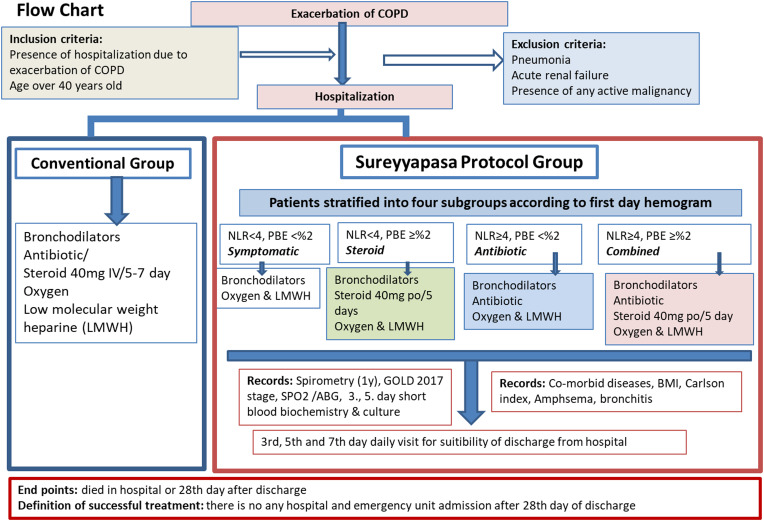
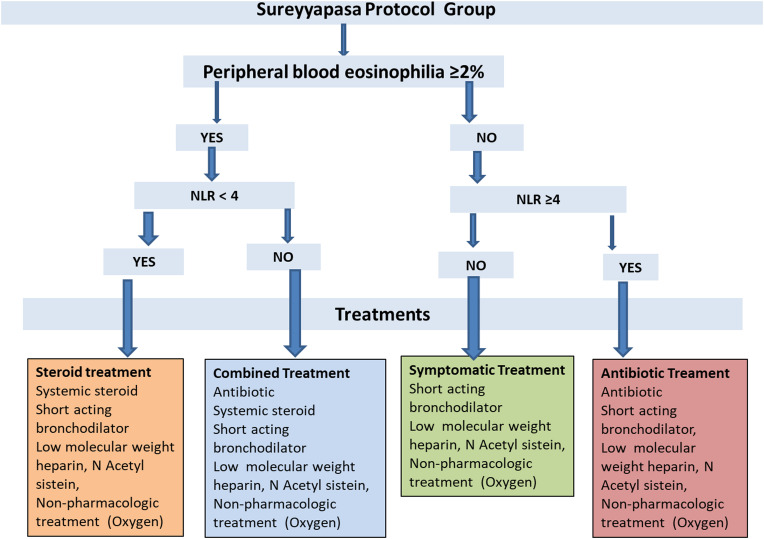
Material and methods: Patients were hospitalized due to acute exacerbation of chronic obstructive pulmonary diseases from February 1, 2018, to January 31, 2019. Patients were divided into 2 groups: Sureyyapasa protocol group and conventional group. In the Sureyyapasa protocol group, patients were divided into 4 subgroups according to peripheral blood eosinophilia and neutrophil-lympho- cyte ratio values. Treatment success was defined as 5-7 days acute exacerbation of chronic obstructive pulmonary diseases treatment was enough to discharge and no re-hospitalization within 28 days. Treatment failure was defined that the hospital stay was longer than 7 days or transport to intensive care and death or readmission to the hospital due to acute exacerbation of chronic obstructive pulmonary diseases within 28 days after discharge.
Results: The Sureyyapasa protocol group (n = 96) and the conventional group (n = 95) were randomly selected. The conventional group and Sureyyapasa protocol group had similar hospital stay (P = .22), and antibiotic and steroid uses were significantly higher in the conventional group than the Sureyyapasa protocol group (antibiotic use 100% vs. 83%, P < .001 and steroid use 84% vs. 29%, P < .001, respectively). Treatment failure in the conventional Group (n = 23, 24%) is higher than the Sureyyapasa protocol group (n = 17, 18%).
Conclusions: Initiating treatment by evaluating eosinophilia and neutrophil-lymphocyte ratio in patients with acute exacerbation of chronic obstructive pulmonary diseases in the ward reduces unnecessary antibiotic and steroid use and cost rates in hospitalizations.




 京公网安备 11010802042870号
京ICP备2023020795号-1
京公网安备 11010802042870号
京ICP备2023020795号-1

 分享
分享

 求助内容:
求助内容: 应助结果提醒方式:
 扫码关注我们
