Clinical Efficacy Evaluation of Ultrasound-Guided C2 Dorsal Root Nerve Pulsed Radiofrequency Combined with Stellate Ganglion Block in the Treatment of Cervicogenic Headache: A Retrospective Cohort Study.
{"title":"Clinical Efficacy Evaluation of Ultrasound-Guided C2 Dorsal Root Nerve Pulsed Radiofrequency Combined with Stellate Ganglion Block in the Treatment of Cervicogenic Headache: A Retrospective Cohort Study.","authors":"Lu Hua, Kaiyuan Sha, HongCheng Lu, Ying Han, Cehua Ou, Jiang-Lin Wang, Yue Zhang","doi":"10.2147/JPR.S409226","DOIUrl":null,"url":null,"abstract":"<p><strong>Purpose: </strong>To explore the therapeutic effect of C2 dorsal root ganglion pulsed radiofrequency (PRF) combined with stellate ganglion block (SGB) in patients with cervicogenic headache (CEH).</p><p><strong>Patients and methods: </strong>We retrospectively reviewed 90 patients diagnosed with CEH who were admitted to our hospital between May 2019 and May 2022. All patients were divided into three groups (n = 30 each) according to the actual treatment method used: ultrasound-guided SGB, ultrasound-guided C2 dorsal root ganglion PRF treatment, and ultrasound-guided C2 dorsal root ganglion PRF combined with SGB treatment. Patients' pain intensity, sleep, and mood changes were assessed by statistically analyzing their pain visual analog scale (VAS), Pittsburgh Sleep Quality Inventory (PSQI), and short-form McGill Pain Questionnaire affective item scores before and after treatment.</p><p><strong>Results: </strong>The post-treatment VAS, PSQI, and McGill scores were significantly decreased in all patients (<i>P</i> < 0.05), and all three scores in ultrasound-guided C2 dorsal root ganglion PRF combined with SGB were lower than those in ultrasound-guided SGB alone and ultrasound-guided C2 dorsal root ganglion PRF alone (<i>P</i> < 0.05).</p><p><strong>Conclusion: </strong>The use of ultrasound-guided C2 dorsal root ganglion PRF combined with SGB in patients with CHE is effective in alleviating pain and improving sleep, and deserves to be replicated in the clinic.</p>","PeriodicalId":16661,"journal":{"name":"Journal of Pain Research","volume":"16 ","pages":"2655-2663"},"PeriodicalIF":2.5000,"publicationDate":"2023-01-01","publicationTypes":"Journal Article","fieldsOfStudy":null,"isOpenAccess":false,"openAccessPdf":"https://ftp.ncbi.nlm.nih.gov/pub/pmc/oa_pdf/02/ad/jpr-16-2655.PMC10392809.pdf","citationCount":"0","resultStr":null,"platform":"Semanticscholar","paperid":null,"PeriodicalName":"Journal of Pain Research","FirstCategoryId":"3","ListUrlMain":"https://doi.org/10.2147/JPR.S409226","RegionNum":3,"RegionCategory":"医学","ArticlePicture":[],"TitleCN":null,"AbstractTextCN":null,"PMCID":null,"EPubDate":"","PubModel":"","JCR":"Q2","JCRName":"CLINICAL NEUROLOGY","Score":null,"Total":0}
引用次数: 0
Abstract
Purpose: To explore the therapeutic effect of C2 dorsal root ganglion pulsed radiofrequency (PRF) combined with stellate ganglion block (SGB) in patients with cervicogenic headache (CEH).
Patients and methods: We retrospectively reviewed 90 patients diagnosed with CEH who were admitted to our hospital between May 2019 and May 2022. All patients were divided into three groups (n = 30 each) according to the actual treatment method used: ultrasound-guided SGB, ultrasound-guided C2 dorsal root ganglion PRF treatment, and ultrasound-guided C2 dorsal root ganglion PRF combined with SGB treatment. Patients' pain intensity, sleep, and mood changes were assessed by statistically analyzing their pain visual analog scale (VAS), Pittsburgh Sleep Quality Inventory (PSQI), and short-form McGill Pain Questionnaire affective item scores before and after treatment.
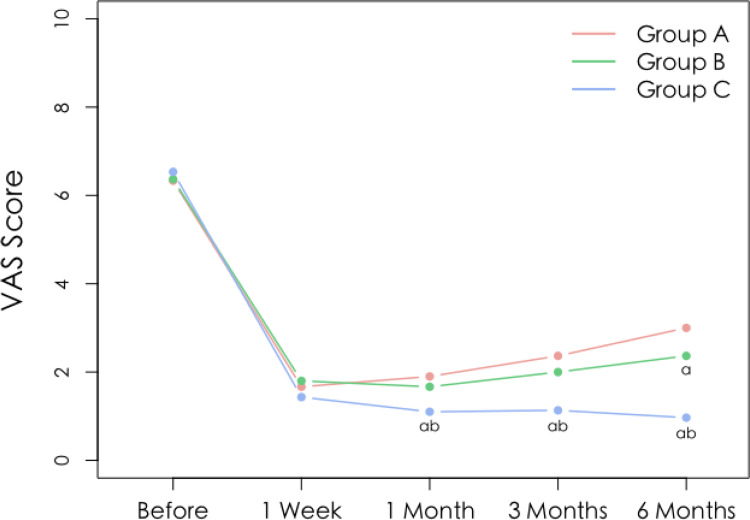
Results: The post-treatment VAS, PSQI, and McGill scores were significantly decreased in all patients (P < 0.05), and all three scores in ultrasound-guided C2 dorsal root ganglion PRF combined with SGB were lower than those in ultrasound-guided SGB alone and ultrasound-guided C2 dorsal root ganglion PRF alone (P < 0.05).
Conclusion: The use of ultrasound-guided C2 dorsal root ganglion PRF combined with SGB in patients with CHE is effective in alleviating pain and improving sleep, and deserves to be replicated in the clinic.
期刊介绍:
Journal of Pain Research is an international, peer-reviewed, open access journal that welcomes laboratory and clinical findings in the fields of pain research and the prevention and management of pain. Original research, reviews, symposium reports, hypothesis formation and commentaries are all considered for publication. Additionally, the journal now welcomes the submission of pain-policy-related editorials and commentaries, particularly in regard to ethical, regulatory, forensic, and other legal issues in pain medicine, and to the education of pain practitioners and researchers.




 京公网安备 11010802042870号
京ICP备2023020795号-1
京公网安备 11010802042870号
京ICP备2023020795号-1

 分享
分享
 求助内容:
求助内容: 应助结果提醒方式:
 扫码关注我们
