Angela L. Zhou , Davin R. Jensen , Francis C. Peterson , Monica A. Thomas , Roman R. Schlimgen , Michael B. Dwinell , Brian C. Smith , Brian F. Volkman
{"title":"人趋化因子CCL28小分子配体的片段药物发现","authors":"Angela L. Zhou , Davin R. Jensen , Francis C. Peterson , Monica A. Thomas , Roman R. Schlimgen , Michael B. Dwinell , Brian C. Smith , Brian F. Volkman","doi":"10.1016/j.slasd.2023.02.004","DOIUrl":null,"url":null,"abstract":"<div><p>The mucosal chemokine CCL28 is a promising target for immunotherapy drug development due to its elevated expression level in epithelial cells and critical role in creating and maintaining an immunosuppressive tumor microenvironment. Using sulfotyrosine as a probe, NMR chemical shift mapping identified a potential receptor-binding hotspot on the human CCL28 surface. CCL28 was screened against 2,678 commercially available chemical fragments by 2D NMR, yielding thirteen verified hits. Computational docking predicted that two fragments could occupy adjoining subsites within the sulfotyrosine recognition cleft. Dual NMR titrations confirmed their ability to bind CCL28 simultaneously, thereby validating an initial fragment pair for linking and merging strategies to design high-potency CCL28 inhibitors.</p></div>","PeriodicalId":21764,"journal":{"name":"SLAS Discovery","volume":"28 4","pages":"Pages 163-169"},"PeriodicalIF":2.7000,"publicationDate":"2023-06-01","publicationTypes":"Journal Article","fieldsOfStudy":null,"isOpenAccess":false,"openAccessPdf":"https://www.ncbi.nlm.nih.gov/pmc/articles/PMC10339762/pdf/","citationCount":"0","resultStr":"{\"title\":\"Fragment-based drug discovery of small molecule ligands for the human chemokine CCL28\",\"authors\":\"Angela L. Zhou , Davin R. Jensen , Francis C. Peterson , Monica A. Thomas , Roman R. Schlimgen , Michael B. Dwinell , Brian C. Smith , Brian F. Volkman\",\"doi\":\"10.1016/j.slasd.2023.02.004\",\"DOIUrl\":null,\"url\":null,\"abstract\":\"<div><p>The mucosal chemokine CCL28 is a promising target for immunotherapy drug development due to its elevated expression level in epithelial cells and critical role in creating and maintaining an immunosuppressive tumor microenvironment. Using sulfotyrosine as a probe, NMR chemical shift mapping identified a potential receptor-binding hotspot on the human CCL28 surface. CCL28 was screened against 2,678 commercially available chemical fragments by 2D NMR, yielding thirteen verified hits. Computational docking predicted that two fragments could occupy adjoining subsites within the sulfotyrosine recognition cleft. Dual NMR titrations confirmed their ability to bind CCL28 simultaneously, thereby validating an initial fragment pair for linking and merging strategies to design high-potency CCL28 inhibitors.</p></div>\",\"PeriodicalId\":21764,\"journal\":{\"name\":\"SLAS Discovery\",\"volume\":\"28 4\",\"pages\":\"Pages 163-169\"},\"PeriodicalIF\":2.7000,\"publicationDate\":\"2023-06-01\",\"publicationTypes\":\"Journal Article\",\"fieldsOfStudy\":null,\"isOpenAccess\":false,\"openAccessPdf\":\"https://www.ncbi.nlm.nih.gov/pmc/articles/PMC10339762/pdf/\",\"citationCount\":\"0\",\"resultStr\":null,\"platform\":\"Semanticscholar\",\"paperid\":null,\"PeriodicalName\":\"SLAS Discovery\",\"FirstCategoryId\":\"99\",\"ListUrlMain\":\"https://www.sciencedirect.com/science/article/pii/S2472555223000199\",\"RegionNum\":4,\"RegionCategory\":\"生物学\",\"ArticlePicture\":[],\"TitleCN\":null,\"AbstractTextCN\":null,\"PMCID\":null,\"EPubDate\":\"2023/2/23 0:00:00\",\"PubModel\":\"Epub\",\"JCR\":\"Q2\",\"JCRName\":\"BIOCHEMICAL RESEARCH METHODS\",\"Score\":null,\"Total\":0}","platform":"Semanticscholar","paperid":null,"PeriodicalName":"SLAS Discovery","FirstCategoryId":"99","ListUrlMain":"https://www.sciencedirect.com/science/article/pii/S2472555223000199","RegionNum":4,"RegionCategory":"生物学","ArticlePicture":[],"TitleCN":null,"AbstractTextCN":null,"PMCID":null,"EPubDate":"2023/2/23 0:00:00","PubModel":"Epub","JCR":"Q2","JCRName":"BIOCHEMICAL RESEARCH METHODS","Score":null,"Total":0}
Fragment-based drug discovery of small molecule ligands for the human chemokine CCL28
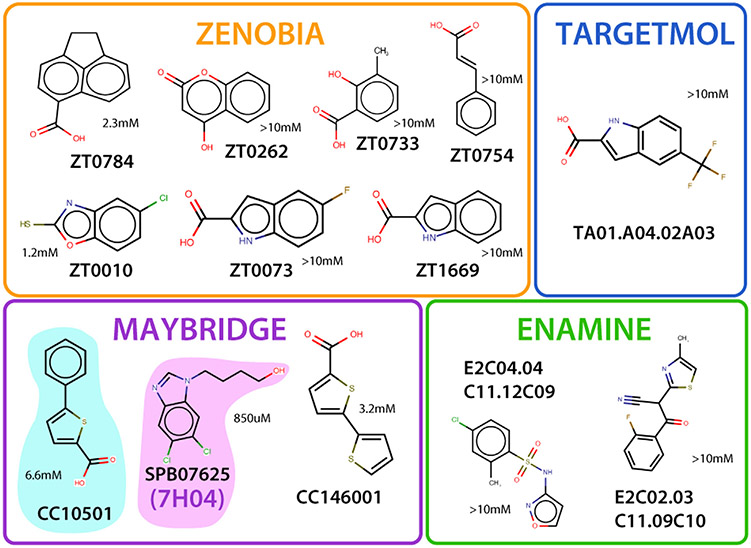
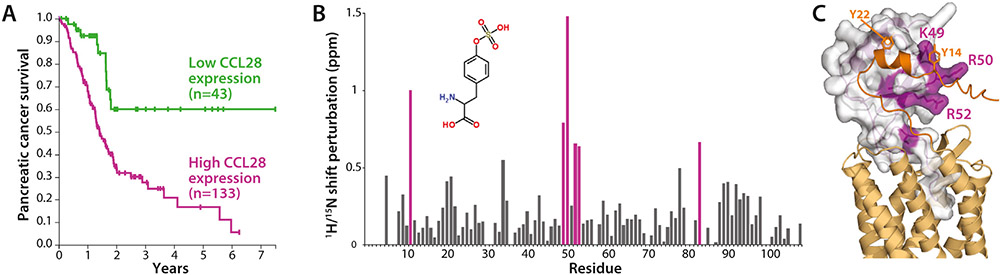
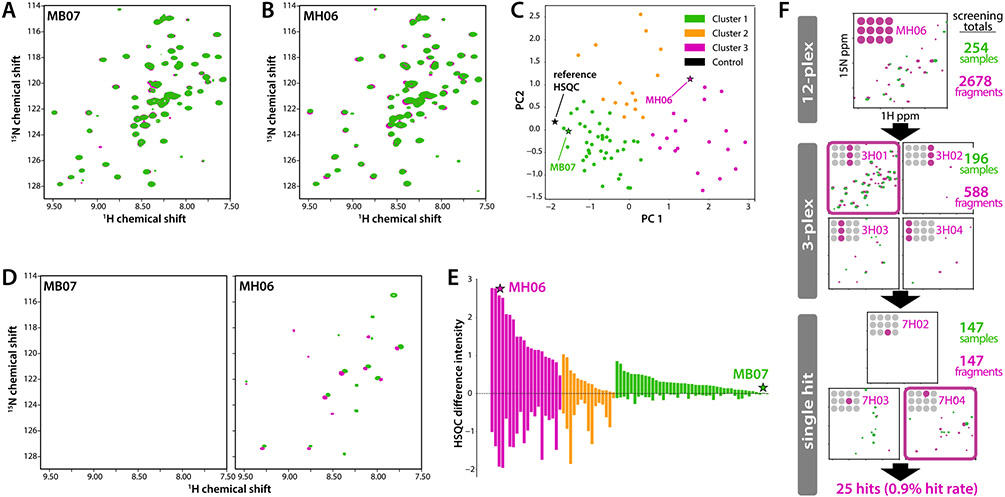
The mucosal chemokine CCL28 is a promising target for immunotherapy drug development due to its elevated expression level in epithelial cells and critical role in creating and maintaining an immunosuppressive tumor microenvironment. Using sulfotyrosine as a probe, NMR chemical shift mapping identified a potential receptor-binding hotspot on the human CCL28 surface. CCL28 was screened against 2,678 commercially available chemical fragments by 2D NMR, yielding thirteen verified hits. Computational docking predicted that two fragments could occupy adjoining subsites within the sulfotyrosine recognition cleft. Dual NMR titrations confirmed their ability to bind CCL28 simultaneously, thereby validating an initial fragment pair for linking and merging strategies to design high-potency CCL28 inhibitors.
期刊介绍:
Advancing Life Sciences R&D: SLAS Discovery reports how scientists develop and utilize novel technologies and/or approaches to provide and characterize chemical and biological tools to understand and treat human disease.
SLAS Discovery is a peer-reviewed journal that publishes scientific reports that enable and improve target validation, evaluate current drug discovery technologies, provide novel research tools, and incorporate research approaches that enhance depth of knowledge and drug discovery success.
SLAS Discovery emphasizes scientific and technical advances in target identification/validation (including chemical probes, RNA silencing, gene editing technologies); biomarker discovery; assay development; virtual, medium- or high-throughput screening (biochemical and biological, biophysical, phenotypic, toxicological, ADME); lead generation/optimization; chemical biology; and informatics (data analysis, image analysis, statistics, bio- and chemo-informatics). Review articles on target biology, new paradigms in drug discovery and advances in drug discovery technologies.
SLAS Discovery is of particular interest to those involved in analytical chemistry, applied microbiology, automation, biochemistry, bioengineering, biomedical optics, biotechnology, bioinformatics, cell biology, DNA science and technology, genetics, information technology, medicinal chemistry, molecular biology, natural products chemistry, organic chemistry, pharmacology, spectroscopy, and toxicology.
SLAS Discovery is a member of the Committee on Publication Ethics (COPE) and was published previously (1996-2016) as the Journal of Biomolecular Screening (JBS).




 京公网安备 11010802042870号
京ICP备2023020795号-1
京公网安备 11010802042870号
京ICP备2023020795号-1

 分享
分享
 求助内容:
求助内容: 应助结果提醒方式:
 扫码关注我们
