{"title":"骨髓增生异常综合征的免疫失调和潜在的靶向治疗。","authors":"Xiaoying Zhang, Xingcheng Yang, Ling Ma, Yicheng Zhang, Jia Wei","doi":"10.1177/20406207231183330","DOIUrl":null,"url":null,"abstract":"<p><p>Myelodysplastic syndrome (MDS) is a heterogeneous group of clonal hematological diseases and a high risk for transformation to acute myeloid leukemia (AML). The identification of key genetic alterations in MDS has enhanced our understanding of the pathogenesis and evolution. In recent years, it has been found that both innate and adaptive immune signaling are activated in the hematopoietic niche of MDS with aberrant cytokine secretion in the bone marrow microenvironment. It is also clear that immune dysregulation plays an important role in the occurrence and progression of MDS, especially the destruction of the bone marrow microenvironment, including hematopoiesis and stromal components. The purpose of this review is to explore the role of immune cells, the immune microenvironment, and cytokines in the pathogenesis of MDS. Insights into the mechanisms of these variants may facilitate the development of novel effective treatments to prevent disease progression.</p>","PeriodicalId":23048,"journal":{"name":"Therapeutic Advances in Hematology","volume":"14 ","pages":"20406207231183330"},"PeriodicalIF":3.1000,"publicationDate":"2023-01-01","publicationTypes":"Journal Article","fieldsOfStudy":null,"isOpenAccess":false,"openAccessPdf":"https://ftp.ncbi.nlm.nih.gov/pub/pmc/oa_pdf/60/f2/10.1177_20406207231183330.PMC10399277.pdf","citationCount":"0","resultStr":"{\"title\":\"Immune dysregulation and potential targeted therapy in myelodysplastic syndrome.\",\"authors\":\"Xiaoying Zhang, Xingcheng Yang, Ling Ma, Yicheng Zhang, Jia Wei\",\"doi\":\"10.1177/20406207231183330\",\"DOIUrl\":null,\"url\":null,\"abstract\":\"<p><p>Myelodysplastic syndrome (MDS) is a heterogeneous group of clonal hematological diseases and a high risk for transformation to acute myeloid leukemia (AML). The identification of key genetic alterations in MDS has enhanced our understanding of the pathogenesis and evolution. In recent years, it has been found that both innate and adaptive immune signaling are activated in the hematopoietic niche of MDS with aberrant cytokine secretion in the bone marrow microenvironment. It is also clear that immune dysregulation plays an important role in the occurrence and progression of MDS, especially the destruction of the bone marrow microenvironment, including hematopoiesis and stromal components. The purpose of this review is to explore the role of immune cells, the immune microenvironment, and cytokines in the pathogenesis of MDS. Insights into the mechanisms of these variants may facilitate the development of novel effective treatments to prevent disease progression.</p>\",\"PeriodicalId\":23048,\"journal\":{\"name\":\"Therapeutic Advances in Hematology\",\"volume\":\"14 \",\"pages\":\"20406207231183330\"},\"PeriodicalIF\":3.1000,\"publicationDate\":\"2023-01-01\",\"publicationTypes\":\"Journal Article\",\"fieldsOfStudy\":null,\"isOpenAccess\":false,\"openAccessPdf\":\"https://ftp.ncbi.nlm.nih.gov/pub/pmc/oa_pdf/60/f2/10.1177_20406207231183330.PMC10399277.pdf\",\"citationCount\":\"0\",\"resultStr\":null,\"platform\":\"Semanticscholar\",\"paperid\":null,\"PeriodicalName\":\"Therapeutic Advances in Hematology\",\"FirstCategoryId\":\"3\",\"ListUrlMain\":\"https://doi.org/10.1177/20406207231183330\",\"RegionNum\":3,\"RegionCategory\":\"医学\",\"ArticlePicture\":[],\"TitleCN\":null,\"AbstractTextCN\":null,\"PMCID\":null,\"EPubDate\":\"\",\"PubModel\":\"\",\"JCR\":\"Q2\",\"JCRName\":\"HEMATOLOGY\",\"Score\":null,\"Total\":0}","platform":"Semanticscholar","paperid":null,"PeriodicalName":"Therapeutic Advances in Hematology","FirstCategoryId":"3","ListUrlMain":"https://doi.org/10.1177/20406207231183330","RegionNum":3,"RegionCategory":"医学","ArticlePicture":[],"TitleCN":null,"AbstractTextCN":null,"PMCID":null,"EPubDate":"","PubModel":"","JCR":"Q2","JCRName":"HEMATOLOGY","Score":null,"Total":0}
Immune dysregulation and potential targeted therapy in myelodysplastic syndrome.
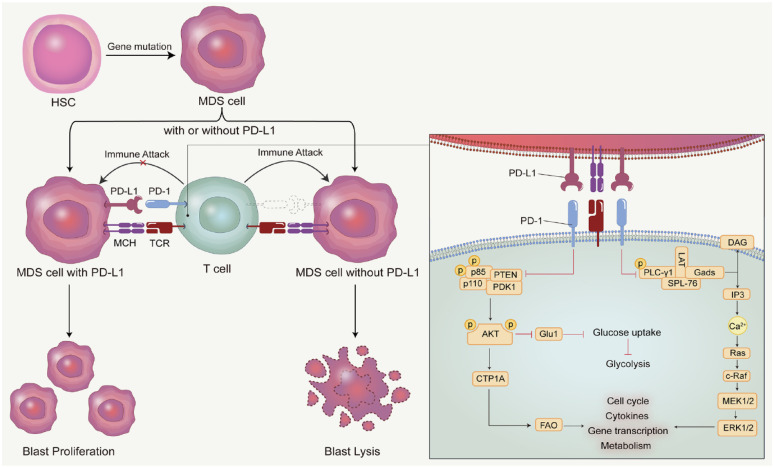
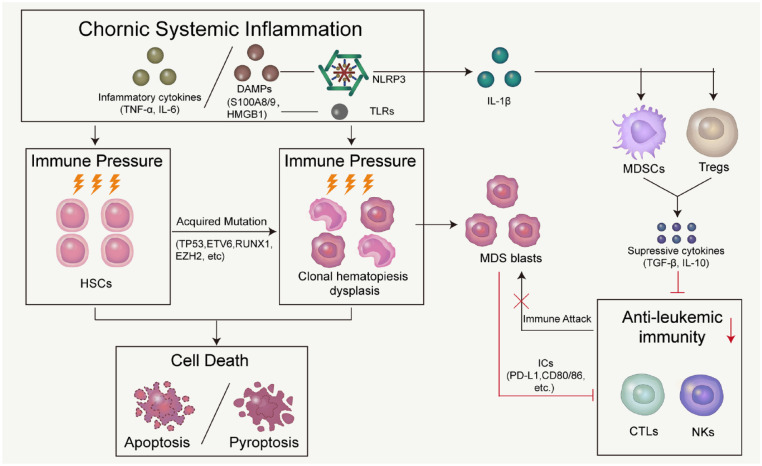
Myelodysplastic syndrome (MDS) is a heterogeneous group of clonal hematological diseases and a high risk for transformation to acute myeloid leukemia (AML). The identification of key genetic alterations in MDS has enhanced our understanding of the pathogenesis and evolution. In recent years, it has been found that both innate and adaptive immune signaling are activated in the hematopoietic niche of MDS with aberrant cytokine secretion in the bone marrow microenvironment. It is also clear that immune dysregulation plays an important role in the occurrence and progression of MDS, especially the destruction of the bone marrow microenvironment, including hematopoiesis and stromal components. The purpose of this review is to explore the role of immune cells, the immune microenvironment, and cytokines in the pathogenesis of MDS. Insights into the mechanisms of these variants may facilitate the development of novel effective treatments to prevent disease progression.
期刊介绍:
Therapeutic Advances in Hematology delivers the highest quality peer-reviewed articles, reviews, and scholarly comment on pioneering efforts and innovative studies across all areas of hematology. The journal has a strong clinical and pharmacological focus and is aimed at clinicians and researchers in hematology, providing a forum in print and online for publishing the highest quality articles in this area.






 京公网安备 11010802042870号
京ICP备2023020795号-1
京公网安备 11010802042870号
京ICP备2023020795号-1

 分享
分享
 求助内容:
求助内容: 应助结果提醒方式:
 扫码关注我们
