Navjot Kaur, Atul Khanna, Puneet Kaur, M N Singh, A K Sinha
{"title":"利用x射线衍射、Rietveld分析和反向蒙特卡罗模拟对α-V2O5、α-TeO2和xV2O5-(100 - x)TeO2玻璃的近程结构进行了比较研究。","authors":"Navjot Kaur, Atul Khanna, Puneet Kaur, M N Singh, A K Sinha","doi":"10.1107/S2052520622011581","DOIUrl":null,"url":null,"abstract":"<p><p>Vanadium-tellurite glasses, tetragonal TeO<sub>2</sub> and orthorhombic V<sub>2</sub>O<sub>5</sub> crystalline samples were characterized for their atomic structure properties by synchrotron X-ray diffraction, pair distribution function analysis, reverse Monte Carlo simulations (RMC) and Rietveld analysis. The pair correlation function, G(r), of V<sub>2</sub>O<sub>5</sub> shows the first peak at 1.61 Å. G(r) of TeO<sub>2</sub> shows three peaks at 1.57, 2.13 and 2.88 Å due to Te-O linkages of three different lengths, whereas the Te-Te atomic pair correlation shows a peak at 3.85 Å. The average coordination number of V with O in crystalline V<sub>2</sub>O<sub>5</sub> is 4.39 while that of Te with O in crystalline TeO<sub>2</sub> is 3.71. G(r) of the vanadium tellurite glass shows the first peak at 1.90 Å due to overlapping Te-O and V-O atomic pair correlations. The RMC analysis on diffraction data of glasses found that the V-O coordination number is in the range 5.27-5.59 and the Te-O coordination number is 5.39-5.67. However, it is found that these coordination numbers cannot be clearly defined due to short-range disorder.</p>","PeriodicalId":7320,"journal":{"name":"Acta crystallographica Section B, Structural science, crystal engineering and materials","volume":"79 Pt 1","pages":"55-63"},"PeriodicalIF":2.5000,"publicationDate":"2023-02-01","publicationTypes":"Journal Article","fieldsOfStudy":null,"isOpenAccess":false,"openAccessPdf":"","citationCount":"0","resultStr":"{\"title\":\"Comparative study of the short-range structure of α-V<sub>2</sub>O<sub>5</sub>, α-TeO<sub>2</sub> and xV<sub>2</sub>O<sub>5</sub>-(100 - x)TeO<sub>2</sub> glasses using X-ray diffraction, Rietveld analysis and reverse Monte Carlo simulations.\",\"authors\":\"Navjot Kaur, Atul Khanna, Puneet Kaur, M N Singh, A K Sinha\",\"doi\":\"10.1107/S2052520622011581\",\"DOIUrl\":null,\"url\":null,\"abstract\":\"<p><p>Vanadium-tellurite glasses, tetragonal TeO<sub>2</sub> and orthorhombic V<sub>2</sub>O<sub>5</sub> crystalline samples were characterized for their atomic structure properties by synchrotron X-ray diffraction, pair distribution function analysis, reverse Monte Carlo simulations (RMC) and Rietveld analysis. The pair correlation function, G(r), of V<sub>2</sub>O<sub>5</sub> shows the first peak at 1.61 Å. G(r) of TeO<sub>2</sub> shows three peaks at 1.57, 2.13 and 2.88 Å due to Te-O linkages of three different lengths, whereas the Te-Te atomic pair correlation shows a peak at 3.85 Å. The average coordination number of V with O in crystalline V<sub>2</sub>O<sub>5</sub> is 4.39 while that of Te with O in crystalline TeO<sub>2</sub> is 3.71. G(r) of the vanadium tellurite glass shows the first peak at 1.90 Å due to overlapping Te-O and V-O atomic pair correlations. The RMC analysis on diffraction data of glasses found that the V-O coordination number is in the range 5.27-5.59 and the Te-O coordination number is 5.39-5.67. However, it is found that these coordination numbers cannot be clearly defined due to short-range disorder.</p>\",\"PeriodicalId\":7320,\"journal\":{\"name\":\"Acta crystallographica Section B, Structural science, crystal engineering and materials\",\"volume\":\"79 Pt 1\",\"pages\":\"55-63\"},\"PeriodicalIF\":2.5000,\"publicationDate\":\"2023-02-01\",\"publicationTypes\":\"Journal Article\",\"fieldsOfStudy\":null,\"isOpenAccess\":false,\"openAccessPdf\":\"\",\"citationCount\":\"0\",\"resultStr\":null,\"platform\":\"Semanticscholar\",\"paperid\":null,\"PeriodicalName\":\"Acta crystallographica Section B, Structural science, crystal engineering and materials\",\"FirstCategoryId\":\"92\",\"ListUrlMain\":\"https://doi.org/10.1107/S2052520622011581\",\"RegionNum\":3,\"RegionCategory\":\"化学\",\"ArticlePicture\":[],\"TitleCN\":null,\"AbstractTextCN\":null,\"PMCID\":null,\"EPubDate\":\"\",\"PubModel\":\"\",\"JCR\":\"Q3\",\"JCRName\":\"CHEMISTRY, MULTIDISCIPLINARY\",\"Score\":null,\"Total\":0}","platform":"Semanticscholar","paperid":null,"PeriodicalName":"Acta crystallographica Section B, Structural science, crystal engineering and materials","FirstCategoryId":"92","ListUrlMain":"https://doi.org/10.1107/S2052520622011581","RegionNum":3,"RegionCategory":"化学","ArticlePicture":[],"TitleCN":null,"AbstractTextCN":null,"PMCID":null,"EPubDate":"","PubModel":"","JCR":"Q3","JCRName":"CHEMISTRY, MULTIDISCIPLINARY","Score":null,"Total":0}
Comparative study of the short-range structure of α-V2O5, α-TeO2 and xV2O5-(100 - x)TeO2 glasses using X-ray diffraction, Rietveld analysis and reverse Monte Carlo simulations.
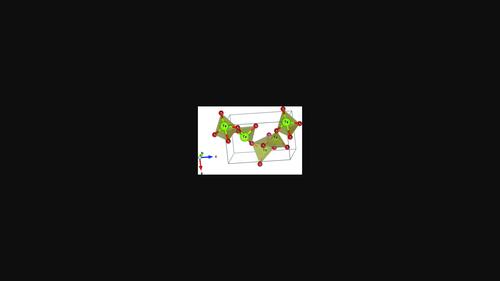
Vanadium-tellurite glasses, tetragonal TeO2 and orthorhombic V2O5 crystalline samples were characterized for their atomic structure properties by synchrotron X-ray diffraction, pair distribution function analysis, reverse Monte Carlo simulations (RMC) and Rietveld analysis. The pair correlation function, G(r), of V2O5 shows the first peak at 1.61 Å. G(r) of TeO2 shows three peaks at 1.57, 2.13 and 2.88 Å due to Te-O linkages of three different lengths, whereas the Te-Te atomic pair correlation shows a peak at 3.85 Å. The average coordination number of V with O in crystalline V2O5 is 4.39 while that of Te with O in crystalline TeO2 is 3.71. G(r) of the vanadium tellurite glass shows the first peak at 1.90 Å due to overlapping Te-O and V-O atomic pair correlations. The RMC analysis on diffraction data of glasses found that the V-O coordination number is in the range 5.27-5.59 and the Te-O coordination number is 5.39-5.67. However, it is found that these coordination numbers cannot be clearly defined due to short-range disorder.
期刊介绍:
Acta Crystallographica Section B: Structural Science, Crystal Engineering and Materials publishes scientific articles related to the structural science of compounds and materials in the widest sense. Knowledge of the arrangements of atoms, including their temporal variations and dependencies on temperature and pressure, is often the key to understanding physical and chemical phenomena and is crucial for the design of new materials and supramolecular devices. Acta Crystallographica B is the forum for the publication of such contributions. Scientific developments based on experimental studies as well as those based on theoretical approaches, including crystal-structure prediction, structure-property relations and the use of databases of crystal structures, are published.




 京公网安备 11010802042870号
京ICP备2023020795号-1
京公网安备 11010802042870号
京ICP备2023020795号-1

 分享
分享
 求助内容:
求助内容: 应助结果提醒方式:
 扫码关注我们
