Amal M El Afifi, Alia M Saeed, Gihad H Fekry, Mariam A Mostafa, Reham A Elmetwally, Inas M Hamed, Aliaa N Hussein, Gomaa M Hasanien
{"title":"托珠单抗联合利妥昔单抗成功治疗非输血依赖型地中海贫血的严重高溶血:1例报告。","authors":"Amal M El Afifi, Alia M Saeed, Gihad H Fekry, Mariam A Mostafa, Reham A Elmetwally, Inas M Hamed, Aliaa N Hussein, Gomaa M Hasanien","doi":"10.1159/000524743","DOIUrl":null,"url":null,"abstract":"<p><strong>Introduction: </strong>This is the fourth case reporting the administration of tocilizumab to control hyperhaemolysis. It was administered with rituximab to stop hyperhaemolysis refractory to frontline therapy. Hyperhaemolysis is a rare life-threatening subtype of delayed haemolytic transfusion reaction. Refractory cases pose a clinical challenge with no standard of care to date.</p><p><strong>Case presentation: </strong>A 29-year-old lady with non-transfusion-dependent thalassaemia presented with refractory hyperhaemolysis necessitating the administration of rituximab. This was complicated with anaemic heart failure and altered sensorium exacerbated with further transfusions. A nadir haemoglobin of 2.1 g/dL was reached after the initiation of rituximab, and her condition was too critical to wait for the slow expected improvement. Hence, tocilizumab was given as a bridging therapy to block haemolysis till the delayed onset of radical treatment.</p><p><strong>Conclusion: </strong>Tocilizumab can be effectively combined with rituximab to stop hyperhaemolytic episode refractory to first-line treatment when a prompt response is needed.</p>","PeriodicalId":75241,"journal":{"name":"","volume":"50 1","pages":"66-70"},"PeriodicalIF":0.0,"publicationDate":"2023-02-01","publicationTypes":"Journal Article","fieldsOfStudy":null,"isOpenAccess":false,"openAccessPdf":"https://ftp.ncbi.nlm.nih.gov/pub/pmc/oa_pdf/5e/4d/tmh-0050-0066.PMC9911996.pdf","citationCount":"1","resultStr":"{\"title\":\"Successful Management of Severe Hyperhaemolysis with Combined Tocilizumab and Rituximab in Non-Transfusion-Dependent Thalassaemia: A Case Report.\",\"authors\":\"Amal M El Afifi, Alia M Saeed, Gihad H Fekry, Mariam A Mostafa, Reham A Elmetwally, Inas M Hamed, Aliaa N Hussein, Gomaa M Hasanien\",\"doi\":\"10.1159/000524743\",\"DOIUrl\":null,\"url\":null,\"abstract\":\"<p><strong>Introduction: </strong>This is the fourth case reporting the administration of tocilizumab to control hyperhaemolysis. It was administered with rituximab to stop hyperhaemolysis refractory to frontline therapy. Hyperhaemolysis is a rare life-threatening subtype of delayed haemolytic transfusion reaction. Refractory cases pose a clinical challenge with no standard of care to date.</p><p><strong>Case presentation: </strong>A 29-year-old lady with non-transfusion-dependent thalassaemia presented with refractory hyperhaemolysis necessitating the administration of rituximab. This was complicated with anaemic heart failure and altered sensorium exacerbated with further transfusions. A nadir haemoglobin of 2.1 g/dL was reached after the initiation of rituximab, and her condition was too critical to wait for the slow expected improvement. Hence, tocilizumab was given as a bridging therapy to block haemolysis till the delayed onset of radical treatment.</p><p><strong>Conclusion: </strong>Tocilizumab can be effectively combined with rituximab to stop hyperhaemolytic episode refractory to first-line treatment when a prompt response is needed.</p>\",\"PeriodicalId\":75241,\"journal\":{\"name\":\"\",\"volume\":\"50 1\",\"pages\":\"66-70\"},\"PeriodicalIF\":0.0,\"publicationDate\":\"2023-02-01\",\"publicationTypes\":\"Journal Article\",\"fieldsOfStudy\":null,\"isOpenAccess\":false,\"openAccessPdf\":\"https://ftp.ncbi.nlm.nih.gov/pub/pmc/oa_pdf/5e/4d/tmh-0050-0066.PMC9911996.pdf\",\"citationCount\":\"1\",\"resultStr\":null,\"platform\":\"Semanticscholar\",\"paperid\":null,\"PeriodicalName\":\"\",\"FirstCategoryId\":\"3\",\"ListUrlMain\":\"https://doi.org/10.1159/000524743\",\"RegionNum\":0,\"RegionCategory\":null,\"ArticlePicture\":[],\"TitleCN\":null,\"AbstractTextCN\":null,\"PMCID\":null,\"EPubDate\":\"\",\"PubModel\":\"\",\"JCR\":\"\",\"JCRName\":\"\",\"Score\":null,\"Total\":0}","platform":"Semanticscholar","paperid":null,"PeriodicalName":"","FirstCategoryId":"3","ListUrlMain":"https://doi.org/10.1159/000524743","RegionNum":0,"RegionCategory":null,"ArticlePicture":[],"TitleCN":null,"AbstractTextCN":null,"PMCID":null,"EPubDate":"","PubModel":"","JCR":"","JCRName":"","Score":null,"Total":0}
Successful Management of Severe Hyperhaemolysis with Combined Tocilizumab and Rituximab in Non-Transfusion-Dependent Thalassaemia: A Case Report.
Introduction: This is the fourth case reporting the administration of tocilizumab to control hyperhaemolysis. It was administered with rituximab to stop hyperhaemolysis refractory to frontline therapy. Hyperhaemolysis is a rare life-threatening subtype of delayed haemolytic transfusion reaction. Refractory cases pose a clinical challenge with no standard of care to date.
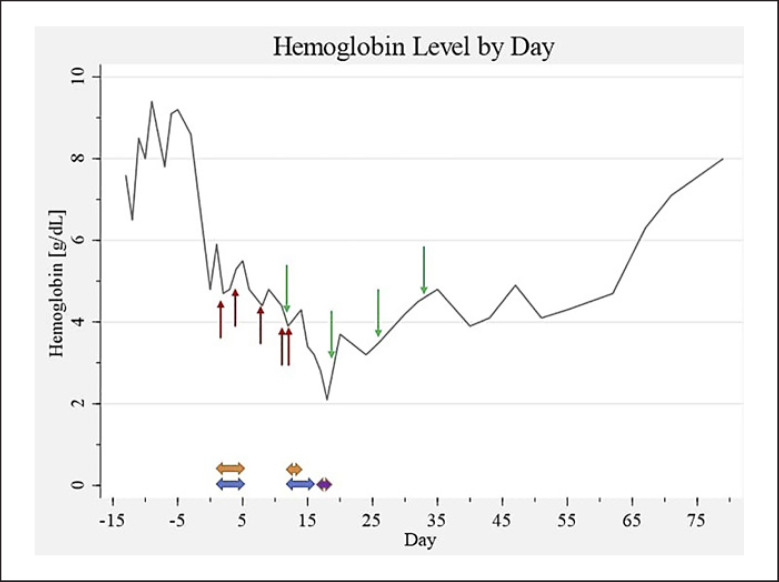
Case presentation: A 29-year-old lady with non-transfusion-dependent thalassaemia presented with refractory hyperhaemolysis necessitating the administration of rituximab. This was complicated with anaemic heart failure and altered sensorium exacerbated with further transfusions. A nadir haemoglobin of 2.1 g/dL was reached after the initiation of rituximab, and her condition was too critical to wait for the slow expected improvement. Hence, tocilizumab was given as a bridging therapy to block haemolysis till the delayed onset of radical treatment.
Conclusion: Tocilizumab can be effectively combined with rituximab to stop hyperhaemolytic episode refractory to first-line treatment when a prompt response is needed.




 京公网安备 11010802042870号
京ICP备2023020795号-1
京公网安备 11010802042870号
京ICP备2023020795号-1

 分享
分享
 求助内容:
求助内容: 应助结果提醒方式:
 扫码关注我们
