{"title":"十六烷基三甲基溴化铵(CTAB)/正己烷/正戊醇/水微乳液中反胶束大小、形状和组成的NMR和分子动力学研究","authors":"Amanda J. Mills, John Wilkie, Melanie M. Britton*","doi":"10.1021/jp504585k","DOIUrl":null,"url":null,"abstract":"<p >The size, shape, and composition of reverse micelles (RMs) in a cetyltrimethylammonium bromide (CTAB)/pentanol/<i>n</i>-hexane/water microemulsion were investigated using pulsed gradient stimulated echo (PGSTE) nuclear magnetic resonance (NMR) measurements and molecular modeling. PGSTE data were collected at observation times (Δ) of 10, 40, and 450 ms. At long observation times, CTAB and pentanol exhibited single diffusion coefficients. However, at short (Δ ≤ 40 ms) observation times both CTAB and pentanol exhibited slow and fast diffusion coefficients. These NMR data indicate that both CTAB and pentanol molecules reside in different environments within the microemulsion and that there is exchange between regions on the millisecond time scale. Molecular dynamic simulations of the CTAB RM, in a solvent box containing <i>n</i>-hexane and pentanol, produced an ellipsoid shaped RM. Using structural parameters from these simulations and the Stokes–Einstein relation, the structure factor and dimensions of the reverse micelle were determined. Analysis of the composition of the interphase also showed that there was a variation in the ratio of surfactant to cosurfactant molecules depending on the curvature of the interphase.</p>","PeriodicalId":60,"journal":{"name":"The Journal of Physical Chemistry B","volume":"118 36","pages":"10767–10775"},"PeriodicalIF":2.9000,"publicationDate":"2014-08-18","publicationTypes":"Journal Article","fieldsOfStudy":null,"isOpenAccess":false,"openAccessPdf":"https://sci-hub-pdf.com/10.1021/jp504585k","citationCount":"38","resultStr":"{\"title\":\"NMR and Molecular Dynamics Study of the Size, Shape, and Composition of Reverse Micelles in a Cetyltrimethylammonium Bromide (CTAB)/n-Hexane/Pentanol/Water Microemulsion\",\"authors\":\"Amanda J. Mills, John Wilkie, Melanie M. Britton*\",\"doi\":\"10.1021/jp504585k\",\"DOIUrl\":null,\"url\":null,\"abstract\":\"<p >The size, shape, and composition of reverse micelles (RMs) in a cetyltrimethylammonium bromide (CTAB)/pentanol/<i>n</i>-hexane/water microemulsion were investigated using pulsed gradient stimulated echo (PGSTE) nuclear magnetic resonance (NMR) measurements and molecular modeling. PGSTE data were collected at observation times (Δ) of 10, 40, and 450 ms. At long observation times, CTAB and pentanol exhibited single diffusion coefficients. However, at short (Δ ≤ 40 ms) observation times both CTAB and pentanol exhibited slow and fast diffusion coefficients. These NMR data indicate that both CTAB and pentanol molecules reside in different environments within the microemulsion and that there is exchange between regions on the millisecond time scale. Molecular dynamic simulations of the CTAB RM, in a solvent box containing <i>n</i>-hexane and pentanol, produced an ellipsoid shaped RM. Using structural parameters from these simulations and the Stokes–Einstein relation, the structure factor and dimensions of the reverse micelle were determined. Analysis of the composition of the interphase also showed that there was a variation in the ratio of surfactant to cosurfactant molecules depending on the curvature of the interphase.</p>\",\"PeriodicalId\":60,\"journal\":{\"name\":\"The Journal of Physical Chemistry B\",\"volume\":\"118 36\",\"pages\":\"10767–10775\"},\"PeriodicalIF\":2.9000,\"publicationDate\":\"2014-08-18\",\"publicationTypes\":\"Journal Article\",\"fieldsOfStudy\":null,\"isOpenAccess\":false,\"openAccessPdf\":\"https://sci-hub-pdf.com/10.1021/jp504585k\",\"citationCount\":\"38\",\"resultStr\":null,\"platform\":\"Semanticscholar\",\"paperid\":null,\"PeriodicalName\":\"The Journal of Physical Chemistry B\",\"FirstCategoryId\":\"1\",\"ListUrlMain\":\"https://pubs.acs.org/doi/10.1021/jp504585k\",\"RegionNum\":2,\"RegionCategory\":\"化学\",\"ArticlePicture\":[],\"TitleCN\":null,\"AbstractTextCN\":null,\"PMCID\":null,\"EPubDate\":\"\",\"PubModel\":\"\",\"JCR\":\"Q3\",\"JCRName\":\"CHEMISTRY, PHYSICAL\",\"Score\":null,\"Total\":0}","platform":"Semanticscholar","paperid":null,"PeriodicalName":"The Journal of Physical Chemistry B","FirstCategoryId":"1","ListUrlMain":"https://pubs.acs.org/doi/10.1021/jp504585k","RegionNum":2,"RegionCategory":"化学","ArticlePicture":[],"TitleCN":null,"AbstractTextCN":null,"PMCID":null,"EPubDate":"","PubModel":"","JCR":"Q3","JCRName":"CHEMISTRY, PHYSICAL","Score":null,"Total":0}
NMR and Molecular Dynamics Study of the Size, Shape, and Composition of Reverse Micelles in a Cetyltrimethylammonium Bromide (CTAB)/n-Hexane/Pentanol/Water Microemulsion
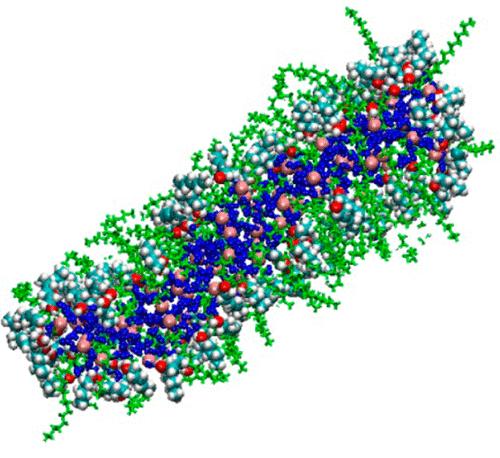
The size, shape, and composition of reverse micelles (RMs) in a cetyltrimethylammonium bromide (CTAB)/pentanol/n-hexane/water microemulsion were investigated using pulsed gradient stimulated echo (PGSTE) nuclear magnetic resonance (NMR) measurements and molecular modeling. PGSTE data were collected at observation times (Δ) of 10, 40, and 450 ms. At long observation times, CTAB and pentanol exhibited single diffusion coefficients. However, at short (Δ ≤ 40 ms) observation times both CTAB and pentanol exhibited slow and fast diffusion coefficients. These NMR data indicate that both CTAB and pentanol molecules reside in different environments within the microemulsion and that there is exchange between regions on the millisecond time scale. Molecular dynamic simulations of the CTAB RM, in a solvent box containing n-hexane and pentanol, produced an ellipsoid shaped RM. Using structural parameters from these simulations and the Stokes–Einstein relation, the structure factor and dimensions of the reverse micelle were determined. Analysis of the composition of the interphase also showed that there was a variation in the ratio of surfactant to cosurfactant molecules depending on the curvature of the interphase.
期刊介绍:
An essential criterion for acceptance of research articles in the journal is that they provide new physical insight. Please refer to the New Physical Insights virtual issue on what constitutes new physical insight. Manuscripts that are essentially reporting data or applications of data are, in general, not suitable for publication in JPC B.




 京公网安备 11010802042870号
京ICP备2023020795号-1
京公网安备 11010802042870号
京ICP备2023020795号-1

 分享
分享

 求助内容:
求助内容: 应助结果提醒方式:
 扫码关注我们
