Ahmad Al Shihabi, Heba Mardini, Ahmad N Alkhaledi, Lana Jarad, Rama Jaber, Ramez Jaber, Sara Naoura, Mohammad Bashar Izzat
{"title":"对英语非母语的医科学生进行医学英语技能同伴辅助教学的效果。","authors":"Ahmad Al Shihabi, Heba Mardini, Ahmad N Alkhaledi, Lana Jarad, Rama Jaber, Ramez Jaber, Sara Naoura, Mohammad Bashar Izzat","doi":"10.12688/mep.19694.2","DOIUrl":null,"url":null,"abstract":"<p><strong>Background: </strong>Peer-assisted learning has been shown to be constructive in numerous aspects of undergraduate medical education. The purpose of this study was to evaluate the effectiveness of peer-assisted teaching of medical English skills to non-native English-speaking students.</p><p><strong>Methods: </strong>A medical English conversation course was conducted at Damascus University by a group of students. Targeted participants were intermediate level fellow students from the same program. A longitudinal study was carried out between 1 <sup>st</sup> to 31 <sup>st</sup> March 2019 to assess changes in self-assessment of English language skills among course participants. Pre- and post-course appraisal involved a review of previous experience with medical English language, a self-assessment of five English language skills, and an objective measurement of medical English knowledge. In addition, participants were requested to respond to a set of statements related to the importance and the usefulness of peer-assisted teaching of medical English skills. Paired-sample Student <i>t</i>-test was used to compare pre- and post-course appraisal results.</p><p><strong>Results: </strong>42 students attended the course and completed pre- and post-course appraisals in full. Data analyses showed a statistically significant increase in participants' confidence in speaking medical English in public ( <i>p</i><0.001) and using English in various medical settings (presenting and discussing cases, writing clinical reports, interviewing patients and reading English medical texts). Objective measurements of medical English knowledge confirmed a significant increase in participants' knowledge of methods of administration of therapeutics, knowledge of human body parts in English and familiarity with English medical abbreviations. Most participants agreed that peer-education was effective in teaching medical English skills to non-native English-speaking students and in increasing their confidence when using English in real-life medical scenarios.</p><p><strong>Conclusions: </strong>The present study highlights the effectiveness of peer-assisted teaching of medical English skills to non-native English-speaking medical students. Further validation is required and should compare the effectiveness of traditional versus peer-assisted teaching approaches.</p>","PeriodicalId":74136,"journal":{"name":"MedEdPublish (2016)","volume":"13 ","pages":"36"},"PeriodicalIF":0.0000,"publicationDate":"2023-12-28","publicationTypes":"Journal Article","fieldsOfStudy":null,"isOpenAccess":false,"openAccessPdf":"https://www.ncbi.nlm.nih.gov/pmc/articles/PMC10831228/pdf/","citationCount":"0","resultStr":"{\"title\":\"Effectiveness of peer-assisted teaching of medical English skills to non-native English-speaking medical students.\",\"authors\":\"Ahmad Al Shihabi, Heba Mardini, Ahmad N Alkhaledi, Lana Jarad, Rama Jaber, Ramez Jaber, Sara Naoura, Mohammad Bashar Izzat\",\"doi\":\"10.12688/mep.19694.2\",\"DOIUrl\":null,\"url\":null,\"abstract\":\"<p><strong>Background: </strong>Peer-assisted learning has been shown to be constructive in numerous aspects of undergraduate medical education. The purpose of this study was to evaluate the effectiveness of peer-assisted teaching of medical English skills to non-native English-speaking students.</p><p><strong>Methods: </strong>A medical English conversation course was conducted at Damascus University by a group of students. Targeted participants were intermediate level fellow students from the same program. A longitudinal study was carried out between 1 <sup>st</sup> to 31 <sup>st</sup> March 2019 to assess changes in self-assessment of English language skills among course participants. Pre- and post-course appraisal involved a review of previous experience with medical English language, a self-assessment of five English language skills, and an objective measurement of medical English knowledge. In addition, participants were requested to respond to a set of statements related to the importance and the usefulness of peer-assisted teaching of medical English skills. Paired-sample Student <i>t</i>-test was used to compare pre- and post-course appraisal results.</p><p><strong>Results: </strong>42 students attended the course and completed pre- and post-course appraisals in full. Data analyses showed a statistically significant increase in participants' confidence in speaking medical English in public ( <i>p</i><0.001) and using English in various medical settings (presenting and discussing cases, writing clinical reports, interviewing patients and reading English medical texts). Objective measurements of medical English knowledge confirmed a significant increase in participants' knowledge of methods of administration of therapeutics, knowledge of human body parts in English and familiarity with English medical abbreviations. Most participants agreed that peer-education was effective in teaching medical English skills to non-native English-speaking students and in increasing their confidence when using English in real-life medical scenarios.</p><p><strong>Conclusions: </strong>The present study highlights the effectiveness of peer-assisted teaching of medical English skills to non-native English-speaking medical students. Further validation is required and should compare the effectiveness of traditional versus peer-assisted teaching approaches.</p>\",\"PeriodicalId\":74136,\"journal\":{\"name\":\"MedEdPublish (2016)\",\"volume\":\"13 \",\"pages\":\"36\"},\"PeriodicalIF\":0.0000,\"publicationDate\":\"2023-12-28\",\"publicationTypes\":\"Journal Article\",\"fieldsOfStudy\":null,\"isOpenAccess\":false,\"openAccessPdf\":\"https://www.ncbi.nlm.nih.gov/pmc/articles/PMC10831228/pdf/\",\"citationCount\":\"0\",\"resultStr\":null,\"platform\":\"Semanticscholar\",\"paperid\":null,\"PeriodicalName\":\"MedEdPublish (2016)\",\"FirstCategoryId\":\"1085\",\"ListUrlMain\":\"https://doi.org/10.12688/mep.19694.2\",\"RegionNum\":0,\"RegionCategory\":null,\"ArticlePicture\":[],\"TitleCN\":null,\"AbstractTextCN\":null,\"PMCID\":null,\"EPubDate\":\"2023/1/1 0:00:00\",\"PubModel\":\"eCollection\",\"JCR\":\"\",\"JCRName\":\"\",\"Score\":null,\"Total\":0}","platform":"Semanticscholar","paperid":null,"PeriodicalName":"MedEdPublish (2016)","FirstCategoryId":"1085","ListUrlMain":"https://doi.org/10.12688/mep.19694.2","RegionNum":0,"RegionCategory":null,"ArticlePicture":[],"TitleCN":null,"AbstractTextCN":null,"PMCID":null,"EPubDate":"2023/1/1 0:00:00","PubModel":"eCollection","JCR":"","JCRName":"","Score":null,"Total":0}
Effectiveness of peer-assisted teaching of medical English skills to non-native English-speaking medical students.
Background: Peer-assisted learning has been shown to be constructive in numerous aspects of undergraduate medical education. The purpose of this study was to evaluate the effectiveness of peer-assisted teaching of medical English skills to non-native English-speaking students.
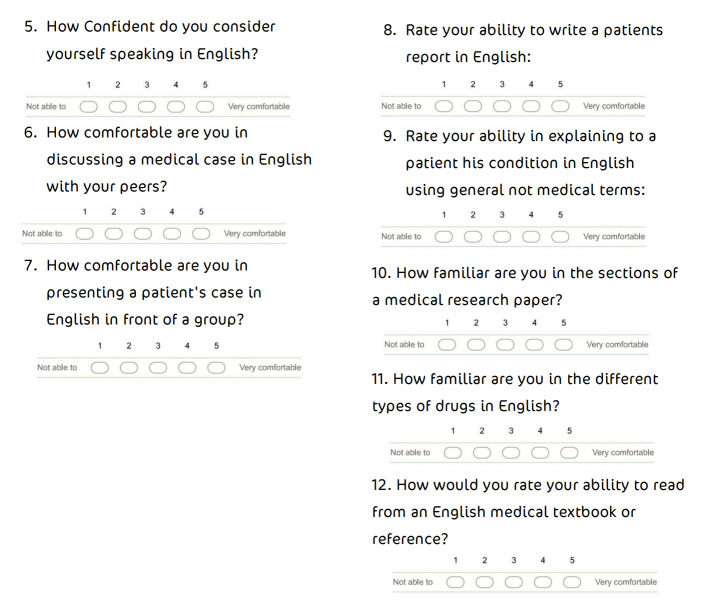
Methods: A medical English conversation course was conducted at Damascus University by a group of students. Targeted participants were intermediate level fellow students from the same program. A longitudinal study was carried out between 1 st to 31 st March 2019 to assess changes in self-assessment of English language skills among course participants. Pre- and post-course appraisal involved a review of previous experience with medical English language, a self-assessment of five English language skills, and an objective measurement of medical English knowledge. In addition, participants were requested to respond to a set of statements related to the importance and the usefulness of peer-assisted teaching of medical English skills. Paired-sample Student t-test was used to compare pre- and post-course appraisal results.
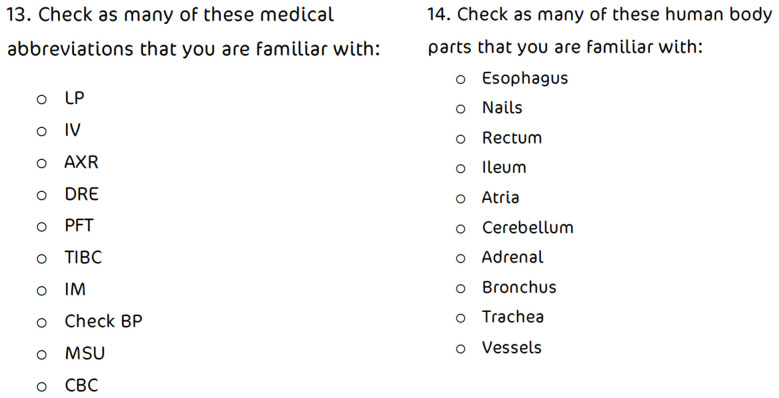
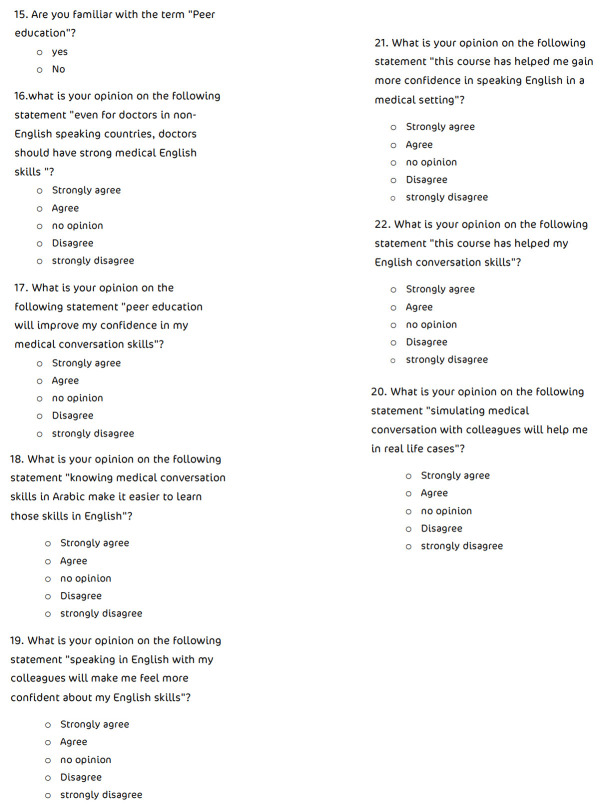
Results: 42 students attended the course and completed pre- and post-course appraisals in full. Data analyses showed a statistically significant increase in participants' confidence in speaking medical English in public ( p<0.001) and using English in various medical settings (presenting and discussing cases, writing clinical reports, interviewing patients and reading English medical texts). Objective measurements of medical English knowledge confirmed a significant increase in participants' knowledge of methods of administration of therapeutics, knowledge of human body parts in English and familiarity with English medical abbreviations. Most participants agreed that peer-education was effective in teaching medical English skills to non-native English-speaking students and in increasing their confidence when using English in real-life medical scenarios.
Conclusions: The present study highlights the effectiveness of peer-assisted teaching of medical English skills to non-native English-speaking medical students. Further validation is required and should compare the effectiveness of traditional versus peer-assisted teaching approaches.




 京公网安备 11010802042870号
京ICP备2023020795号-1
京公网安备 11010802042870号
京ICP备2023020795号-1

 分享
分享

 求助内容:
求助内容: 应助结果提醒方式:
 扫码关注我们
