{"title":"营养保健品改善植烷酸诱导的神经毒性:机理透视。","authors":"Neha, Shaista Chaudhary, Prachi Tiwari, Suhel Parvez","doi":"10.1007/s12035-024-03985-0","DOIUrl":null,"url":null,"abstract":"<p><p>Phytanic acid (PA) (3,7,11,15-tetramethylhexadecanoic acid) is a methyl-branched fatty acid that enters the body through food consumption, primarily through red meat, dairy products, and fatty marine foods. The metabolic byproduct of phytol is PA, which is then oxidized by the ruminal microbiota and some marine species. The first methyl group at the 3-position prevents the β-oxidation of branched-chain fatty acid (BCFA). Instead, α-oxidation of PA results in the production of pristanic acid (2,10,14-tetramethylpentadecanoic acid) with CO<sub>2</sub>. This fatty acid (FA) builds up in individuals with certain peroxisomal disorders and is historically linked to neurological impairment. It also causes oxidative stress in synaptosomes, as demonstrated by an increase in the production of reactive oxygen species (ROS), which is a sign of oxidative stress. This review concludes that the nutraceuticals (melatonin, piperine, quercetin, curcumin, resveratrol, epigallocatechin-3-gallate (EGCG), coenzyme Q10, ω-3 FA) can reduce oxidative stress and enhanced the activity of mitochondria. Furthermore, the use of nutraceuticals completely reversed the neurotoxic effects of PA on NO level and membrane potential. Additionally, the review further emphasizes the urgent need for more research into dairy-derived BCFAs and their impact on human health.</p>","PeriodicalId":18762,"journal":{"name":"Molecular Neurobiology","volume":" ","pages":"7303-7318"},"PeriodicalIF":4.3000,"publicationDate":"2024-10-01","publicationTypes":"Journal Article","fieldsOfStudy":null,"isOpenAccess":false,"openAccessPdf":"","citationCount":"0","resultStr":"{\"title\":\"Amelioration of Phytanic Acid-Induced Neurotoxicity by Nutraceuticals: Mechanistic Insights.\",\"authors\":\"Neha, Shaista Chaudhary, Prachi Tiwari, Suhel Parvez\",\"doi\":\"10.1007/s12035-024-03985-0\",\"DOIUrl\":null,\"url\":null,\"abstract\":\"<p><p>Phytanic acid (PA) (3,7,11,15-tetramethylhexadecanoic acid) is a methyl-branched fatty acid that enters the body through food consumption, primarily through red meat, dairy products, and fatty marine foods. The metabolic byproduct of phytol is PA, which is then oxidized by the ruminal microbiota and some marine species. The first methyl group at the 3-position prevents the β-oxidation of branched-chain fatty acid (BCFA). Instead, α-oxidation of PA results in the production of pristanic acid (2,10,14-tetramethylpentadecanoic acid) with CO<sub>2</sub>. This fatty acid (FA) builds up in individuals with certain peroxisomal disorders and is historically linked to neurological impairment. It also causes oxidative stress in synaptosomes, as demonstrated by an increase in the production of reactive oxygen species (ROS), which is a sign of oxidative stress. This review concludes that the nutraceuticals (melatonin, piperine, quercetin, curcumin, resveratrol, epigallocatechin-3-gallate (EGCG), coenzyme Q10, ω-3 FA) can reduce oxidative stress and enhanced the activity of mitochondria. Furthermore, the use of nutraceuticals completely reversed the neurotoxic effects of PA on NO level and membrane potential. Additionally, the review further emphasizes the urgent need for more research into dairy-derived BCFAs and their impact on human health.</p>\",\"PeriodicalId\":18762,\"journal\":{\"name\":\"Molecular Neurobiology\",\"volume\":\" \",\"pages\":\"7303-7318\"},\"PeriodicalIF\":4.3000,\"publicationDate\":\"2024-10-01\",\"publicationTypes\":\"Journal Article\",\"fieldsOfStudy\":null,\"isOpenAccess\":false,\"openAccessPdf\":\"\",\"citationCount\":\"0\",\"resultStr\":null,\"platform\":\"Semanticscholar\",\"paperid\":null,\"PeriodicalName\":\"Molecular Neurobiology\",\"FirstCategoryId\":\"3\",\"ListUrlMain\":\"https://doi.org/10.1007/s12035-024-03985-0\",\"RegionNum\":2,\"RegionCategory\":\"医学\",\"ArticlePicture\":[],\"TitleCN\":null,\"AbstractTextCN\":null,\"PMCID\":null,\"EPubDate\":\"2024/2/20 0:00:00\",\"PubModel\":\"Epub\",\"JCR\":\"Q1\",\"JCRName\":\"NEUROSCIENCES\",\"Score\":null,\"Total\":0}","platform":"Semanticscholar","paperid":null,"PeriodicalName":"Molecular Neurobiology","FirstCategoryId":"3","ListUrlMain":"https://doi.org/10.1007/s12035-024-03985-0","RegionNum":2,"RegionCategory":"医学","ArticlePicture":[],"TitleCN":null,"AbstractTextCN":null,"PMCID":null,"EPubDate":"2024/2/20 0:00:00","PubModel":"Epub","JCR":"Q1","JCRName":"NEUROSCIENCES","Score":null,"Total":0}
引用次数: 0
摘要
植烷酸(PA)(3,7,11,15-四甲基十六烷酸)是一种甲基支链脂肪酸,通过食物进入人体,主要是通过红肉、乳制品和高脂肪海洋食物。植醇的代谢副产物是 PA,然后被瘤胃微生物群和一些海洋物种氧化。3 位上的第一个甲基阻止了支链脂肪酸(BCFA)的β-氧化。相反,PA 的 α 氧化反应会产生普氏酸(2,10,14-四甲基十五烷酸)和二氧化碳。这种脂肪酸(FA)会在患有某些过氧异构体疾病的人体内积聚,而且历来与神经损伤有关。它还会导致突触体氧化应激,表现为活性氧(ROS)的产生增加,这是氧化应激的一种迹象。本综述认为,营养保健品(褪黑素、胡椒碱、槲皮素、姜黄素、白藜芦醇、表儿茶素-3-棓酸盐(EGCG)、辅酶 Q10、ω-3 FA)可以减轻氧化应激,增强线粒体的活性。此外,营养保健品的使用完全逆转了 PA 对 NO 水平和膜电位的神经毒性影响。此外,该综述进一步强调了对乳制品衍生 BCFAs 及其对人类健康影响进行更多研究的迫切性。
Amelioration of Phytanic Acid-Induced Neurotoxicity by Nutraceuticals: Mechanistic Insights.
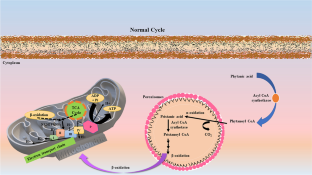
Phytanic acid (PA) (3,7,11,15-tetramethylhexadecanoic acid) is a methyl-branched fatty acid that enters the body through food consumption, primarily through red meat, dairy products, and fatty marine foods. The metabolic byproduct of phytol is PA, which is then oxidized by the ruminal microbiota and some marine species. The first methyl group at the 3-position prevents the β-oxidation of branched-chain fatty acid (BCFA). Instead, α-oxidation of PA results in the production of pristanic acid (2,10,14-tetramethylpentadecanoic acid) with CO2. This fatty acid (FA) builds up in individuals with certain peroxisomal disorders and is historically linked to neurological impairment. It also causes oxidative stress in synaptosomes, as demonstrated by an increase in the production of reactive oxygen species (ROS), which is a sign of oxidative stress. This review concludes that the nutraceuticals (melatonin, piperine, quercetin, curcumin, resveratrol, epigallocatechin-3-gallate (EGCG), coenzyme Q10, ω-3 FA) can reduce oxidative stress and enhanced the activity of mitochondria. Furthermore, the use of nutraceuticals completely reversed the neurotoxic effects of PA on NO level and membrane potential. Additionally, the review further emphasizes the urgent need for more research into dairy-derived BCFAs and their impact on human health.
期刊介绍:
Molecular Neurobiology is an exciting journal for neuroscientists needing to stay in close touch with progress at the forefront of molecular brain research today. It is an especially important periodical for graduate students and "postdocs," specifically designed to synthesize and critically assess research trends for all neuroscientists hoping to stay active at the cutting edge of this dramatically developing area. This journal has proven to be crucial in departmental libraries, serving as essential reading for every committed neuroscientist who is striving to keep abreast of all rapid developments in a forefront field. Most recent significant advances in experimental and clinical neuroscience have been occurring at the molecular level. Until now, there has been no journal devoted to looking closely at this fragmented literature in a critical, coherent fashion. Each submission is thoroughly analyzed by scientists and clinicians internationally renowned for their special competence in the areas treated.




 京公网安备 11010802042870号
京ICP备2023020795号-1
京公网安备 11010802042870号
京ICP备2023020795号-1

 分享
分享
 求助内容:
求助内容: 应助结果提醒方式:
 扫码关注我们
