{"title":"关于精神分裂症相关潜在 miRNA 在 COMT 基因调控中的作用的体外研究","authors":"Onur Tonk, Pervin Elvan Tokgun, Özge Sarıca Yılmaz, Onur Tokgun, Kubilay Inci, Büşra Çelikkaya, Nuray Altintas","doi":"10.1007/s12035-024-04070-2","DOIUrl":null,"url":null,"abstract":"<p><p>This study aimed to analyze the possible association of miR-30a-5p, miR-30e-5p, and miR-34a-5p identified as potential candidate miRNAs in schizophrenia, with the COMT gene. Candidate miRNAs were obtained from the TargetScan database. The SH-SY5Y human neuroblastoma cell line was used as a cellular model for schizophrenia. miR-30a-5p, miR-30e-5p, and miR-34a-5p mimics were transfected into the SH-SY5Y cell line. Total RNA was isolated from transfected cells and RNA-IP samples and reverse transcripted for miRNA and mRNA analysis. RT-qPCR and western blot were performed to observe changes in expression levels of COMT. RNA-ımmunoprecipitation was performed to determine RNA-protein interactions after mimic transfection. In the study, it was observed that COMT gene expression levels decreased significantly after miR-30a-5p and miR-34a-5p expressions, whereas increased significantly as a result of miR-30e-5p transfection. RNA-IP data have shown that the amount of COMT pulled down by Ago2 was increased after miR-30a-5p and miR-34a-5p transfections. RNA-IP results revealed that miR-30a-5p and miR-34a-5p are direct targets for the COMT gene.</p>","PeriodicalId":18762,"journal":{"name":"Molecular Neurobiology","volume":" ","pages":"7680-7690"},"PeriodicalIF":5.5000,"publicationDate":"2024-10-01","publicationTypes":"Journal Article","fieldsOfStudy":null,"isOpenAccess":false,"openAccessPdf":"https://www.ncbi.nlm.nih.gov/pmc/articles/PMC11415445/pdf/","citationCount":"0","resultStr":"{\"title\":\"An In Vitro Study for the Role of Schizophrenia-Related Potential miRNAs in the Regulation of COMT Gene.\",\"authors\":\"Onur Tonk, Pervin Elvan Tokgun, Özge Sarıca Yılmaz, Onur Tokgun, Kubilay Inci, Büşra Çelikkaya, Nuray Altintas\",\"doi\":\"10.1007/s12035-024-04070-2\",\"DOIUrl\":null,\"url\":null,\"abstract\":\"<p><p>This study aimed to analyze the possible association of miR-30a-5p, miR-30e-5p, and miR-34a-5p identified as potential candidate miRNAs in schizophrenia, with the COMT gene. Candidate miRNAs were obtained from the TargetScan database. The SH-SY5Y human neuroblastoma cell line was used as a cellular model for schizophrenia. miR-30a-5p, miR-30e-5p, and miR-34a-5p mimics were transfected into the SH-SY5Y cell line. Total RNA was isolated from transfected cells and RNA-IP samples and reverse transcripted for miRNA and mRNA analysis. RT-qPCR and western blot were performed to observe changes in expression levels of COMT. RNA-ımmunoprecipitation was performed to determine RNA-protein interactions after mimic transfection. In the study, it was observed that COMT gene expression levels decreased significantly after miR-30a-5p and miR-34a-5p expressions, whereas increased significantly as a result of miR-30e-5p transfection. RNA-IP data have shown that the amount of COMT pulled down by Ago2 was increased after miR-30a-5p and miR-34a-5p transfections. RNA-IP results revealed that miR-30a-5p and miR-34a-5p are direct targets for the COMT gene.</p>\",\"PeriodicalId\":18762,\"journal\":{\"name\":\"Molecular Neurobiology\",\"volume\":\" \",\"pages\":\"7680-7690\"},\"PeriodicalIF\":5.5000,\"publicationDate\":\"2024-10-01\",\"publicationTypes\":\"Journal Article\",\"fieldsOfStudy\":null,\"isOpenAccess\":false,\"openAccessPdf\":\"https://www.ncbi.nlm.nih.gov/pmc/articles/PMC11415445/pdf/\",\"citationCount\":\"0\",\"resultStr\":null,\"platform\":\"Semanticscholar\",\"paperid\":null,\"PeriodicalName\":\"Molecular Neurobiology\",\"FirstCategoryId\":\"3\",\"ListUrlMain\":\"https://doi.org/10.1007/s12035-024-04070-2\",\"RegionNum\":2,\"RegionCategory\":\"医学\",\"ArticlePicture\":[],\"TitleCN\":null,\"AbstractTextCN\":null,\"PMCID\":null,\"EPubDate\":\"2024/3/1 0:00:00\",\"PubModel\":\"Epub\",\"JCR\":\"Q1\",\"JCRName\":\"NEUROSCIENCES\",\"Score\":null,\"Total\":0}","platform":"Semanticscholar","paperid":null,"PeriodicalName":"Molecular Neurobiology","FirstCategoryId":"3","ListUrlMain":"https://doi.org/10.1007/s12035-024-04070-2","RegionNum":2,"RegionCategory":"医学","ArticlePicture":[],"TitleCN":null,"AbstractTextCN":null,"PMCID":null,"EPubDate":"2024/3/1 0:00:00","PubModel":"Epub","JCR":"Q1","JCRName":"NEUROSCIENCES","Score":null,"Total":0}
An In Vitro Study for the Role of Schizophrenia-Related Potential miRNAs in the Regulation of COMT Gene.
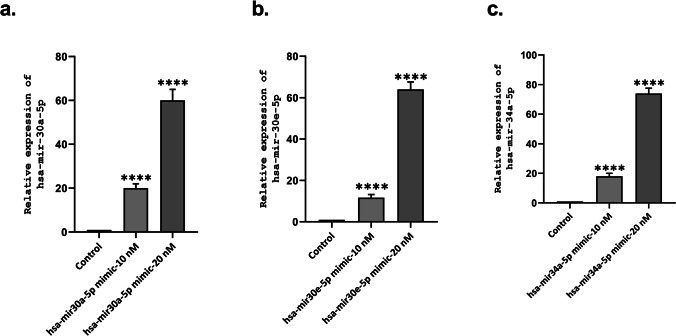
This study aimed to analyze the possible association of miR-30a-5p, miR-30e-5p, and miR-34a-5p identified as potential candidate miRNAs in schizophrenia, with the COMT gene. Candidate miRNAs were obtained from the TargetScan database. The SH-SY5Y human neuroblastoma cell line was used as a cellular model for schizophrenia. miR-30a-5p, miR-30e-5p, and miR-34a-5p mimics were transfected into the SH-SY5Y cell line. Total RNA was isolated from transfected cells and RNA-IP samples and reverse transcripted for miRNA and mRNA analysis. RT-qPCR and western blot were performed to observe changes in expression levels of COMT. RNA-ımmunoprecipitation was performed to determine RNA-protein interactions after mimic transfection. In the study, it was observed that COMT gene expression levels decreased significantly after miR-30a-5p and miR-34a-5p expressions, whereas increased significantly as a result of miR-30e-5p transfection. RNA-IP data have shown that the amount of COMT pulled down by Ago2 was increased after miR-30a-5p and miR-34a-5p transfections. RNA-IP results revealed that miR-30a-5p and miR-34a-5p are direct targets for the COMT gene.
期刊介绍:
Molecular Neurobiology is an exciting journal for neuroscientists needing to stay in close touch with progress at the forefront of molecular brain research today. It is an especially important periodical for graduate students and "postdocs," specifically designed to synthesize and critically assess research trends for all neuroscientists hoping to stay active at the cutting edge of this dramatically developing area. This journal has proven to be crucial in departmental libraries, serving as essential reading for every committed neuroscientist who is striving to keep abreast of all rapid developments in a forefront field. Most recent significant advances in experimental and clinical neuroscience have been occurring at the molecular level. Until now, there has been no journal devoted to looking closely at this fragmented literature in a critical, coherent fashion. Each submission is thoroughly analyzed by scientists and clinicians internationally renowned for their special competence in the areas treated.






 京公网安备 11010802042870号
京ICP备2023020795号-1
京公网安备 11010802042870号
京ICP备2023020795号-1

 分享
分享
 求助内容:
求助内容: 应助结果提醒方式:
 扫码关注我们
