Hiram Luna-Munguia, Deisy Gasca-Martinez, Alejandra Garay-Cortes, Daniela Coutiño, Mirelta Regalado, Ericka de Los Rios, Paulina Villaseñor, Fernando Hidalgo-Flores, Karen Flores-Guapo, Brandon Yair Benito, Luis Concha
{"title":"对健康大鼠内侧隔膜的选择性损伤会导致肢体微结构的纵向变化、行为改变以及对癫痫状态的易感性增加。","authors":"Hiram Luna-Munguia, Deisy Gasca-Martinez, Alejandra Garay-Cortes, Daniela Coutiño, Mirelta Regalado, Ericka de Los Rios, Paulina Villaseñor, Fernando Hidalgo-Flores, Karen Flores-Guapo, Brandon Yair Benito, Luis Concha","doi":"10.1007/s12035-024-04069-9","DOIUrl":null,"url":null,"abstract":"<p><p>Septo-hippocampal pathway, crucial for physiological functions and involved in epilepsy. Clinical monitoring during epileptogenesis is complicated. We aim to evaluate tissue changes after lesioning the medial septum (MS) of normal rats and assess how the depletion of specific neuronal populations alters the animals' behavior and susceptibility to establishing a pilocarpine-induced status epilepticus. Male Sprague-Dawley rats were injected into the MS with vehicle or saporins (to deplete GABAergic or cholinergic neurons; n = 16 per group). Thirty-two animals were used for diffusion tensor imaging (DTI); scanned before surgery and 14 and 49 days post-injection. Fractional anisotropy and apparent diffusion coefficient were evaluated in the fimbria, dorsal hippocampus, ventral hippocampus, dorso-medial thalamus, and amygdala. Between scans 2 and 3, animals were submitted to diverse behavioral tasks. Stainings were used to analyze tissue alterations. Twenty-four different animals received pilocarpine to evaluate the latency and severity of the status epilepticus 2 weeks after surgery. Additionally, eight different animals were only used to evaluate the neuronal damage inflicted on the MS 1 week after the molecular surgery. Progressive changes in DTI parameters in both white and gray matter structures of the four evaluated groups were observed. Behaviorally, the GAT1-saporin injection impacted spatial memory formation, while 192-IgG-saporin triggered anxiety-like behaviors. Histologically, the GABAergic toxin also induced aberrant mossy fiber sprouting, tissue damage, and neuronal death. Regarding the pilocarpine-induced status epilepticus, this agent provoked an increased mortality rate. Selective septo-hippocampal modulation impacts the integrity of limbic regions crucial for certain behavioral skills and could represent a precursor for epilepsy development.</p>","PeriodicalId":18762,"journal":{"name":"Molecular Neurobiology","volume":" ","pages":"1-21"},"PeriodicalIF":4.3000,"publicationDate":"2024-10-01","publicationTypes":"Journal Article","fieldsOfStudy":null,"isOpenAccess":false,"openAccessPdf":"https://www.ncbi.nlm.nih.gov/pmc/articles/PMC11415424/pdf/","citationCount":"0","resultStr":"{\"title\":\"Selective Medial Septum Lesions in Healthy Rats Induce Longitudinal Changes in Microstructure of Limbic Regions, Behavioral Alterations, and Increased Susceptibility to Status Epilepticus.\",\"authors\":\"Hiram Luna-Munguia, Deisy Gasca-Martinez, Alejandra Garay-Cortes, Daniela Coutiño, Mirelta Regalado, Ericka de Los Rios, Paulina Villaseñor, Fernando Hidalgo-Flores, Karen Flores-Guapo, Brandon Yair Benito, Luis Concha\",\"doi\":\"10.1007/s12035-024-04069-9\",\"DOIUrl\":null,\"url\":null,\"abstract\":\"<p><p>Septo-hippocampal pathway, crucial for physiological functions and involved in epilepsy. Clinical monitoring during epileptogenesis is complicated. We aim to evaluate tissue changes after lesioning the medial septum (MS) of normal rats and assess how the depletion of specific neuronal populations alters the animals' behavior and susceptibility to establishing a pilocarpine-induced status epilepticus. Male Sprague-Dawley rats were injected into the MS with vehicle or saporins (to deplete GABAergic or cholinergic neurons; n = 16 per group). Thirty-two animals were used for diffusion tensor imaging (DTI); scanned before surgery and 14 and 49 days post-injection. Fractional anisotropy and apparent diffusion coefficient were evaluated in the fimbria, dorsal hippocampus, ventral hippocampus, dorso-medial thalamus, and amygdala. Between scans 2 and 3, animals were submitted to diverse behavioral tasks. Stainings were used to analyze tissue alterations. Twenty-four different animals received pilocarpine to evaluate the latency and severity of the status epilepticus 2 weeks after surgery. Additionally, eight different animals were only used to evaluate the neuronal damage inflicted on the MS 1 week after the molecular surgery. Progressive changes in DTI parameters in both white and gray matter structures of the four evaluated groups were observed. Behaviorally, the GAT1-saporin injection impacted spatial memory formation, while 192-IgG-saporin triggered anxiety-like behaviors. Histologically, the GABAergic toxin also induced aberrant mossy fiber sprouting, tissue damage, and neuronal death. Regarding the pilocarpine-induced status epilepticus, this agent provoked an increased mortality rate. Selective septo-hippocampal modulation impacts the integrity of limbic regions crucial for certain behavioral skills and could represent a precursor for epilepsy development.</p>\",\"PeriodicalId\":18762,\"journal\":{\"name\":\"Molecular Neurobiology\",\"volume\":\" \",\"pages\":\"1-21\"},\"PeriodicalIF\":4.3000,\"publicationDate\":\"2024-10-01\",\"publicationTypes\":\"Journal Article\",\"fieldsOfStudy\":null,\"isOpenAccess\":false,\"openAccessPdf\":\"https://www.ncbi.nlm.nih.gov/pmc/articles/PMC11415424/pdf/\",\"citationCount\":\"0\",\"resultStr\":null,\"platform\":\"Semanticscholar\",\"paperid\":null,\"PeriodicalName\":\"Molecular Neurobiology\",\"FirstCategoryId\":\"3\",\"ListUrlMain\":\"https://doi.org/10.1007/s12035-024-04069-9\",\"RegionNum\":2,\"RegionCategory\":\"医学\",\"ArticlePicture\":[],\"TitleCN\":null,\"AbstractTextCN\":null,\"PMCID\":null,\"EPubDate\":\"2024/3/5 0:00:00\",\"PubModel\":\"Epub\",\"JCR\":\"Q1\",\"JCRName\":\"NEUROSCIENCES\",\"Score\":null,\"Total\":0}","platform":"Semanticscholar","paperid":null,"PeriodicalName":"Molecular Neurobiology","FirstCategoryId":"3","ListUrlMain":"https://doi.org/10.1007/s12035-024-04069-9","RegionNum":2,"RegionCategory":"医学","ArticlePicture":[],"TitleCN":null,"AbstractTextCN":null,"PMCID":null,"EPubDate":"2024/3/5 0:00:00","PubModel":"Epub","JCR":"Q1","JCRName":"NEUROSCIENCES","Score":null,"Total":0}
Selective Medial Septum Lesions in Healthy Rats Induce Longitudinal Changes in Microstructure of Limbic Regions, Behavioral Alterations, and Increased Susceptibility to Status Epilepticus.
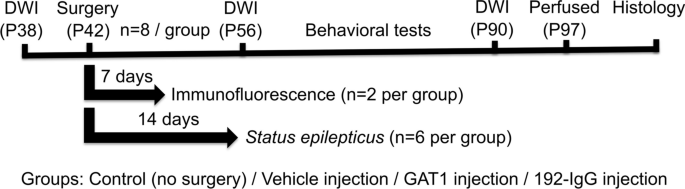
Septo-hippocampal pathway, crucial for physiological functions and involved in epilepsy. Clinical monitoring during epileptogenesis is complicated. We aim to evaluate tissue changes after lesioning the medial septum (MS) of normal rats and assess how the depletion of specific neuronal populations alters the animals' behavior and susceptibility to establishing a pilocarpine-induced status epilepticus. Male Sprague-Dawley rats were injected into the MS with vehicle or saporins (to deplete GABAergic or cholinergic neurons; n = 16 per group). Thirty-two animals were used for diffusion tensor imaging (DTI); scanned before surgery and 14 and 49 days post-injection. Fractional anisotropy and apparent diffusion coefficient were evaluated in the fimbria, dorsal hippocampus, ventral hippocampus, dorso-medial thalamus, and amygdala. Between scans 2 and 3, animals were submitted to diverse behavioral tasks. Stainings were used to analyze tissue alterations. Twenty-four different animals received pilocarpine to evaluate the latency and severity of the status epilepticus 2 weeks after surgery. Additionally, eight different animals were only used to evaluate the neuronal damage inflicted on the MS 1 week after the molecular surgery. Progressive changes in DTI parameters in both white and gray matter structures of the four evaluated groups were observed. Behaviorally, the GAT1-saporin injection impacted spatial memory formation, while 192-IgG-saporin triggered anxiety-like behaviors. Histologically, the GABAergic toxin also induced aberrant mossy fiber sprouting, tissue damage, and neuronal death. Regarding the pilocarpine-induced status epilepticus, this agent provoked an increased mortality rate. Selective septo-hippocampal modulation impacts the integrity of limbic regions crucial for certain behavioral skills and could represent a precursor for epilepsy development.
期刊介绍:
Molecular Neurobiology is an exciting journal for neuroscientists needing to stay in close touch with progress at the forefront of molecular brain research today. It is an especially important periodical for graduate students and "postdocs," specifically designed to synthesize and critically assess research trends for all neuroscientists hoping to stay active at the cutting edge of this dramatically developing area. This journal has proven to be crucial in departmental libraries, serving as essential reading for every committed neuroscientist who is striving to keep abreast of all rapid developments in a forefront field. Most recent significant advances in experimental and clinical neuroscience have been occurring at the molecular level. Until now, there has been no journal devoted to looking closely at this fragmented literature in a critical, coherent fashion. Each submission is thoroughly analyzed by scientists and clinicians internationally renowned for their special competence in the areas treated.




 京公网安备 11010802042870号
京ICP备2023020795号-1
京公网安备 11010802042870号
京ICP备2023020795号-1

 分享
分享
 求助内容:
求助内容: 应助结果提醒方式:
 扫码关注我们
