{"title":"人文地理:不是终结而是以新的方式将现代学科世界化","authors":"Jonathan Pugh","doi":"10.1177/20438206241242467","DOIUrl":null,"url":null,"abstract":"This commentary engages Bodden's (2023) ‘Working through our differences’ to draw out how contemporary frameworks of reasoning in human geography extend the limits of ‘thinkability’, expanding the world, of the modern subject. In response, I offer ‘Abyssal Geography’, critiquing how the discipline is not ending but worlding the modern subject in new ways.","PeriodicalId":8,"journal":{"name":"ACS Biomaterials Science & Engineering","volume":"38 20","pages":""},"PeriodicalIF":5.5000,"publicationDate":"2024-03-27","publicationTypes":"Journal Article","fieldsOfStudy":null,"isOpenAccess":false,"openAccessPdf":"","citationCount":"0","resultStr":"{\"title\":\"Human geography: Not ending but worlding the modern subject in new ways\",\"authors\":\"Jonathan Pugh\",\"doi\":\"10.1177/20438206241242467\",\"DOIUrl\":null,\"url\":null,\"abstract\":\"This commentary engages Bodden's (2023) ‘Working through our differences’ to draw out how contemporary frameworks of reasoning in human geography extend the limits of ‘thinkability’, expanding the world, of the modern subject. In response, I offer ‘Abyssal Geography’, critiquing how the discipline is not ending but worlding the modern subject in new ways.\",\"PeriodicalId\":8,\"journal\":{\"name\":\"ACS Biomaterials Science & Engineering\",\"volume\":\"38 20\",\"pages\":\"\"},\"PeriodicalIF\":5.5000,\"publicationDate\":\"2024-03-27\",\"publicationTypes\":\"Journal Article\",\"fieldsOfStudy\":null,\"isOpenAccess\":false,\"openAccessPdf\":\"\",\"citationCount\":\"0\",\"resultStr\":null,\"platform\":\"Semanticscholar\",\"paperid\":null,\"PeriodicalName\":\"ACS Biomaterials Science & Engineering\",\"FirstCategoryId\":\"96\",\"ListUrlMain\":\"https://doi.org/10.1177/20438206241242467\",\"RegionNum\":2,\"RegionCategory\":\"医学\",\"ArticlePicture\":[],\"TitleCN\":null,\"AbstractTextCN\":null,\"PMCID\":null,\"EPubDate\":\"\",\"PubModel\":\"\",\"JCR\":\"Q2\",\"JCRName\":\"MATERIALS SCIENCE, BIOMATERIALS\",\"Score\":null,\"Total\":0}","platform":"Semanticscholar","paperid":null,"PeriodicalName":"ACS Biomaterials Science & Engineering","FirstCategoryId":"96","ListUrlMain":"https://doi.org/10.1177/20438206241242467","RegionNum":2,"RegionCategory":"医学","ArticlePicture":[],"TitleCN":null,"AbstractTextCN":null,"PMCID":null,"EPubDate":"","PubModel":"","JCR":"Q2","JCRName":"MATERIALS SCIENCE, BIOMATERIALS","Score":null,"Total":0}
Human geography: Not ending but worlding the modern subject in new ways
This commentary engages Bodden's (2023) ‘Working through our differences’ to draw out how contemporary frameworks of reasoning in human geography extend the limits of ‘thinkability’, expanding the world, of the modern subject. In response, I offer ‘Abyssal Geography’, critiquing how the discipline is not ending but worlding the modern subject in new ways.
期刊介绍:
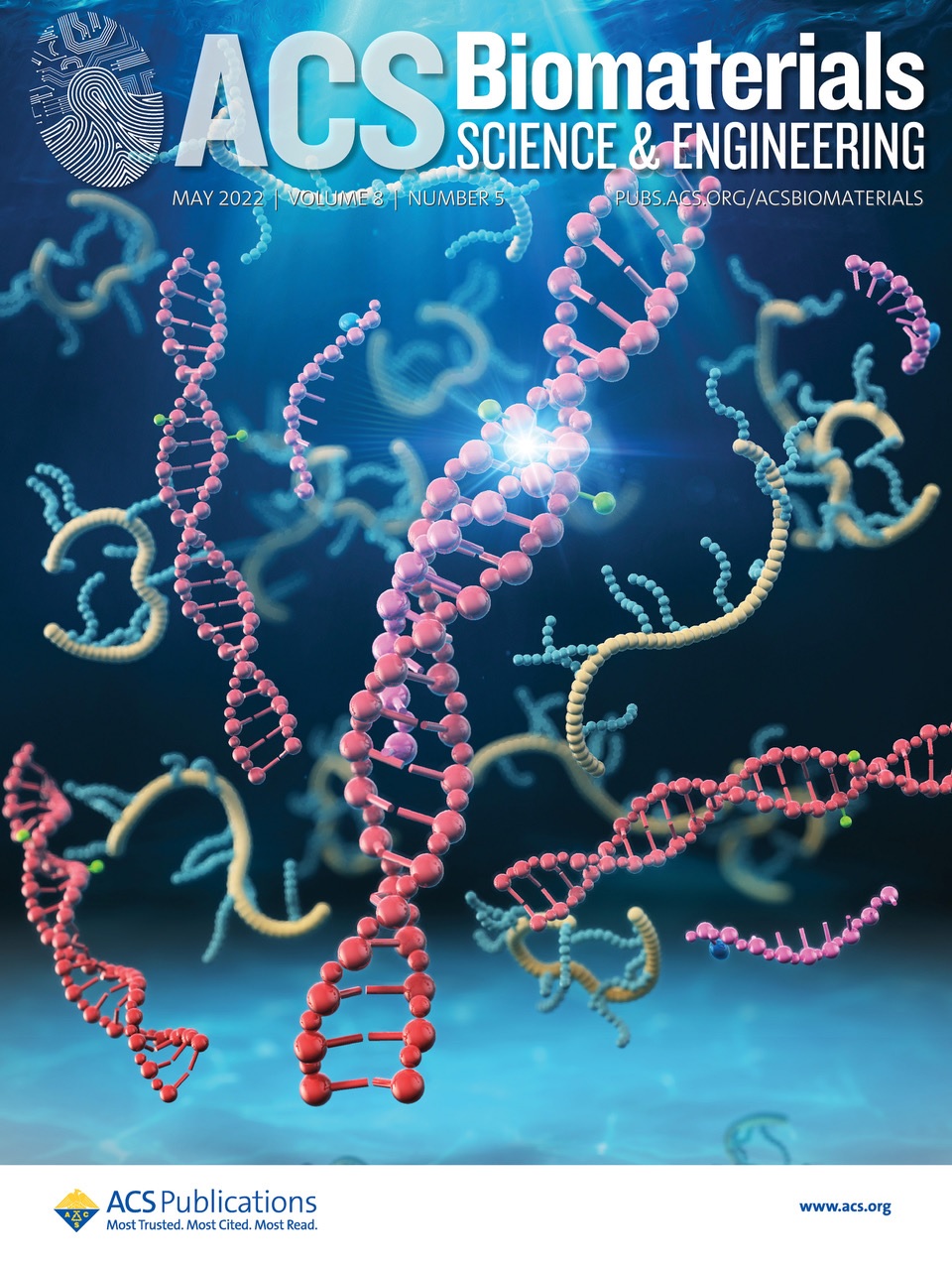
ACS Biomaterials Science & Engineering is the leading journal in the field of biomaterials, serving as an international forum for publishing cutting-edge research and innovative ideas on a broad range of topics:
Applications and Health – implantable tissues and devices, prosthesis, health risks, toxicology
Bio-interactions and Bio-compatibility – material-biology interactions, chemical/morphological/structural communication, mechanobiology, signaling and biological responses, immuno-engineering, calcification, coatings, corrosion and degradation of biomaterials and devices, biophysical regulation of cell functions
Characterization, Synthesis, and Modification – new biomaterials, bioinspired and biomimetic approaches to biomaterials, exploiting structural hierarchy and architectural control, combinatorial strategies for biomaterials discovery, genetic biomaterials design, synthetic biology, new composite systems, bionics, polymer synthesis
Controlled Release and Delivery Systems – biomaterial-based drug and gene delivery, bio-responsive delivery of regulatory molecules, pharmaceutical engineering
Healthcare Advances – clinical translation, regulatory issues, patient safety, emerging trends
Imaging and Diagnostics – imaging agents and probes, theranostics, biosensors, monitoring
Manufacturing and Technology – 3D printing, inks, organ-on-a-chip, bioreactor/perfusion systems, microdevices, BioMEMS, optics and electronics interfaces with biomaterials, systems integration
Modeling and Informatics Tools – scaling methods to guide biomaterial design, predictive algorithms for structure-function, biomechanics, integrating bioinformatics with biomaterials discovery, metabolomics in the context of biomaterials
Tissue Engineering and Regenerative Medicine – basic and applied studies, cell therapies, scaffolds, vascularization, bioartificial organs, transplantation and functionality, cellular agriculture




 京公网安备 11010802042870号
京ICP备2023020795号-1
京公网安备 11010802042870号
京ICP备2023020795号-1

 分享
分享
 求助内容:
求助内容: 应助结果提醒方式:
 扫码关注我们
