{"title":"合理设计用于废水处理的 CdS 包裹聚吡咯纳米粒子:去除水溶液中的有害污染物。","authors":"Vadivel Siva, Anbazhagan Murugan, Abdul Samad Shameem, Sahadevan Jhelai, Baskaran Palanivel, Sankaiya Asaithambi, Poongavanam GaneshKumar, Ikhyun Kim, Palanisamy Govindasamy, Jintae Lee, Sivaprakash Paramasivam","doi":"10.1007/s11356-024-33285-y","DOIUrl":null,"url":null,"abstract":"<div><p>The modern world requires a chemical industry that can run at low production costs while producing high-quality products with minimal environmental impact. The development of environmentally friendly, cost-effective, and efficient wastewater treatment materials remains a major problem for the sustainable approach. We prepared nanoscale cadmium sulfide (CdS)-enwrapped polypyrrole (PPy) polymer composites for degradation of organic pollutants. The prepared CdS@PPy nanocomposites were characterized by powder X-ray diffraction, scanning electron microscope (SEM), field emission scanning electron microscope (FESEM), Fourier transform infrared spectroscopy (FTIR), and ultraviolet–visible (UV) absorption spectroscopy, indicating proper intercalation between CdS and PPy. Consequently, the catalytic efficiency of the synthesized hybrid nanocomposites was analyzed through the degradation of methylene blue (MB) and rhodamine B (Rh B) under visible light irradiation. The measured degradation efficiency of the dye solutions under the photolysis process is about 18% and 23% for MB and Rh B dye, respectively. Furthermore, the recycle test result concludes that the CdS@PPy composite exhibits 91% and 89% of MB and Rh B dye degradation efficiency even at the 4th cycle, respectively. The positive synergistic impact of CdS and PPy may be the result of effective photocatalytic degradation of MB and RhB. </p></div>","PeriodicalId":545,"journal":{"name":"Environmental Science and Pollution Research","volume":"32 42","pages":"23855 - 23865"},"PeriodicalIF":5.8000,"publicationDate":"2024-04-24","publicationTypes":"Journal Article","fieldsOfStudy":null,"isOpenAccess":false,"openAccessPdf":"","citationCount":"0","resultStr":"{\"title\":\"Rational design of CdS-enwrapped polypyrrole nanoparticles for wastewater treatment: removal of hazardous pollutants in aqueous solutions\",\"authors\":\"Vadivel Siva, Anbazhagan Murugan, Abdul Samad Shameem, Sahadevan Jhelai, Baskaran Palanivel, Sankaiya Asaithambi, Poongavanam GaneshKumar, Ikhyun Kim, Palanisamy Govindasamy, Jintae Lee, Sivaprakash Paramasivam\",\"doi\":\"10.1007/s11356-024-33285-y\",\"DOIUrl\":null,\"url\":null,\"abstract\":\"<div><p>The modern world requires a chemical industry that can run at low production costs while producing high-quality products with minimal environmental impact. The development of environmentally friendly, cost-effective, and efficient wastewater treatment materials remains a major problem for the sustainable approach. We prepared nanoscale cadmium sulfide (CdS)-enwrapped polypyrrole (PPy) polymer composites for degradation of organic pollutants. The prepared CdS@PPy nanocomposites were characterized by powder X-ray diffraction, scanning electron microscope (SEM), field emission scanning electron microscope (FESEM), Fourier transform infrared spectroscopy (FTIR), and ultraviolet–visible (UV) absorption spectroscopy, indicating proper intercalation between CdS and PPy. Consequently, the catalytic efficiency of the synthesized hybrid nanocomposites was analyzed through the degradation of methylene blue (MB) and rhodamine B (Rh B) under visible light irradiation. The measured degradation efficiency of the dye solutions under the photolysis process is about 18% and 23% for MB and Rh B dye, respectively. Furthermore, the recycle test result concludes that the CdS@PPy composite exhibits 91% and 89% of MB and Rh B dye degradation efficiency even at the 4th cycle, respectively. The positive synergistic impact of CdS and PPy may be the result of effective photocatalytic degradation of MB and RhB. </p></div>\",\"PeriodicalId\":545,\"journal\":{\"name\":\"Environmental Science and Pollution Research\",\"volume\":\"32 42\",\"pages\":\"23855 - 23865\"},\"PeriodicalIF\":5.8000,\"publicationDate\":\"2024-04-24\",\"publicationTypes\":\"Journal Article\",\"fieldsOfStudy\":null,\"isOpenAccess\":false,\"openAccessPdf\":\"\",\"citationCount\":\"0\",\"resultStr\":null,\"platform\":\"Semanticscholar\",\"paperid\":null,\"PeriodicalName\":\"Environmental Science and Pollution Research\",\"FirstCategoryId\":\"93\",\"ListUrlMain\":\"https://link.springer.com/article/10.1007/s11356-024-33285-y\",\"RegionNum\":3,\"RegionCategory\":\"环境科学与生态学\",\"ArticlePicture\":[],\"TitleCN\":null,\"AbstractTextCN\":null,\"PMCID\":null,\"EPubDate\":\"\",\"PubModel\":\"\",\"JCR\":\"0\",\"JCRName\":\"ENVIRONMENTAL SCIENCES\",\"Score\":null,\"Total\":0}","platform":"Semanticscholar","paperid":null,"PeriodicalName":"Environmental Science and Pollution Research","FirstCategoryId":"93","ListUrlMain":"https://link.springer.com/article/10.1007/s11356-024-33285-y","RegionNum":3,"RegionCategory":"环境科学与生态学","ArticlePicture":[],"TitleCN":null,"AbstractTextCN":null,"PMCID":null,"EPubDate":"","PubModel":"","JCR":"0","JCRName":"ENVIRONMENTAL SCIENCES","Score":null,"Total":0}
Rational design of CdS-enwrapped polypyrrole nanoparticles for wastewater treatment: removal of hazardous pollutants in aqueous solutions
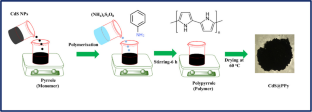
The modern world requires a chemical industry that can run at low production costs while producing high-quality products with minimal environmental impact. The development of environmentally friendly, cost-effective, and efficient wastewater treatment materials remains a major problem for the sustainable approach. We prepared nanoscale cadmium sulfide (CdS)-enwrapped polypyrrole (PPy) polymer composites for degradation of organic pollutants. The prepared CdS@PPy nanocomposites were characterized by powder X-ray diffraction, scanning electron microscope (SEM), field emission scanning electron microscope (FESEM), Fourier transform infrared spectroscopy (FTIR), and ultraviolet–visible (UV) absorption spectroscopy, indicating proper intercalation between CdS and PPy. Consequently, the catalytic efficiency of the synthesized hybrid nanocomposites was analyzed through the degradation of methylene blue (MB) and rhodamine B (Rh B) under visible light irradiation. The measured degradation efficiency of the dye solutions under the photolysis process is about 18% and 23% for MB and Rh B dye, respectively. Furthermore, the recycle test result concludes that the CdS@PPy composite exhibits 91% and 89% of MB and Rh B dye degradation efficiency even at the 4th cycle, respectively. The positive synergistic impact of CdS and PPy may be the result of effective photocatalytic degradation of MB and RhB.
期刊介绍:
Environmental Science and Pollution Research (ESPR) serves the international community in all areas of Environmental Science and related subjects with emphasis on chemical compounds. This includes:
- Terrestrial Biology and Ecology
- Aquatic Biology and Ecology
- Atmospheric Chemistry
- Environmental Microbiology/Biobased Energy Sources
- Phytoremediation and Ecosystem Restoration
- Environmental Analyses and Monitoring
- Assessment of Risks and Interactions of Pollutants in the Environment
- Conservation Biology and Sustainable Agriculture
- Impact of Chemicals/Pollutants on Human and Animal Health
It reports from a broad interdisciplinary outlook.




 京公网安备 11010802042870号
京ICP备2023020795号-1
京公网安备 11010802042870号
京ICP备2023020795号-1

 分享
分享
 求助内容:
求助内容: 应助结果提醒方式:
 扫码关注我们
