Isabella Hunjan, Alice Umulisa, Gianfranco Parati, Mario G. Bianchetti, Gregorio P. Milani, Bienvenu Muvunyi, Evariste Ntaganda, Dragana Radovanovic, Clara Stroppa, Paolo Suter, Franco Muggli
{"title":"卢旺达农村地区马塔区的血压筛查。","authors":"Isabella Hunjan, Alice Umulisa, Gianfranco Parati, Mario G. Bianchetti, Gregorio P. Milani, Bienvenu Muvunyi, Evariste Ntaganda, Dragana Radovanovic, Clara Stroppa, Paolo Suter, Franco Muggli","doi":"10.1038/s41371-024-00912-7","DOIUrl":null,"url":null,"abstract":"In rural sub-Saharan Africa, knowledge of non-communicable diseases such as high blood pressure (BP) is rather limited. This report provides information about a BP screening in Mata Sector, a rural region in Southern Province of Rwanda. Community-based, house-to-house screening was performed between February and July 2020 on more than 7000 inhabitants. The screening was conducted by a local team composed by 20 community health care workers, five community health care supervisors, and one nurse with hypertension surveillance training. BP and heart rate were recorded after 5 min of resting, using a validated automated oscillometric OMRON M6 IT-HEM-7322-E monitor with Intelli Wrap Cuff (HEM-FL31-E) technology. The mean of the second and third value was retained. BP was normal (<140/90 mm Hg) in 6340 (88%) and elevated in 863 (12%) participants with 95% of unawareness. Grade 1 (140–159/90–99 mm Hg) hypertensive BP readings were detected in 697 (81%), grade 2 (160–179/100–109 mm Hg) in 134 (16%), and grade 3 (≥180/≥110 mm Hg) in 32 (3.7%) individuals. The prevalence of hypertensive readings was significantly age-dependent. Additionally, a slightly greater proportion of participants with high BP (14% versus 11%) had a body mass index (BMI) ≥ 25.0 kg/m2. Also resting heart rate was higher in individuals with high BP (82 versus 77 beats/min). Although individuals identified with occasionally elevated BP values need further confirmatory measurements to establish the diagnosis of hypertension, these data suggest that high BP represents a noteworthy and preventable reason of concern within sub-Saharan Africa.","PeriodicalId":16070,"journal":{"name":"Journal of Human Hypertension","volume":"39 2","pages":"131-138"},"PeriodicalIF":3.3000,"publicationDate":"2024-04-24","publicationTypes":"Journal Article","fieldsOfStudy":null,"isOpenAccess":false,"openAccessPdf":"https://www.nature.com/articles/s41371-024-00912-7.pdf","citationCount":"0","resultStr":"{\"title\":\"Blood pressure screening in Mata Sector, a rural area of Rwanda\",\"authors\":\"Isabella Hunjan, Alice Umulisa, Gianfranco Parati, Mario G. Bianchetti, Gregorio P. Milani, Bienvenu Muvunyi, Evariste Ntaganda, Dragana Radovanovic, Clara Stroppa, Paolo Suter, Franco Muggli\",\"doi\":\"10.1038/s41371-024-00912-7\",\"DOIUrl\":null,\"url\":null,\"abstract\":\"In rural sub-Saharan Africa, knowledge of non-communicable diseases such as high blood pressure (BP) is rather limited. This report provides information about a BP screening in Mata Sector, a rural region in Southern Province of Rwanda. Community-based, house-to-house screening was performed between February and July 2020 on more than 7000 inhabitants. The screening was conducted by a local team composed by 20 community health care workers, five community health care supervisors, and one nurse with hypertension surveillance training. BP and heart rate were recorded after 5 min of resting, using a validated automated oscillometric OMRON M6 IT-HEM-7322-E monitor with Intelli Wrap Cuff (HEM-FL31-E) technology. The mean of the second and third value was retained. BP was normal (<140/90 mm Hg) in 6340 (88%) and elevated in 863 (12%) participants with 95% of unawareness. Grade 1 (140–159/90–99 mm Hg) hypertensive BP readings were detected in 697 (81%), grade 2 (160–179/100–109 mm Hg) in 134 (16%), and grade 3 (≥180/≥110 mm Hg) in 32 (3.7%) individuals. The prevalence of hypertensive readings was significantly age-dependent. Additionally, a slightly greater proportion of participants with high BP (14% versus 11%) had a body mass index (BMI) ≥ 25.0 kg/m2. Also resting heart rate was higher in individuals with high BP (82 versus 77 beats/min). Although individuals identified with occasionally elevated BP values need further confirmatory measurements to establish the diagnosis of hypertension, these data suggest that high BP represents a noteworthy and preventable reason of concern within sub-Saharan Africa.\",\"PeriodicalId\":16070,\"journal\":{\"name\":\"Journal of Human Hypertension\",\"volume\":\"39 2\",\"pages\":\"131-138\"},\"PeriodicalIF\":3.3000,\"publicationDate\":\"2024-04-24\",\"publicationTypes\":\"Journal Article\",\"fieldsOfStudy\":null,\"isOpenAccess\":false,\"openAccessPdf\":\"https://www.nature.com/articles/s41371-024-00912-7.pdf\",\"citationCount\":\"0\",\"resultStr\":null,\"platform\":\"Semanticscholar\",\"paperid\":null,\"PeriodicalName\":\"Journal of Human Hypertension\",\"FirstCategoryId\":\"3\",\"ListUrlMain\":\"https://www.nature.com/articles/s41371-024-00912-7\",\"RegionNum\":4,\"RegionCategory\":\"医学\",\"ArticlePicture\":[],\"TitleCN\":null,\"AbstractTextCN\":null,\"PMCID\":null,\"EPubDate\":\"\",\"PubModel\":\"\",\"JCR\":\"Q2\",\"JCRName\":\"PERIPHERAL VASCULAR DISEASE\",\"Score\":null,\"Total\":0}","platform":"Semanticscholar","paperid":null,"PeriodicalName":"Journal of Human Hypertension","FirstCategoryId":"3","ListUrlMain":"https://www.nature.com/articles/s41371-024-00912-7","RegionNum":4,"RegionCategory":"医学","ArticlePicture":[],"TitleCN":null,"AbstractTextCN":null,"PMCID":null,"EPubDate":"","PubModel":"","JCR":"Q2","JCRName":"PERIPHERAL VASCULAR DISEASE","Score":null,"Total":0}
引用次数: 0
摘要
在撒哈拉以南非洲农村地区,人们对高血压等非传染性疾病的了解相当有限。本报告提供了卢旺达南部省农村地区Mata区的BP筛查信息。2020年2月至7月期间,以社区为基础,对7000多名居民进行了挨家挨户的筛查。筛查由20名社区卫生保健工作者、5名社区卫生保健监督员和1名接受过高血压监测培训的护士组成的当地小组进行。静息5分钟后记录血压和心率,使用经过验证的OMRON M6 IT-HEM-7322-E自动振荡监测仪,采用Intelli Wrap Cuff (HEM-FL31-E)技术。第二个和第三个值的平均值被保留。6340名(88%)参与者血压正常(140/90毫米汞柱),863名(12%)参与者血压升高,95%的人不知道。1级(140-159/90-99 mm Hg)高血压697人(81%),2级(160-179/100-109 mm Hg) 134人(16%),3级(≥180/≥110 mm Hg) 32人(3.7%)。高血压的患病率明显与年龄相关。此外,体重指数(BMI)≥25.0 kg/m2的高血压参与者比例略高(14%对11%)。此外,血压高的人静息心率更高(82比77次/分)。虽然偶尔血压升高的个体需要进一步的确认测量来确定高血压的诊断,但这些数据表明,在撒哈拉以南非洲地区,血压升高是一个值得关注的和可预防的原因。
Blood pressure screening in Mata Sector, a rural area of Rwanda
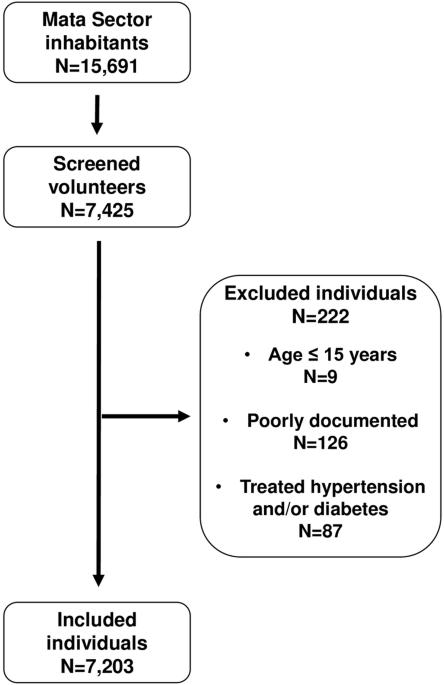
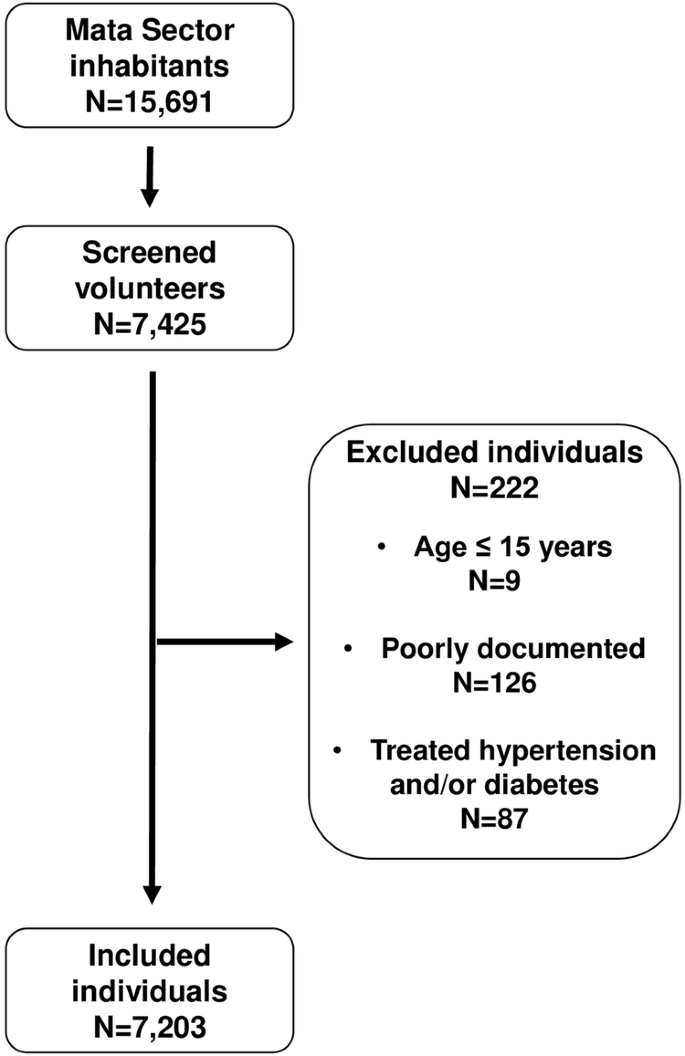
In rural sub-Saharan Africa, knowledge of non-communicable diseases such as high blood pressure (BP) is rather limited. This report provides information about a BP screening in Mata Sector, a rural region in Southern Province of Rwanda. Community-based, house-to-house screening was performed between February and July 2020 on more than 7000 inhabitants. The screening was conducted by a local team composed by 20 community health care workers, five community health care supervisors, and one nurse with hypertension surveillance training. BP and heart rate were recorded after 5 min of resting, using a validated automated oscillometric OMRON M6 IT-HEM-7322-E monitor with Intelli Wrap Cuff (HEM-FL31-E) technology. The mean of the second and third value was retained. BP was normal (<140/90 mm Hg) in 6340 (88%) and elevated in 863 (12%) participants with 95% of unawareness. Grade 1 (140–159/90–99 mm Hg) hypertensive BP readings were detected in 697 (81%), grade 2 (160–179/100–109 mm Hg) in 134 (16%), and grade 3 (≥180/≥110 mm Hg) in 32 (3.7%) individuals. The prevalence of hypertensive readings was significantly age-dependent. Additionally, a slightly greater proportion of participants with high BP (14% versus 11%) had a body mass index (BMI) ≥ 25.0 kg/m2. Also resting heart rate was higher in individuals with high BP (82 versus 77 beats/min). Although individuals identified with occasionally elevated BP values need further confirmatory measurements to establish the diagnosis of hypertension, these data suggest that high BP represents a noteworthy and preventable reason of concern within sub-Saharan Africa.
期刊介绍:
Journal of Human Hypertension is published monthly and is of interest to health care professionals who deal with hypertension (specialists, internists, primary care physicians) and public health workers. We believe that our patients benefit from robust scientific data that are based on well conducted clinical trials. We also believe that basic sciences are the foundations on which we build our knowledge of clinical conditions and their management. Towards this end, although we are primarily a clinical based journal, we also welcome suitable basic sciences studies that promote our understanding of human hypertension.
The journal aims to perform the dual role of increasing knowledge in the field of high blood pressure as well as improving the standard of care of patients. The editors will consider for publication all suitable papers dealing directly or indirectly with clinical aspects of hypertension, including but not limited to epidemiology, pathophysiology, therapeutics and basic sciences involving human subjects or tissues. We also consider papers from all specialties such as ophthalmology, cardiology, nephrology, obstetrics and stroke medicine that deal with the various aspects of hypertension and its complications.




 京公网安备 11010802042870号
京ICP备2023020795号-1
京公网安备 11010802042870号
京ICP备2023020795号-1

 分享
分享
 求助内容:
求助内容: 应助结果提醒方式:
 扫码关注我们
