Jutian Chen, Junxia Lu, Xiaopeng Cheng, Yuefei Zhang, Ze Zhang
{"title":"晶界错向对高温下铬镍铁合金 718 塑性变形影响的原位研究","authors":"Jutian Chen, Junxia Lu, Xiaopeng Cheng, Yuefei Zhang, Ze Zhang","doi":"10.1007/s10853-024-09627-z","DOIUrl":null,"url":null,"abstract":"<div><p>The effect of the grain boundary (GB) misorientation on plastic deformation of Inconel 718 (IN718) alloy was investigated in this paper, using in-situ tensile experiment at 650 °C in combination with crystal plasticity finite element method (CPFEM). The results indicate that dislocations tend to accumulate at GBs to form stress concentration, but the degree of stress concentration does not necessarily increase with the increase of the GB misorientation. It is attributed to the slip transfer at the GBs, determined by the angle between the slip systems of the two adjacent grains. There is a significant uncertainty in the slip transfer for GB misorientation larger than 10°. However, the <span>\\(m_{{{\\alpha \\beta }}}^{\\prime} \\left( {{\\text{SF}}_{\\alpha } + {\\text{SF}}_\\beta } \\right)\\)</span> criterion, which is a function of the Luster and Morris <span>\\(m_{{{\\alpha \\beta }}}^{\\prime}\\)</span> combining the Schmid factors of the two slip systems with the GB misorientation, has some statistical separation significance. Slip transfer tends to appear at GB misorientation less than 30° and <span>\\(m_{{{\\alpha \\beta }}}^{\\prime} \\left( {{\\text{SF}}_{\\alpha } + {\\text{SF}}_\\beta } \\right) > 0.78\\)</span>. This study clarifies the mechanism of the influence of GB misorientation on IN718 microplastic deformation and provides a new strategy to study the deformation behavior of superalloys.</p></div>","PeriodicalId":645,"journal":{"name":"Journal of Materials Science","volume":"59 17","pages":""},"PeriodicalIF":3.9000,"publicationDate":"2024-04-24","publicationTypes":"Journal Article","fieldsOfStudy":null,"isOpenAccess":false,"openAccessPdf":"","citationCount":"0","resultStr":"{\"title\":\"In-situ study of the effect of grain boundary misorientation on plastic deformation of Inconel 718 at high temperature\",\"authors\":\"Jutian Chen, Junxia Lu, Xiaopeng Cheng, Yuefei Zhang, Ze Zhang\",\"doi\":\"10.1007/s10853-024-09627-z\",\"DOIUrl\":null,\"url\":null,\"abstract\":\"<div><p>The effect of the grain boundary (GB) misorientation on plastic deformation of Inconel 718 (IN718) alloy was investigated in this paper, using in-situ tensile experiment at 650 °C in combination with crystal plasticity finite element method (CPFEM). The results indicate that dislocations tend to accumulate at GBs to form stress concentration, but the degree of stress concentration does not necessarily increase with the increase of the GB misorientation. It is attributed to the slip transfer at the GBs, determined by the angle between the slip systems of the two adjacent grains. There is a significant uncertainty in the slip transfer for GB misorientation larger than 10°. However, the <span>\\\\(m_{{{\\\\alpha \\\\beta }}}^{\\\\prime} \\\\left( {{\\\\text{SF}}_{\\\\alpha } + {\\\\text{SF}}_\\\\beta } \\\\right)\\\\)</span> criterion, which is a function of the Luster and Morris <span>\\\\(m_{{{\\\\alpha \\\\beta }}}^{\\\\prime}\\\\)</span> combining the Schmid factors of the two slip systems with the GB misorientation, has some statistical separation significance. Slip transfer tends to appear at GB misorientation less than 30° and <span>\\\\(m_{{{\\\\alpha \\\\beta }}}^{\\\\prime} \\\\left( {{\\\\text{SF}}_{\\\\alpha } + {\\\\text{SF}}_\\\\beta } \\\\right) > 0.78\\\\)</span>. This study clarifies the mechanism of the influence of GB misorientation on IN718 microplastic deformation and provides a new strategy to study the deformation behavior of superalloys.</p></div>\",\"PeriodicalId\":645,\"journal\":{\"name\":\"Journal of Materials Science\",\"volume\":\"59 17\",\"pages\":\"\"},\"PeriodicalIF\":3.9000,\"publicationDate\":\"2024-04-24\",\"publicationTypes\":\"Journal Article\",\"fieldsOfStudy\":null,\"isOpenAccess\":false,\"openAccessPdf\":\"\",\"citationCount\":\"0\",\"resultStr\":null,\"platform\":\"Semanticscholar\",\"paperid\":null,\"PeriodicalName\":\"Journal of Materials Science\",\"FirstCategoryId\":\"88\",\"ListUrlMain\":\"https://link.springer.com/article/10.1007/s10853-024-09627-z\",\"RegionNum\":3,\"RegionCategory\":\"材料科学\",\"ArticlePicture\":[],\"TitleCN\":null,\"AbstractTextCN\":null,\"PMCID\":null,\"EPubDate\":\"\",\"PubModel\":\"\",\"JCR\":\"Q2\",\"JCRName\":\"MATERIALS SCIENCE, MULTIDISCIPLINARY\",\"Score\":null,\"Total\":0}","platform":"Semanticscholar","paperid":null,"PeriodicalName":"Journal of Materials Science","FirstCategoryId":"88","ListUrlMain":"https://link.springer.com/article/10.1007/s10853-024-09627-z","RegionNum":3,"RegionCategory":"材料科学","ArticlePicture":[],"TitleCN":null,"AbstractTextCN":null,"PMCID":null,"EPubDate":"","PubModel":"","JCR":"Q2","JCRName":"MATERIALS SCIENCE, MULTIDISCIPLINARY","Score":null,"Total":0}
In-situ study of the effect of grain boundary misorientation on plastic deformation of Inconel 718 at high temperature
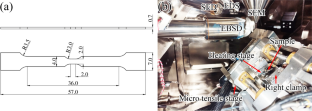
The effect of the grain boundary (GB) misorientation on plastic deformation of Inconel 718 (IN718) alloy was investigated in this paper, using in-situ tensile experiment at 650 °C in combination with crystal plasticity finite element method (CPFEM). The results indicate that dislocations tend to accumulate at GBs to form stress concentration, but the degree of stress concentration does not necessarily increase with the increase of the GB misorientation. It is attributed to the slip transfer at the GBs, determined by the angle between the slip systems of the two adjacent grains. There is a significant uncertainty in the slip transfer for GB misorientation larger than 10°. However, the \(m_{{{\alpha \beta }}}^{\prime} \left( {{\text{SF}}_{\alpha } + {\text{SF}}_\beta } \right)\) criterion, which is a function of the Luster and Morris \(m_{{{\alpha \beta }}}^{\prime}\) combining the Schmid factors of the two slip systems with the GB misorientation, has some statistical separation significance. Slip transfer tends to appear at GB misorientation less than 30° and \(m_{{{\alpha \beta }}}^{\prime} \left( {{\text{SF}}_{\alpha } + {\text{SF}}_\beta } \right) > 0.78\). This study clarifies the mechanism of the influence of GB misorientation on IN718 microplastic deformation and provides a new strategy to study the deformation behavior of superalloys.
期刊介绍:
The Journal of Materials Science publishes reviews, full-length papers, and short Communications recording original research results on, or techniques for studying the relationship between structure, properties, and uses of materials. The subjects are seen from international and interdisciplinary perspectives covering areas including metals, ceramics, glasses, polymers, electrical materials, composite materials, fibers, nanostructured materials, nanocomposites, and biological and biomedical materials. The Journal of Materials Science is now firmly established as the leading source of primary communication for scientists investigating the structure and properties of all engineering materials.




 京公网安备 11010802042870号
京ICP备2023020795号-1
京公网安备 11010802042870号
京ICP备2023020795号-1

 分享
分享
 求助内容:
求助内容: 应助结果提醒方式:
 扫码关注我们
