Yelitza Delgado, Natalia Tapia, Martín Muñoz-Morales, Álvaro Ramirez, Javier Llanos, Ignacio Vargas, Francisco Jesús Fernández-Morales
{"title":"水碳掺杂对微生物燃料电池中作为阳极电极的碳毡性能的影响。","authors":"Yelitza Delgado, Natalia Tapia, Martín Muñoz-Morales, Álvaro Ramirez, Javier Llanos, Ignacio Vargas, Francisco Jesús Fernández-Morales","doi":"10.1007/s11356-024-33338-2","DOIUrl":null,"url":null,"abstract":"<div><p>In this study, the feasibility of using hydrochars as anodic doping materials in microbial fuel cells (MFCs) was investigated. The feedstock used for hydrochar synthesis was metal-polluted plant biomass from an abandoned mining site. The hydrochar obtained was activated by pyrolysis at 500 °C in N<sub>2</sub> atmosphere. Under steady state conditions, the current exerted by the MFCs, as well as the cyclic voltammetry and polarization curves, showed that the activated hydrochar-doped anodes exhibited the best performance in terms of power and current density generation, 0.055 mW/cm<sup>2</sup> and 0.15 mA/cm<sup>2</sup>, respectively. These values were approximately 30% higher than those achieved with non-doped or doped with non-activated hydrochar anodes which can be explained by the highly graphitic carbonaceous structures obtained during the hydrochar activation that reduced the internal resistance of the system. These results suggest that the activated hydrochar materials could significantly enhance the electrochemical performance of bioelectrochemical systems. Moreover, this integration will not only enhance the energy generated by MFCs, but also valorize metal polluted plant biomass within the frame of the circular economy.</p></div>","PeriodicalId":545,"journal":{"name":"Environmental Science and Pollution Research","volume":"32 49","pages":"28253 - 28265"},"PeriodicalIF":5.8000,"publicationDate":"2024-04-23","publicationTypes":"Journal Article","fieldsOfStudy":null,"isOpenAccess":false,"openAccessPdf":"https://link.springer.com/content/pdf/10.1007/s11356-024-33338-2.pdf","citationCount":"0","resultStr":"{\"title\":\"Effect of hydrochar-doping on the performance of carbon felt as anodic electrode in microbial fuel cells\",\"authors\":\"Yelitza Delgado, Natalia Tapia, Martín Muñoz-Morales, Álvaro Ramirez, Javier Llanos, Ignacio Vargas, Francisco Jesús Fernández-Morales\",\"doi\":\"10.1007/s11356-024-33338-2\",\"DOIUrl\":null,\"url\":null,\"abstract\":\"<div><p>In this study, the feasibility of using hydrochars as anodic doping materials in microbial fuel cells (MFCs) was investigated. The feedstock used for hydrochar synthesis was metal-polluted plant biomass from an abandoned mining site. The hydrochar obtained was activated by pyrolysis at 500 °C in N<sub>2</sub> atmosphere. Under steady state conditions, the current exerted by the MFCs, as well as the cyclic voltammetry and polarization curves, showed that the activated hydrochar-doped anodes exhibited the best performance in terms of power and current density generation, 0.055 mW/cm<sup>2</sup> and 0.15 mA/cm<sup>2</sup>, respectively. These values were approximately 30% higher than those achieved with non-doped or doped with non-activated hydrochar anodes which can be explained by the highly graphitic carbonaceous structures obtained during the hydrochar activation that reduced the internal resistance of the system. These results suggest that the activated hydrochar materials could significantly enhance the electrochemical performance of bioelectrochemical systems. Moreover, this integration will not only enhance the energy generated by MFCs, but also valorize metal polluted plant biomass within the frame of the circular economy.</p></div>\",\"PeriodicalId\":545,\"journal\":{\"name\":\"Environmental Science and Pollution Research\",\"volume\":\"32 49\",\"pages\":\"28253 - 28265\"},\"PeriodicalIF\":5.8000,\"publicationDate\":\"2024-04-23\",\"publicationTypes\":\"Journal Article\",\"fieldsOfStudy\":null,\"isOpenAccess\":false,\"openAccessPdf\":\"https://link.springer.com/content/pdf/10.1007/s11356-024-33338-2.pdf\",\"citationCount\":\"0\",\"resultStr\":null,\"platform\":\"Semanticscholar\",\"paperid\":null,\"PeriodicalName\":\"Environmental Science and Pollution Research\",\"FirstCategoryId\":\"93\",\"ListUrlMain\":\"https://link.springer.com/article/10.1007/s11356-024-33338-2\",\"RegionNum\":3,\"RegionCategory\":\"环境科学与生态学\",\"ArticlePicture\":[],\"TitleCN\":null,\"AbstractTextCN\":null,\"PMCID\":null,\"EPubDate\":\"\",\"PubModel\":\"\",\"JCR\":\"0\",\"JCRName\":\"ENVIRONMENTAL SCIENCES\",\"Score\":null,\"Total\":0}","platform":"Semanticscholar","paperid":null,"PeriodicalName":"Environmental Science and Pollution Research","FirstCategoryId":"93","ListUrlMain":"https://link.springer.com/article/10.1007/s11356-024-33338-2","RegionNum":3,"RegionCategory":"环境科学与生态学","ArticlePicture":[],"TitleCN":null,"AbstractTextCN":null,"PMCID":null,"EPubDate":"","PubModel":"","JCR":"0","JCRName":"ENVIRONMENTAL SCIENCES","Score":null,"Total":0}
Effect of hydrochar-doping on the performance of carbon felt as anodic electrode in microbial fuel cells
In this study, the feasibility of using hydrochars as anodic doping materials in microbial fuel cells (MFCs) was investigated. The feedstock used for hydrochar synthesis was metal-polluted plant biomass from an abandoned mining site. The hydrochar obtained was activated by pyrolysis at 500 °C in N2 atmosphere. Under steady state conditions, the current exerted by the MFCs, as well as the cyclic voltammetry and polarization curves, showed that the activated hydrochar-doped anodes exhibited the best performance in terms of power and current density generation, 0.055 mW/cm2 and 0.15 mA/cm2, respectively. These values were approximately 30% higher than those achieved with non-doped or doped with non-activated hydrochar anodes which can be explained by the highly graphitic carbonaceous structures obtained during the hydrochar activation that reduced the internal resistance of the system. These results suggest that the activated hydrochar materials could significantly enhance the electrochemical performance of bioelectrochemical systems. Moreover, this integration will not only enhance the energy generated by MFCs, but also valorize metal polluted plant biomass within the frame of the circular economy.
期刊介绍:
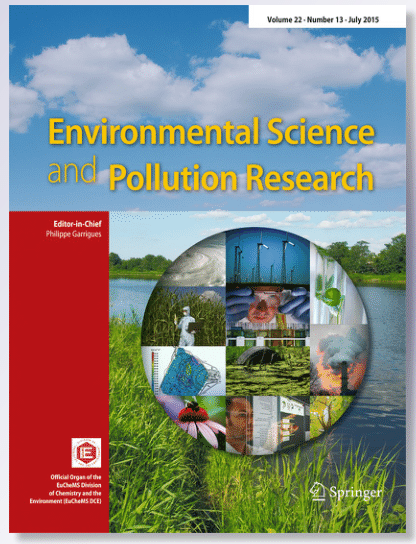
Environmental Science and Pollution Research (ESPR) serves the international community in all areas of Environmental Science and related subjects with emphasis on chemical compounds. This includes:
- Terrestrial Biology and Ecology
- Aquatic Biology and Ecology
- Atmospheric Chemistry
- Environmental Microbiology/Biobased Energy Sources
- Phytoremediation and Ecosystem Restoration
- Environmental Analyses and Monitoring
- Assessment of Risks and Interactions of Pollutants in the Environment
- Conservation Biology and Sustainable Agriculture
- Impact of Chemicals/Pollutants on Human and Animal Health
It reports from a broad interdisciplinary outlook.




 京公网安备 11010802042870号
京ICP备2023020795号-1
京公网安备 11010802042870号
京ICP备2023020795号-1

 分享
分享
 求助内容:
求助内容: 应助结果提醒方式:
 扫码关注我们
