{"title":"当今世界的美国:社会学家如何看待美国及其重要性","authors":"Grégoire Mallard, Shirin Barol, Nina Teresa Kiderlin","doi":"10.1146/annurev-soc-031021-040637","DOIUrl":null,"url":null,"abstract":"The study of policy alone often means domestic policy, of interest to generalist sociologists interested in how political ideas are turned into domestic legislation, executive action, and/or court litigation. Foreign policy, as the financial, commercial, diplomatic and military relations of a state with foreign states, remains a niche subfield. But foreign relations should be conceived of as the broader set of entanglements between societies, encompassing transnational movements, expert networks, and fields. Then, sociological theories of foreign relations can interest generalist sociologists. In this review, we illustrate how this broad view of foreign relations applies to the study of the United States in the world today (USitWT) by first surveying how sociologists of the world society and world system have focused on transnational relations and the place of the United States in their dynamics, and how they have engaged with the question of power. We then demonstrate how field theorists’ study of transnational fields can allow sociologists to reconceptualize the historical role of the USitWT by highlighting continuities between European colonial governmentalities and current US transnational practices. This field perspective can allow sociologists to understand the USitWT as transnational, postcolonial, or neo-colonial governmentality, depending on the sociological and historical depth and range of its relation with different parts of the world.","PeriodicalId":8,"journal":{"name":"ACS Biomaterials Science & Engineering","volume":"32 1","pages":""},"PeriodicalIF":5.5000,"publicationDate":"2024-04-11","publicationTypes":"Journal Article","fieldsOfStudy":null,"isOpenAccess":false,"openAccessPdf":"","citationCount":"0","resultStr":"{\"title\":\"The United States in the World Today: How Sociologists Think About It and Why It Matters\",\"authors\":\"Grégoire Mallard, Shirin Barol, Nina Teresa Kiderlin\",\"doi\":\"10.1146/annurev-soc-031021-040637\",\"DOIUrl\":null,\"url\":null,\"abstract\":\"The study of policy alone often means domestic policy, of interest to generalist sociologists interested in how political ideas are turned into domestic legislation, executive action, and/or court litigation. Foreign policy, as the financial, commercial, diplomatic and military relations of a state with foreign states, remains a niche subfield. But foreign relations should be conceived of as the broader set of entanglements between societies, encompassing transnational movements, expert networks, and fields. Then, sociological theories of foreign relations can interest generalist sociologists. In this review, we illustrate how this broad view of foreign relations applies to the study of the United States in the world today (USitWT) by first surveying how sociologists of the world society and world system have focused on transnational relations and the place of the United States in their dynamics, and how they have engaged with the question of power. We then demonstrate how field theorists’ study of transnational fields can allow sociologists to reconceptualize the historical role of the USitWT by highlighting continuities between European colonial governmentalities and current US transnational practices. This field perspective can allow sociologists to understand the USitWT as transnational, postcolonial, or neo-colonial governmentality, depending on the sociological and historical depth and range of its relation with different parts of the world.\",\"PeriodicalId\":8,\"journal\":{\"name\":\"ACS Biomaterials Science & Engineering\",\"volume\":\"32 1\",\"pages\":\"\"},\"PeriodicalIF\":5.5000,\"publicationDate\":\"2024-04-11\",\"publicationTypes\":\"Journal Article\",\"fieldsOfStudy\":null,\"isOpenAccess\":false,\"openAccessPdf\":\"\",\"citationCount\":\"0\",\"resultStr\":null,\"platform\":\"Semanticscholar\",\"paperid\":null,\"PeriodicalName\":\"ACS Biomaterials Science & Engineering\",\"FirstCategoryId\":\"90\",\"ListUrlMain\":\"https://doi.org/10.1146/annurev-soc-031021-040637\",\"RegionNum\":2,\"RegionCategory\":\"医学\",\"ArticlePicture\":[],\"TitleCN\":null,\"AbstractTextCN\":null,\"PMCID\":null,\"EPubDate\":\"\",\"PubModel\":\"\",\"JCR\":\"Q2\",\"JCRName\":\"MATERIALS SCIENCE, BIOMATERIALS\",\"Score\":null,\"Total\":0}","platform":"Semanticscholar","paperid":null,"PeriodicalName":"ACS Biomaterials Science & Engineering","FirstCategoryId":"90","ListUrlMain":"https://doi.org/10.1146/annurev-soc-031021-040637","RegionNum":2,"RegionCategory":"医学","ArticlePicture":[],"TitleCN":null,"AbstractTextCN":null,"PMCID":null,"EPubDate":"","PubModel":"","JCR":"Q2","JCRName":"MATERIALS SCIENCE, BIOMATERIALS","Score":null,"Total":0}
The United States in the World Today: How Sociologists Think About It and Why It Matters
The study of policy alone often means domestic policy, of interest to generalist sociologists interested in how political ideas are turned into domestic legislation, executive action, and/or court litigation. Foreign policy, as the financial, commercial, diplomatic and military relations of a state with foreign states, remains a niche subfield. But foreign relations should be conceived of as the broader set of entanglements between societies, encompassing transnational movements, expert networks, and fields. Then, sociological theories of foreign relations can interest generalist sociologists. In this review, we illustrate how this broad view of foreign relations applies to the study of the United States in the world today (USitWT) by first surveying how sociologists of the world society and world system have focused on transnational relations and the place of the United States in their dynamics, and how they have engaged with the question of power. We then demonstrate how field theorists’ study of transnational fields can allow sociologists to reconceptualize the historical role of the USitWT by highlighting continuities between European colonial governmentalities and current US transnational practices. This field perspective can allow sociologists to understand the USitWT as transnational, postcolonial, or neo-colonial governmentality, depending on the sociological and historical depth and range of its relation with different parts of the world.
期刊介绍:
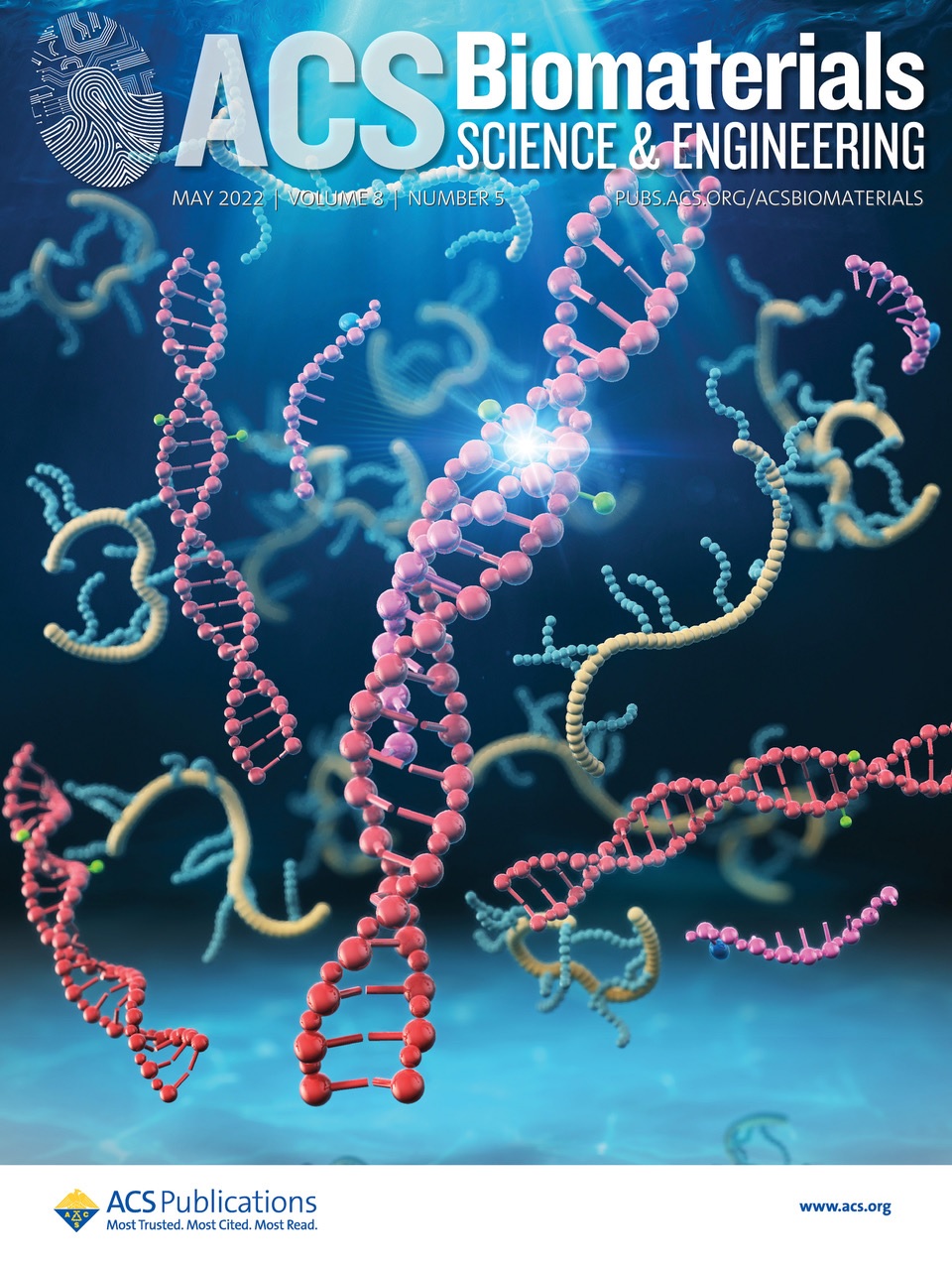
ACS Biomaterials Science & Engineering is the leading journal in the field of biomaterials, serving as an international forum for publishing cutting-edge research and innovative ideas on a broad range of topics:
Applications and Health – implantable tissues and devices, prosthesis, health risks, toxicology
Bio-interactions and Bio-compatibility – material-biology interactions, chemical/morphological/structural communication, mechanobiology, signaling and biological responses, immuno-engineering, calcification, coatings, corrosion and degradation of biomaterials and devices, biophysical regulation of cell functions
Characterization, Synthesis, and Modification – new biomaterials, bioinspired and biomimetic approaches to biomaterials, exploiting structural hierarchy and architectural control, combinatorial strategies for biomaterials discovery, genetic biomaterials design, synthetic biology, new composite systems, bionics, polymer synthesis
Controlled Release and Delivery Systems – biomaterial-based drug and gene delivery, bio-responsive delivery of regulatory molecules, pharmaceutical engineering
Healthcare Advances – clinical translation, regulatory issues, patient safety, emerging trends
Imaging and Diagnostics – imaging agents and probes, theranostics, biosensors, monitoring
Manufacturing and Technology – 3D printing, inks, organ-on-a-chip, bioreactor/perfusion systems, microdevices, BioMEMS, optics and electronics interfaces with biomaterials, systems integration
Modeling and Informatics Tools – scaling methods to guide biomaterial design, predictive algorithms for structure-function, biomechanics, integrating bioinformatics with biomaterials discovery, metabolomics in the context of biomaterials
Tissue Engineering and Regenerative Medicine – basic and applied studies, cell therapies, scaffolds, vascularization, bioartificial organs, transplantation and functionality, cellular agriculture




 京公网安备 11010802042870号
京ICP备2023020795号-1
京公网安备 11010802042870号
京ICP备2023020795号-1

 分享
分享
 求助内容:
求助内容: 应助结果提醒方式:
 扫码关注我们
