Kiran Kumari, Parva Kumar Sharma, Rajnish Prakash Singh
{"title":"肠杆菌 S-33 的转录组响应受低 pH 压力的调节","authors":"Kiran Kumari, Parva Kumar Sharma, Rajnish Prakash Singh","doi":"10.1007/s13258-024-01513-x","DOIUrl":null,"url":null,"abstract":"<h3 data-test=\"abstract-sub-heading\">Background</h3><p>Acidic environments naturally occur worldwide and uncontrolled use of agricultural practices may also cause acidification of soils. The development of acidic conditions disturbs the establishment of efficient microbial populations in their natural niches. The survival of <i>Enterobacter</i> species under acidic stress remains poorly understood.</p><h3 data-test=\"abstract-sub-heading\">Objective</h3><p>This study aimed to investigate the survival of an environmental isolate <i>Enterobacter</i> sp. S-33 under acidic stress and to identify the various genes involved in stress protection at the global gene transcription level. The obtained results provide new targets that will allow understanding the in-depth mechanisms involved in the adaptation of bacteria to environmental pH changes.</p><h3 data-test=\"abstract-sub-heading\">Methods</h3><p>We used the next-generation sequencing (NGS) method to analyze the expression (up-regulation & down-regulation) of genes under varying pH conditions.</p><h3 data-test=\"abstract-sub-heading\">Results</h3><p>A total of 4214 genes were differentially expressed under acidic conditions (pH 5.0), with 294 up-regulated and 167 down-regulated. At pH 6.0, 50 genes were significantly expressed, of which 34 and 16 were identified as up-regulated and down-regulated, respectively. Many of the up-regulated genes were involved in carbohydrate metabolism, amino acid transport & metabolism, and the most down-regulated genes were related to post-translational modification, lipid transport & metabolism, etc. The observed transcriptomic regulation of genes and pathways identified that <i>Enterobacter</i> reduced its post-translational modification, lipid transport & metabolism, and increased carbohydrate metabolism, amino acid metabolism & transport, energy production & conversion to adapt and grow in acidic stress.</p><h3 data-test=\"abstract-sub-heading\">Conclusions</h3><p>The present work provides in-depth information on the characterization of genes associated with tolerance or adaptation to acidic stress of <i>Enterobacter</i> bacterium.</p>","PeriodicalId":12675,"journal":{"name":"Genes & genomics","volume":"11 1","pages":""},"PeriodicalIF":1.7000,"publicationDate":"2024-04-30","publicationTypes":"Journal Article","fieldsOfStudy":null,"isOpenAccess":false,"openAccessPdf":"","citationCount":"0","resultStr":"{\"title\":\"The transcriptome response of Enterobacter sp. S-33 is modulated by low pH-stress\",\"authors\":\"Kiran Kumari, Parva Kumar Sharma, Rajnish Prakash Singh\",\"doi\":\"10.1007/s13258-024-01513-x\",\"DOIUrl\":null,\"url\":null,\"abstract\":\"<h3 data-test=\\\"abstract-sub-heading\\\">Background</h3><p>Acidic environments naturally occur worldwide and uncontrolled use of agricultural practices may also cause acidification of soils. The development of acidic conditions disturbs the establishment of efficient microbial populations in their natural niches. The survival of <i>Enterobacter</i> species under acidic stress remains poorly understood.</p><h3 data-test=\\\"abstract-sub-heading\\\">Objective</h3><p>This study aimed to investigate the survival of an environmental isolate <i>Enterobacter</i> sp. S-33 under acidic stress and to identify the various genes involved in stress protection at the global gene transcription level. The obtained results provide new targets that will allow understanding the in-depth mechanisms involved in the adaptation of bacteria to environmental pH changes.</p><h3 data-test=\\\"abstract-sub-heading\\\">Methods</h3><p>We used the next-generation sequencing (NGS) method to analyze the expression (up-regulation & down-regulation) of genes under varying pH conditions.</p><h3 data-test=\\\"abstract-sub-heading\\\">Results</h3><p>A total of 4214 genes were differentially expressed under acidic conditions (pH 5.0), with 294 up-regulated and 167 down-regulated. At pH 6.0, 50 genes were significantly expressed, of which 34 and 16 were identified as up-regulated and down-regulated, respectively. Many of the up-regulated genes were involved in carbohydrate metabolism, amino acid transport & metabolism, and the most down-regulated genes were related to post-translational modification, lipid transport & metabolism, etc. The observed transcriptomic regulation of genes and pathways identified that <i>Enterobacter</i> reduced its post-translational modification, lipid transport & metabolism, and increased carbohydrate metabolism, amino acid metabolism & transport, energy production & conversion to adapt and grow in acidic stress.</p><h3 data-test=\\\"abstract-sub-heading\\\">Conclusions</h3><p>The present work provides in-depth information on the characterization of genes associated with tolerance or adaptation to acidic stress of <i>Enterobacter</i> bacterium.</p>\",\"PeriodicalId\":12675,\"journal\":{\"name\":\"Genes & genomics\",\"volume\":\"11 1\",\"pages\":\"\"},\"PeriodicalIF\":1.7000,\"publicationDate\":\"2024-04-30\",\"publicationTypes\":\"Journal Article\",\"fieldsOfStudy\":null,\"isOpenAccess\":false,\"openAccessPdf\":\"\",\"citationCount\":\"0\",\"resultStr\":null,\"platform\":\"Semanticscholar\",\"paperid\":null,\"PeriodicalName\":\"Genes & genomics\",\"FirstCategoryId\":\"99\",\"ListUrlMain\":\"https://doi.org/10.1007/s13258-024-01513-x\",\"RegionNum\":4,\"RegionCategory\":\"生物学\",\"ArticlePicture\":[],\"TitleCN\":null,\"AbstractTextCN\":null,\"PMCID\":null,\"EPubDate\":\"\",\"PubModel\":\"\",\"JCR\":\"Q4\",\"JCRName\":\"BIOCHEMISTRY & MOLECULAR BIOLOGY\",\"Score\":null,\"Total\":0}","platform":"Semanticscholar","paperid":null,"PeriodicalName":"Genes & genomics","FirstCategoryId":"99","ListUrlMain":"https://doi.org/10.1007/s13258-024-01513-x","RegionNum":4,"RegionCategory":"生物学","ArticlePicture":[],"TitleCN":null,"AbstractTextCN":null,"PMCID":null,"EPubDate":"","PubModel":"","JCR":"Q4","JCRName":"BIOCHEMISTRY & MOLECULAR BIOLOGY","Score":null,"Total":0}
The transcriptome response of Enterobacter sp. S-33 is modulated by low pH-stress
Background
Acidic environments naturally occur worldwide and uncontrolled use of agricultural practices may also cause acidification of soils. The development of acidic conditions disturbs the establishment of efficient microbial populations in their natural niches. The survival of Enterobacter species under acidic stress remains poorly understood.
Objective
This study aimed to investigate the survival of an environmental isolate Enterobacter sp. S-33 under acidic stress and to identify the various genes involved in stress protection at the global gene transcription level. The obtained results provide new targets that will allow understanding the in-depth mechanisms involved in the adaptation of bacteria to environmental pH changes.
Methods
We used the next-generation sequencing (NGS) method to analyze the expression (up-regulation & down-regulation) of genes under varying pH conditions.
Results
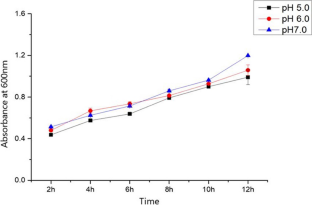
A total of 4214 genes were differentially expressed under acidic conditions (pH 5.0), with 294 up-regulated and 167 down-regulated. At pH 6.0, 50 genes were significantly expressed, of which 34 and 16 were identified as up-regulated and down-regulated, respectively. Many of the up-regulated genes were involved in carbohydrate metabolism, amino acid transport & metabolism, and the most down-regulated genes were related to post-translational modification, lipid transport & metabolism, etc. The observed transcriptomic regulation of genes and pathways identified that Enterobacter reduced its post-translational modification, lipid transport & metabolism, and increased carbohydrate metabolism, amino acid metabolism & transport, energy production & conversion to adapt and grow in acidic stress.
Conclusions
The present work provides in-depth information on the characterization of genes associated with tolerance or adaptation to acidic stress of Enterobacter bacterium.
期刊介绍:
Genes & Genomics is an official journal of the Korean Genetics Society (http://kgenetics.or.kr/). Although it is an official publication of the Genetics Society of Korea, membership of the Society is not required for contributors. It is a peer-reviewed international journal publishing print (ISSN 1976-9571) and online version (E-ISSN 2092-9293). It covers all disciplines of genetics and genomics from prokaryotes to eukaryotes from fundamental heredity to molecular aspects. The articles can be reviews, research articles, and short communications.



 京公网安备 11010802042870号
京ICP备2023020795号-1
京公网安备 11010802042870号
京ICP备2023020795号-1

 分享
分享
 求助内容:
求助内容: 应助结果提醒方式:
 扫码关注我们
