{"title":"利用 DNA 技术优化 Bangkaew 犬的品种识别","authors":"Chananya Patta, Worapong Singchat, Chadaphon Thatukan, Wattanawan Jaito, Nichakorn Kumnan, Piangjai Chalermwong, Thitipong Panthum, Trifan Budi, Wongsathit Wongloet, Pish Wattanadilokchatkun, Thanyapat Thong, Syed Farhan Ahmad, Narongrit Muangmai, Kyudong Han, Prateep Duengkae, Rattanin Phatcharakullawarawat, Kornsorn Srikulnath","doi":"10.1007/s13258-024-01510-0","DOIUrl":null,"url":null,"abstract":"<h3 data-test=\"abstract-sub-heading\">Background</h3><p>The Bangkaew dog is an indigenous dog breed in the Phitsanulok province of Thailand. This breed is recognized by the Fédération Cynologique Internationale (FCI), a global canine organization. The unique traits of the Bangkaew breed lead to purebred selection for breeding, while only their traits and pedigree from parental history are recorded. Determination of the risk of inbreeding depression and the origin of unknown DNA profiles is essential due to the challenges in predicting puppy characteristics, which are crucial for breed management and conservation.</p><h3 data-test=\"abstract-sub-heading\">Objective</h3><p>This study aimed to emphasize that current allelic frequency data for the Bangkaew dog breed must be considered for precise individual identification.</p><h3 data-test=\"abstract-sub-heading\">Methods</h3><p>Approximately 82 Bangkaew dogs from various Thai localities were studied using 15 microsatellite markers for genotypic monitoring and individual identification. Maternal genetic inheritance was assessed via mtDNA D-loop analysis.</p><h3 data-test=\"abstract-sub-heading\">Results</h3><p>The results revealed high genetic diversity in the Bangkaew breed, indicating low potential for inbreeding. We also found that using a 15 loci microsatellite panel was effective for the identification of Bangkaew dogs. The optimized 10 loci microsatellite genotyping panel developed in this study presents improved identification testing efficiency, promoting both time- and cost-effectiveness.</p><h3 data-test=\"abstract-sub-heading\">Conclusion</h3><p>Analysis of microsatellite DNA markers in Bangkaew dogs using an optimized panel of 10 loci selected from 15 loci effectively facilitated individual identification. This approach not only enhances time and cost efficiency, but also provides accurate allelic frequency estimates, which are crucial for the realistic evaluation of DNA evidence.</p>","PeriodicalId":12675,"journal":{"name":"Genes & genomics","volume":"51 1","pages":""},"PeriodicalIF":1.7000,"publicationDate":"2024-04-30","publicationTypes":"Journal Article","fieldsOfStudy":null,"isOpenAccess":false,"openAccessPdf":"","citationCount":"0","resultStr":"{\"title\":\"Optimizing Bangkaew dog breed identification using DNA technology\",\"authors\":\"Chananya Patta, Worapong Singchat, Chadaphon Thatukan, Wattanawan Jaito, Nichakorn Kumnan, Piangjai Chalermwong, Thitipong Panthum, Trifan Budi, Wongsathit Wongloet, Pish Wattanadilokchatkun, Thanyapat Thong, Syed Farhan Ahmad, Narongrit Muangmai, Kyudong Han, Prateep Duengkae, Rattanin Phatcharakullawarawat, Kornsorn Srikulnath\",\"doi\":\"10.1007/s13258-024-01510-0\",\"DOIUrl\":null,\"url\":null,\"abstract\":\"<h3 data-test=\\\"abstract-sub-heading\\\">Background</h3><p>The Bangkaew dog is an indigenous dog breed in the Phitsanulok province of Thailand. This breed is recognized by the Fédération Cynologique Internationale (FCI), a global canine organization. The unique traits of the Bangkaew breed lead to purebred selection for breeding, while only their traits and pedigree from parental history are recorded. Determination of the risk of inbreeding depression and the origin of unknown DNA profiles is essential due to the challenges in predicting puppy characteristics, which are crucial for breed management and conservation.</p><h3 data-test=\\\"abstract-sub-heading\\\">Objective</h3><p>This study aimed to emphasize that current allelic frequency data for the Bangkaew dog breed must be considered for precise individual identification.</p><h3 data-test=\\\"abstract-sub-heading\\\">Methods</h3><p>Approximately 82 Bangkaew dogs from various Thai localities were studied using 15 microsatellite markers for genotypic monitoring and individual identification. Maternal genetic inheritance was assessed via mtDNA D-loop analysis.</p><h3 data-test=\\\"abstract-sub-heading\\\">Results</h3><p>The results revealed high genetic diversity in the Bangkaew breed, indicating low potential for inbreeding. We also found that using a 15 loci microsatellite panel was effective for the identification of Bangkaew dogs. The optimized 10 loci microsatellite genotyping panel developed in this study presents improved identification testing efficiency, promoting both time- and cost-effectiveness.</p><h3 data-test=\\\"abstract-sub-heading\\\">Conclusion</h3><p>Analysis of microsatellite DNA markers in Bangkaew dogs using an optimized panel of 10 loci selected from 15 loci effectively facilitated individual identification. This approach not only enhances time and cost efficiency, but also provides accurate allelic frequency estimates, which are crucial for the realistic evaluation of DNA evidence.</p>\",\"PeriodicalId\":12675,\"journal\":{\"name\":\"Genes & genomics\",\"volume\":\"51 1\",\"pages\":\"\"},\"PeriodicalIF\":1.7000,\"publicationDate\":\"2024-04-30\",\"publicationTypes\":\"Journal Article\",\"fieldsOfStudy\":null,\"isOpenAccess\":false,\"openAccessPdf\":\"\",\"citationCount\":\"0\",\"resultStr\":null,\"platform\":\"Semanticscholar\",\"paperid\":null,\"PeriodicalName\":\"Genes & genomics\",\"FirstCategoryId\":\"99\",\"ListUrlMain\":\"https://doi.org/10.1007/s13258-024-01510-0\",\"RegionNum\":4,\"RegionCategory\":\"生物学\",\"ArticlePicture\":[],\"TitleCN\":null,\"AbstractTextCN\":null,\"PMCID\":null,\"EPubDate\":\"\",\"PubModel\":\"\",\"JCR\":\"Q4\",\"JCRName\":\"BIOCHEMISTRY & MOLECULAR BIOLOGY\",\"Score\":null,\"Total\":0}","platform":"Semanticscholar","paperid":null,"PeriodicalName":"Genes & genomics","FirstCategoryId":"99","ListUrlMain":"https://doi.org/10.1007/s13258-024-01510-0","RegionNum":4,"RegionCategory":"生物学","ArticlePicture":[],"TitleCN":null,"AbstractTextCN":null,"PMCID":null,"EPubDate":"","PubModel":"","JCR":"Q4","JCRName":"BIOCHEMISTRY & MOLECULAR BIOLOGY","Score":null,"Total":0}
引用次数: 0
摘要
背景Bangkaew犬是泰国碧差禄府的本土犬种。该品种得到了国际犬业联合会(FCI)的认可,FCI是一个全球性的犬类组织。Bangkaew 犬种的独特特征导致其必须经过纯种选育,同时只记录其特征和来自父母的血统。由于预测幼犬特征面临挑战,因此确定近亲繁殖抑制风险和未知 DNA 图谱的来源至关重要,这对犬种管理和保护非常关键。结果研究结果表明,Bangkaew 犬种的遗传多样性很高,近亲繁殖的可能性很低。我们还发现,使用 15 个位点的微卫星面板可以有效鉴定 Bangkaew 犬。结论:使用从 15 个基因位点中筛选出的 10 个基因位点组成的优化基因组分析 Bangkaew 犬的微卫星 DNA 标记,有效地促进了个体鉴定。这种方法不仅提高了时间和成本效率,还提供了准确的等位基因频率估计值,这对 DNA 证据的实际评估至关重要。
Optimizing Bangkaew dog breed identification using DNA technology
Background
The Bangkaew dog is an indigenous dog breed in the Phitsanulok province of Thailand. This breed is recognized by the Fédération Cynologique Internationale (FCI), a global canine organization. The unique traits of the Bangkaew breed lead to purebred selection for breeding, while only their traits and pedigree from parental history are recorded. Determination of the risk of inbreeding depression and the origin of unknown DNA profiles is essential due to the challenges in predicting puppy characteristics, which are crucial for breed management and conservation.
Objective
This study aimed to emphasize that current allelic frequency data for the Bangkaew dog breed must be considered for precise individual identification.
Methods
Approximately 82 Bangkaew dogs from various Thai localities were studied using 15 microsatellite markers for genotypic monitoring and individual identification. Maternal genetic inheritance was assessed via mtDNA D-loop analysis.
Results
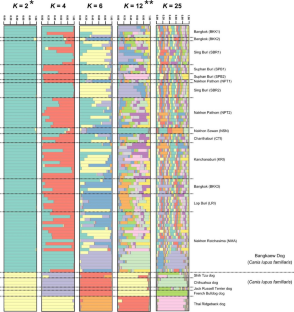
The results revealed high genetic diversity in the Bangkaew breed, indicating low potential for inbreeding. We also found that using a 15 loci microsatellite panel was effective for the identification of Bangkaew dogs. The optimized 10 loci microsatellite genotyping panel developed in this study presents improved identification testing efficiency, promoting both time- and cost-effectiveness.
Conclusion
Analysis of microsatellite DNA markers in Bangkaew dogs using an optimized panel of 10 loci selected from 15 loci effectively facilitated individual identification. This approach not only enhances time and cost efficiency, but also provides accurate allelic frequency estimates, which are crucial for the realistic evaluation of DNA evidence.
期刊介绍:
Genes & Genomics is an official journal of the Korean Genetics Society (http://kgenetics.or.kr/). Although it is an official publication of the Genetics Society of Korea, membership of the Society is not required for contributors. It is a peer-reviewed international journal publishing print (ISSN 1976-9571) and online version (E-ISSN 2092-9293). It covers all disciplines of genetics and genomics from prokaryotes to eukaryotes from fundamental heredity to molecular aspects. The articles can be reviews, research articles, and short communications.




 京公网安备 11010802042870号
京ICP备2023020795号-1
京公网安备 11010802042870号
京ICP备2023020795号-1

 分享
分享
 求助内容:
求助内容: 应助结果提醒方式:
 扫码关注我们
