Federica Castino, F. Yin, V. Grewe, H. Yamashita, S. Matthes, S. Dietmüller, Sabine Baumann, M. Soler, Abolfazl Simorgh, Maximilian Mendiguchia Meuser, F. Linke, B. Lührs
{"title":"在 SolFinder 1.0 中实施决策策略以确定具有生态效益的飞机轨迹:AirTraf 3.0 中的应用研究","authors":"Federica Castino, F. Yin, V. Grewe, H. Yamashita, S. Matthes, S. Dietmüller, Sabine Baumann, M. Soler, Abolfazl Simorgh, Maximilian Mendiguchia Meuser, F. Linke, B. Lührs","doi":"10.5194/gmd-17-4031-2024","DOIUrl":null,"url":null,"abstract":"Abstract. The optimization of aircraft trajectories involves balancing operating costs and climate impact, which are often conflicting objectives. To achieve compromised optimal solutions, higher-level information such as preferences of decision-makers must be taken into account. This paper introduces the SolFinder 1.0 module, a decision-making tool designed to identify eco-efficient aircraft trajectories, which allow for the reduction of the flight's climate impact with limited cost penalties compared to cost-optimal solutions. SolFinder 1.0 offers flexible decision-making options that allow users to select trade-offs between different objective functions, including fuel use, flight time, NOx emissions, contrail distance, and climate impact. The module is included in the AirTraf 3.0 submodel, which optimizes trajectories under atmospheric conditions simulated by the ECHAM/MESSy Atmospheric Chemistry model. This paper focuses on the ability of the module to identify eco-efficient trajectories while solving a bi-objective optimization problem that minimizes climate impact and operating costs. SolFinder 1.0 enables users to explore trajectory properties at varying locations of the Pareto fronts without prior knowledge of the problem results and to identify solutions that limit the cost of reducing the climate impact of a single flight.\n","PeriodicalId":4,"journal":{"name":"ACS Applied Energy Materials","volume":"115 33","pages":""},"PeriodicalIF":5.5000,"publicationDate":"2024-05-17","publicationTypes":"Journal Article","fieldsOfStudy":null,"isOpenAccess":false,"openAccessPdf":"","citationCount":"1","resultStr":"{\"title\":\"Decision-making strategies implemented in SolFinder 1.0 to identify eco-efficient aircraft trajectories: application study in AirTraf 3.0\",\"authors\":\"Federica Castino, F. Yin, V. Grewe, H. Yamashita, S. Matthes, S. Dietmüller, Sabine Baumann, M. Soler, Abolfazl Simorgh, Maximilian Mendiguchia Meuser, F. Linke, B. Lührs\",\"doi\":\"10.5194/gmd-17-4031-2024\",\"DOIUrl\":null,\"url\":null,\"abstract\":\"Abstract. The optimization of aircraft trajectories involves balancing operating costs and climate impact, which are often conflicting objectives. To achieve compromised optimal solutions, higher-level information such as preferences of decision-makers must be taken into account. This paper introduces the SolFinder 1.0 module, a decision-making tool designed to identify eco-efficient aircraft trajectories, which allow for the reduction of the flight's climate impact with limited cost penalties compared to cost-optimal solutions. SolFinder 1.0 offers flexible decision-making options that allow users to select trade-offs between different objective functions, including fuel use, flight time, NOx emissions, contrail distance, and climate impact. The module is included in the AirTraf 3.0 submodel, which optimizes trajectories under atmospheric conditions simulated by the ECHAM/MESSy Atmospheric Chemistry model. This paper focuses on the ability of the module to identify eco-efficient trajectories while solving a bi-objective optimization problem that minimizes climate impact and operating costs. SolFinder 1.0 enables users to explore trajectory properties at varying locations of the Pareto fronts without prior knowledge of the problem results and to identify solutions that limit the cost of reducing the climate impact of a single flight.\\n\",\"PeriodicalId\":4,\"journal\":{\"name\":\"ACS Applied Energy Materials\",\"volume\":\"115 33\",\"pages\":\"\"},\"PeriodicalIF\":5.5000,\"publicationDate\":\"2024-05-17\",\"publicationTypes\":\"Journal Article\",\"fieldsOfStudy\":null,\"isOpenAccess\":false,\"openAccessPdf\":\"\",\"citationCount\":\"1\",\"resultStr\":null,\"platform\":\"Semanticscholar\",\"paperid\":null,\"PeriodicalName\":\"ACS Applied Energy Materials\",\"FirstCategoryId\":\"89\",\"ListUrlMain\":\"https://doi.org/10.5194/gmd-17-4031-2024\",\"RegionNum\":3,\"RegionCategory\":\"材料科学\",\"ArticlePicture\":[],\"TitleCN\":null,\"AbstractTextCN\":null,\"PMCID\":null,\"EPubDate\":\"\",\"PubModel\":\"\",\"JCR\":\"Q2\",\"JCRName\":\"CHEMISTRY, PHYSICAL\",\"Score\":null,\"Total\":0}","platform":"Semanticscholar","paperid":null,"PeriodicalName":"ACS Applied Energy Materials","FirstCategoryId":"89","ListUrlMain":"https://doi.org/10.5194/gmd-17-4031-2024","RegionNum":3,"RegionCategory":"材料科学","ArticlePicture":[],"TitleCN":null,"AbstractTextCN":null,"PMCID":null,"EPubDate":"","PubModel":"","JCR":"Q2","JCRName":"CHEMISTRY, PHYSICAL","Score":null,"Total":0}
Decision-making strategies implemented in SolFinder 1.0 to identify eco-efficient aircraft trajectories: application study in AirTraf 3.0
Abstract. The optimization of aircraft trajectories involves balancing operating costs and climate impact, which are often conflicting objectives. To achieve compromised optimal solutions, higher-level information such as preferences of decision-makers must be taken into account. This paper introduces the SolFinder 1.0 module, a decision-making tool designed to identify eco-efficient aircraft trajectories, which allow for the reduction of the flight's climate impact with limited cost penalties compared to cost-optimal solutions. SolFinder 1.0 offers flexible decision-making options that allow users to select trade-offs between different objective functions, including fuel use, flight time, NOx emissions, contrail distance, and climate impact. The module is included in the AirTraf 3.0 submodel, which optimizes trajectories under atmospheric conditions simulated by the ECHAM/MESSy Atmospheric Chemistry model. This paper focuses on the ability of the module to identify eco-efficient trajectories while solving a bi-objective optimization problem that minimizes climate impact and operating costs. SolFinder 1.0 enables users to explore trajectory properties at varying locations of the Pareto fronts without prior knowledge of the problem results and to identify solutions that limit the cost of reducing the climate impact of a single flight.
期刊介绍:
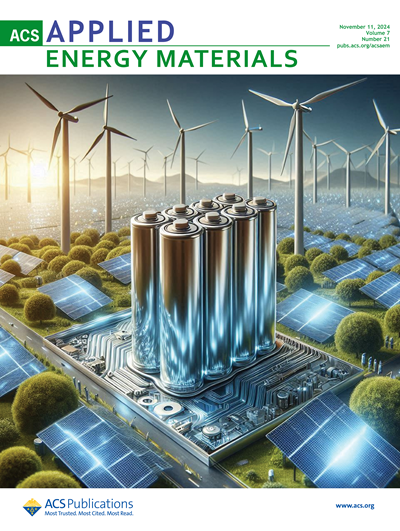
ACS Applied Energy Materials is an interdisciplinary journal publishing original research covering all aspects of materials, engineering, chemistry, physics and biology relevant to energy conversion and storage. The journal is devoted to reports of new and original experimental and theoretical research of an applied nature that integrate knowledge in the areas of materials, engineering, physics, bioscience, and chemistry into important energy applications.




 京公网安备 11010802042870号
京ICP备2023020795号-1
京公网安备 11010802042870号
京ICP备2023020795号-1

 分享
分享
 求助内容:
求助内容: 应助结果提醒方式:
 扫码关注我们
