{"title":"用于布洛芬透皮给药的 Emulgel 和纳米结构脂质载体凝胶配方的评估:表征、机械性能和体内外皮肤渗透。","authors":"Duygu Yılmaz Usta, Zeynep Safak Teksin, Fatmanur Tugcu-Demiroz","doi":"10.1208/s12249-024-02831-9","DOIUrl":null,"url":null,"abstract":"<div><p>In transdermal applications of nonsteroidal anti-inflammatory drugs, the rheological and mechanical properties of the dosage form affect the performance of the drug. The aim of this study to develop emulgel and nanostructured lipid carrier NLC-based gel formulations containing ibuprofen, evaluate their mechanical properties, bioadhesive value and <i>ex-vivo</i> rabbit skin permeability. All formulations showed non-Newtonian pseudoplastic behavior and their viscosity values are suitable for topical application. The particle size of the nanostructured lipid carrier system was found to be 468 ± 21 nm, and the encapsulation efficiency was 95.58 ± 0.41%. According to the index of viscosity, consistency, firmness, and cohesiveness values obtained as a result of the back extrusion study, E2 formulation was found to be more suitable for transdermal application. The firmness and work of shear values of the E2 formulation, which has the highest viscosity value, were also found to be the highest and it was chosen as the most suitable formulation in terms of the spreadability test. The work of bioadhesion values of NLC-based gel and IBU-loaded NLC-based gel were found as 0.226 ± 0.028 and 0.181 ± 0.006 mJ/cm2 respectively. The percentages of IBU that penetrated through rabbit skin from the Ibuactive-Cream and the E2 were 87.4 ± 2.11% and 93.4 ± 2.72% after 24 h, respectively. When the penetration of ibuprofen through the skin was evaluated, it was found that the E2 formulation increased penetration due to its lipid and nanoparticle structure. As a result of these findings, it can be said that the NLC-based gel formulation will increase the therapeutic efficacy and will be a good alternative transdermal formulation.</p><h3>Graphical Abstract</h3>\n<div><figure><div><div><picture><source><img></source></picture></div></div></figure></div></div>","PeriodicalId":6925,"journal":{"name":"AAPS PharmSciTech","volume":"25 5","pages":""},"PeriodicalIF":4.0000,"publicationDate":"2024-05-31","publicationTypes":"Journal Article","fieldsOfStudy":null,"isOpenAccess":false,"openAccessPdf":"https://link.springer.com/content/pdf/10.1208/s12249-024-02831-9.pdf","citationCount":"0","resultStr":"{\"title\":\"Evaluation of Emulgel and Nanostructured Lipid Carrier-Based Gel Formulations for Transdermal Administration of Ibuprofen: Characterization, Mechanical Properties, and Ex-Vivo Skin Permeation\",\"authors\":\"Duygu Yılmaz Usta, Zeynep Safak Teksin, Fatmanur Tugcu-Demiroz\",\"doi\":\"10.1208/s12249-024-02831-9\",\"DOIUrl\":null,\"url\":null,\"abstract\":\"<div><p>In transdermal applications of nonsteroidal anti-inflammatory drugs, the rheological and mechanical properties of the dosage form affect the performance of the drug. The aim of this study to develop emulgel and nanostructured lipid carrier NLC-based gel formulations containing ibuprofen, evaluate their mechanical properties, bioadhesive value and <i>ex-vivo</i> rabbit skin permeability. All formulations showed non-Newtonian pseudoplastic behavior and their viscosity values are suitable for topical application. The particle size of the nanostructured lipid carrier system was found to be 468 ± 21 nm, and the encapsulation efficiency was 95.58 ± 0.41%. According to the index of viscosity, consistency, firmness, and cohesiveness values obtained as a result of the back extrusion study, E2 formulation was found to be more suitable for transdermal application. The firmness and work of shear values of the E2 formulation, which has the highest viscosity value, were also found to be the highest and it was chosen as the most suitable formulation in terms of the spreadability test. The work of bioadhesion values of NLC-based gel and IBU-loaded NLC-based gel were found as 0.226 ± 0.028 and 0.181 ± 0.006 mJ/cm2 respectively. The percentages of IBU that penetrated through rabbit skin from the Ibuactive-Cream and the E2 were 87.4 ± 2.11% and 93.4 ± 2.72% after 24 h, respectively. When the penetration of ibuprofen through the skin was evaluated, it was found that the E2 formulation increased penetration due to its lipid and nanoparticle structure. As a result of these findings, it can be said that the NLC-based gel formulation will increase the therapeutic efficacy and will be a good alternative transdermal formulation.</p><h3>Graphical Abstract</h3>\\n<div><figure><div><div><picture><source><img></source></picture></div></div></figure></div></div>\",\"PeriodicalId\":6925,\"journal\":{\"name\":\"AAPS PharmSciTech\",\"volume\":\"25 5\",\"pages\":\"\"},\"PeriodicalIF\":4.0000,\"publicationDate\":\"2024-05-31\",\"publicationTypes\":\"Journal Article\",\"fieldsOfStudy\":null,\"isOpenAccess\":false,\"openAccessPdf\":\"https://link.springer.com/content/pdf/10.1208/s12249-024-02831-9.pdf\",\"citationCount\":\"0\",\"resultStr\":null,\"platform\":\"Semanticscholar\",\"paperid\":null,\"PeriodicalName\":\"AAPS PharmSciTech\",\"FirstCategoryId\":\"3\",\"ListUrlMain\":\"https://link.springer.com/article/10.1208/s12249-024-02831-9\",\"RegionNum\":4,\"RegionCategory\":\"医学\",\"ArticlePicture\":[],\"TitleCN\":null,\"AbstractTextCN\":null,\"PMCID\":null,\"EPubDate\":\"\",\"PubModel\":\"\",\"JCR\":\"Q2\",\"JCRName\":\"PHARMACOLOGY & PHARMACY\",\"Score\":null,\"Total\":0}","platform":"Semanticscholar","paperid":null,"PeriodicalName":"AAPS PharmSciTech","FirstCategoryId":"3","ListUrlMain":"https://link.springer.com/article/10.1208/s12249-024-02831-9","RegionNum":4,"RegionCategory":"医学","ArticlePicture":[],"TitleCN":null,"AbstractTextCN":null,"PMCID":null,"EPubDate":"","PubModel":"","JCR":"Q2","JCRName":"PHARMACOLOGY & PHARMACY","Score":null,"Total":0}
Evaluation of Emulgel and Nanostructured Lipid Carrier-Based Gel Formulations for Transdermal Administration of Ibuprofen: Characterization, Mechanical Properties, and Ex-Vivo Skin Permeation
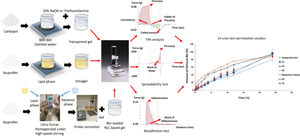
In transdermal applications of nonsteroidal anti-inflammatory drugs, the rheological and mechanical properties of the dosage form affect the performance of the drug. The aim of this study to develop emulgel and nanostructured lipid carrier NLC-based gel formulations containing ibuprofen, evaluate their mechanical properties, bioadhesive value and ex-vivo rabbit skin permeability. All formulations showed non-Newtonian pseudoplastic behavior and their viscosity values are suitable for topical application. The particle size of the nanostructured lipid carrier system was found to be 468 ± 21 nm, and the encapsulation efficiency was 95.58 ± 0.41%. According to the index of viscosity, consistency, firmness, and cohesiveness values obtained as a result of the back extrusion study, E2 formulation was found to be more suitable for transdermal application. The firmness and work of shear values of the E2 formulation, which has the highest viscosity value, were also found to be the highest and it was chosen as the most suitable formulation in terms of the spreadability test. The work of bioadhesion values of NLC-based gel and IBU-loaded NLC-based gel were found as 0.226 ± 0.028 and 0.181 ± 0.006 mJ/cm2 respectively. The percentages of IBU that penetrated through rabbit skin from the Ibuactive-Cream and the E2 were 87.4 ± 2.11% and 93.4 ± 2.72% after 24 h, respectively. When the penetration of ibuprofen through the skin was evaluated, it was found that the E2 formulation increased penetration due to its lipid and nanoparticle structure. As a result of these findings, it can be said that the NLC-based gel formulation will increase the therapeutic efficacy and will be a good alternative transdermal formulation.
期刊介绍:
AAPS PharmSciTech is a peer-reviewed, online-only journal committed to serving those pharmaceutical scientists and engineers interested in the research, development, and evaluation of pharmaceutical dosage forms and delivery systems, including drugs derived from biotechnology and the manufacturing science pertaining to the commercialization of such dosage forms. Because of its electronic nature, AAPS PharmSciTech aspires to utilize evolving electronic technology to enable faster and diverse mechanisms of information delivery to its readership. Submission of uninvited expert reviews and research articles are welcomed.





 京公网安备 11010802042870号
京ICP备2023020795号-1
京公网安备 11010802042870号
京ICP备2023020795号-1

 分享
分享
 求助内容:
求助内容: 应助结果提醒方式:
 扫码关注我们
