Melina Sophie Kurte, Ann-Cathrine Siefen, Florian Jakobs, Tabea Poos, Julia von Tresckow, Bastian von Tresckow, Hans Christian Reinhardt, Florian Kron
{"title":"对复发或难治性弥漫大B细胞淋巴瘤患者进行二线干预的时间成本比较和健康经济影响分析。","authors":"Melina Sophie Kurte, Ann-Cathrine Siefen, Florian Jakobs, Tabea Poos, Julia von Tresckow, Bastian von Tresckow, Hans Christian Reinhardt, Florian Kron","doi":"10.1111/ejh.14248","DOIUrl":null,"url":null,"abstract":"<div>\n \n \n <section>\n \n <h3> Objectives</h3>\n \n <p>Novel interventions (axicabtagene ciloleucel [axi-cel], lisocabtagene maraleucel [liso-cel], tafasitamab-lenalidomide [Tafa-L], polatuzumab-rituximab-bendamustine [pola-BR]) improve clinical outcomes in second-line (2 L) treatment of transplant-ineligible patients with early relapse or refractory (R/R) diffuse large B cell lymphoma (DLBCL). The costs vary depending on the respective treatment regimen and the treatment duration, difficult comparability in reimbursement decisions. The objective was to analyze the health economic impacts of novel 2 L interventions and conventional immunochemotherapies (bendamustine-rituximab [BR], rituximab-gemcitabine-oxaliplatin [R-GemOx]) from a German healthcare payer's perspective as a function of treatment duration.</p>\n </section>\n \n <section>\n \n <h3> Methods</h3>\n \n <p>An economic model was developed to compare treatment costs of 2 L interventions depending on the treatment duration. Treatment duration was measured by progression-free survival (PFS), identified based on a systematic review. Total and average costs were calculated over 5 years to evaluate incremental costs at median PFS for each intervention.</p>\n </section>\n \n <section>\n \n <h3> Results</h3>\n \n <p>Average costs per month at median PFS ranged from €2846 (95% CI: 5067-1641) to €40 535 (95% CI: 91180-N/A) for BR and liso-cel, respectively. Incremental costs at the lowest median PFS (R-GemOx: 5.3 months) revealed −€664, €5560, €11 817, €53 145, and €67 745 for BR, Tafa-L, pola-BR, axi-cel, and liso-cel as compared to R-GemOx, respectively.</p>\n </section>\n \n <section>\n \n <h3> Conclusions</h3>\n \n <p>Analyses uncovered a variation of incremental costs of 2 L transplant-ineligible DLBCL interventions as a function of time leading to amortization of high-priced interventions.</p>\n </section>\n </div>","PeriodicalId":11955,"journal":{"name":"European Journal of Haematology","volume":"113 3","pages":"371-383"},"PeriodicalIF":2.3000,"publicationDate":"2024-06-10","publicationTypes":"Journal Article","fieldsOfStudy":null,"isOpenAccess":false,"openAccessPdf":"https://onlinelibrary.wiley.com/doi/epdf/10.1111/ejh.14248","citationCount":"0","resultStr":"{\"title\":\"Time-dependent cost comparison and health economic impact analysis of second-line interventions for transplant-ineligible patients with relapsed or refractory diffuse large B cell lymphoma\",\"authors\":\"Melina Sophie Kurte, Ann-Cathrine Siefen, Florian Jakobs, Tabea Poos, Julia von Tresckow, Bastian von Tresckow, Hans Christian Reinhardt, Florian Kron\",\"doi\":\"10.1111/ejh.14248\",\"DOIUrl\":null,\"url\":null,\"abstract\":\"<div>\\n \\n \\n <section>\\n \\n <h3> Objectives</h3>\\n \\n <p>Novel interventions (axicabtagene ciloleucel [axi-cel], lisocabtagene maraleucel [liso-cel], tafasitamab-lenalidomide [Tafa-L], polatuzumab-rituximab-bendamustine [pola-BR]) improve clinical outcomes in second-line (2 L) treatment of transplant-ineligible patients with early relapse or refractory (R/R) diffuse large B cell lymphoma (DLBCL). The costs vary depending on the respective treatment regimen and the treatment duration, difficult comparability in reimbursement decisions. The objective was to analyze the health economic impacts of novel 2 L interventions and conventional immunochemotherapies (bendamustine-rituximab [BR], rituximab-gemcitabine-oxaliplatin [R-GemOx]) from a German healthcare payer's perspective as a function of treatment duration.</p>\\n </section>\\n \\n <section>\\n \\n <h3> Methods</h3>\\n \\n <p>An economic model was developed to compare treatment costs of 2 L interventions depending on the treatment duration. Treatment duration was measured by progression-free survival (PFS), identified based on a systematic review. Total and average costs were calculated over 5 years to evaluate incremental costs at median PFS for each intervention.</p>\\n </section>\\n \\n <section>\\n \\n <h3> Results</h3>\\n \\n <p>Average costs per month at median PFS ranged from €2846 (95% CI: 5067-1641) to €40 535 (95% CI: 91180-N/A) for BR and liso-cel, respectively. Incremental costs at the lowest median PFS (R-GemOx: 5.3 months) revealed −€664, €5560, €11 817, €53 145, and €67 745 for BR, Tafa-L, pola-BR, axi-cel, and liso-cel as compared to R-GemOx, respectively.</p>\\n </section>\\n \\n <section>\\n \\n <h3> Conclusions</h3>\\n \\n <p>Analyses uncovered a variation of incremental costs of 2 L transplant-ineligible DLBCL interventions as a function of time leading to amortization of high-priced interventions.</p>\\n </section>\\n </div>\",\"PeriodicalId\":11955,\"journal\":{\"name\":\"European Journal of Haematology\",\"volume\":\"113 3\",\"pages\":\"371-383\"},\"PeriodicalIF\":2.3000,\"publicationDate\":\"2024-06-10\",\"publicationTypes\":\"Journal Article\",\"fieldsOfStudy\":null,\"isOpenAccess\":false,\"openAccessPdf\":\"https://onlinelibrary.wiley.com/doi/epdf/10.1111/ejh.14248\",\"citationCount\":\"0\",\"resultStr\":null,\"platform\":\"Semanticscholar\",\"paperid\":null,\"PeriodicalName\":\"European Journal of Haematology\",\"FirstCategoryId\":\"3\",\"ListUrlMain\":\"https://onlinelibrary.wiley.com/doi/10.1111/ejh.14248\",\"RegionNum\":3,\"RegionCategory\":\"医学\",\"ArticlePicture\":[],\"TitleCN\":null,\"AbstractTextCN\":null,\"PMCID\":null,\"EPubDate\":\"\",\"PubModel\":\"\",\"JCR\":\"Q2\",\"JCRName\":\"HEMATOLOGY\",\"Score\":null,\"Total\":0}","platform":"Semanticscholar","paperid":null,"PeriodicalName":"European Journal of Haematology","FirstCategoryId":"3","ListUrlMain":"https://onlinelibrary.wiley.com/doi/10.1111/ejh.14248","RegionNum":3,"RegionCategory":"医学","ArticlePicture":[],"TitleCN":null,"AbstractTextCN":null,"PMCID":null,"EPubDate":"","PubModel":"","JCR":"Q2","JCRName":"HEMATOLOGY","Score":null,"Total":0}
Time-dependent cost comparison and health economic impact analysis of second-line interventions for transplant-ineligible patients with relapsed or refractory diffuse large B cell lymphoma
Objectives
Novel interventions (axicabtagene ciloleucel [axi-cel], lisocabtagene maraleucel [liso-cel], tafasitamab-lenalidomide [Tafa-L], polatuzumab-rituximab-bendamustine [pola-BR]) improve clinical outcomes in second-line (2 L) treatment of transplant-ineligible patients with early relapse or refractory (R/R) diffuse large B cell lymphoma (DLBCL). The costs vary depending on the respective treatment regimen and the treatment duration, difficult comparability in reimbursement decisions. The objective was to analyze the health economic impacts of novel 2 L interventions and conventional immunochemotherapies (bendamustine-rituximab [BR], rituximab-gemcitabine-oxaliplatin [R-GemOx]) from a German healthcare payer's perspective as a function of treatment duration.
Methods
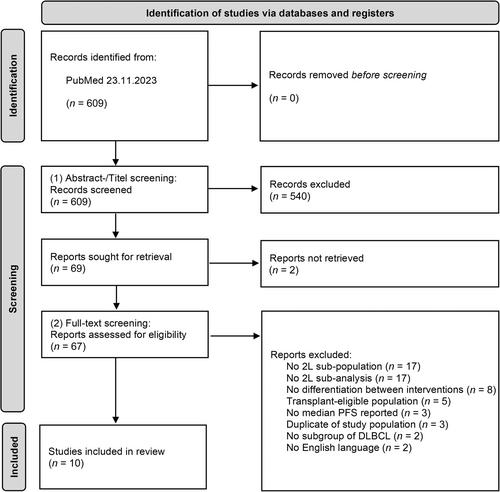
An economic model was developed to compare treatment costs of 2 L interventions depending on the treatment duration. Treatment duration was measured by progression-free survival (PFS), identified based on a systematic review. Total and average costs were calculated over 5 years to evaluate incremental costs at median PFS for each intervention.
Results
Average costs per month at median PFS ranged from €2846 (95% CI: 5067-1641) to €40 535 (95% CI: 91180-N/A) for BR and liso-cel, respectively. Incremental costs at the lowest median PFS (R-GemOx: 5.3 months) revealed −€664, €5560, €11 817, €53 145, and €67 745 for BR, Tafa-L, pola-BR, axi-cel, and liso-cel as compared to R-GemOx, respectively.
Conclusions
Analyses uncovered a variation of incremental costs of 2 L transplant-ineligible DLBCL interventions as a function of time leading to amortization of high-priced interventions.
期刊介绍:
European Journal of Haematology is an international journal for communication of basic and clinical research in haematology. The journal welcomes manuscripts on molecular, cellular and clinical research on diseases of the blood, vascular and lymphatic tissue, and on basic molecular and cellular research related to normal development and function of the blood, vascular and lymphatic tissue. The journal also welcomes reviews on clinical haematology and basic research, case reports, and clinical pictures.




 京公网安备 11010802042870号
京ICP备2023020795号-1
京公网安备 11010802042870号
京ICP备2023020795号-1

 分享
分享
 求助内容:
求助内容: 应助结果提醒方式:
 扫码关注我们
