{"title":"SnCl2 催化的多组分偶联:使用多聚甲醛作为 C1 原料合成 1,3-恶唑烷衍生物。","authors":"","doi":"10.1039/d4ob00791c","DOIUrl":null,"url":null,"abstract":"<div><p>SnCl<sub>2</sub> catalyzed the three-component coupling of aniline, epoxide, and paraformaldehyde, resulting in the synthesis of 1,3-oxazolidine derivatives. The reaction is simple and does not require any additives, bases, or oxidants, and proceeds at moderate temperature with good functional group tolerance. The scope of the utilization of paraformaldehyde as the methylene source was further extended to the synthesis of benzothiazole and 4,4′-methylenebis(<em>N</em>,<em>N</em>-dimethylaniline) using the same catalyst. A catalytic pathway was proposed based on the control experiments.</p></div>","PeriodicalId":96,"journal":{"name":"Organic & Biomolecular Chemistry","volume":"22 28","pages":"Pages 5768-5775"},"PeriodicalIF":2.7000,"publicationDate":"2024-07-17","publicationTypes":"Journal Article","fieldsOfStudy":null,"isOpenAccess":false,"openAccessPdf":"","citationCount":"0","resultStr":"{\"title\":\"SnCl2-catalyzed multicomponent coupling: synthesis of 1,3-oxazolidine derivatives using paraformaldehyde as a C1 feedstock†\",\"authors\":\"\",\"doi\":\"10.1039/d4ob00791c\",\"DOIUrl\":null,\"url\":null,\"abstract\":\"<div><p>SnCl<sub>2</sub> catalyzed the three-component coupling of aniline, epoxide, and paraformaldehyde, resulting in the synthesis of 1,3-oxazolidine derivatives. The reaction is simple and does not require any additives, bases, or oxidants, and proceeds at moderate temperature with good functional group tolerance. The scope of the utilization of paraformaldehyde as the methylene source was further extended to the synthesis of benzothiazole and 4,4′-methylenebis(<em>N</em>,<em>N</em>-dimethylaniline) using the same catalyst. A catalytic pathway was proposed based on the control experiments.</p></div>\",\"PeriodicalId\":96,\"journal\":{\"name\":\"Organic & Biomolecular Chemistry\",\"volume\":\"22 28\",\"pages\":\"Pages 5768-5775\"},\"PeriodicalIF\":2.7000,\"publicationDate\":\"2024-07-17\",\"publicationTypes\":\"Journal Article\",\"fieldsOfStudy\":null,\"isOpenAccess\":false,\"openAccessPdf\":\"\",\"citationCount\":\"0\",\"resultStr\":null,\"platform\":\"Semanticscholar\",\"paperid\":null,\"PeriodicalName\":\"Organic & Biomolecular Chemistry\",\"FirstCategoryId\":\"92\",\"ListUrlMain\":\"https://www.sciencedirect.com/org/science/article/pii/S1477052024005792\",\"RegionNum\":3,\"RegionCategory\":\"化学\",\"ArticlePicture\":[],\"TitleCN\":null,\"AbstractTextCN\":null,\"PMCID\":null,\"EPubDate\":\"2024/6/17 0:00:00\",\"PubModel\":\"Epub\",\"JCR\":\"Q1\",\"JCRName\":\"CHEMISTRY, ORGANIC\",\"Score\":null,\"Total\":0}","platform":"Semanticscholar","paperid":null,"PeriodicalName":"Organic & Biomolecular Chemistry","FirstCategoryId":"92","ListUrlMain":"https://www.sciencedirect.com/org/science/article/pii/S1477052024005792","RegionNum":3,"RegionCategory":"化学","ArticlePicture":[],"TitleCN":null,"AbstractTextCN":null,"PMCID":null,"EPubDate":"2024/6/17 0:00:00","PubModel":"Epub","JCR":"Q1","JCRName":"CHEMISTRY, ORGANIC","Score":null,"Total":0}
SnCl2-catalyzed multicomponent coupling: synthesis of 1,3-oxazolidine derivatives using paraformaldehyde as a C1 feedstock†
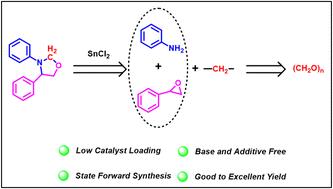
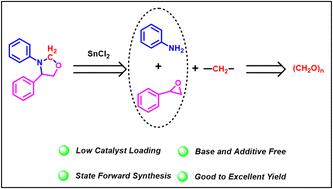
SnCl2 catalyzed the three-component coupling of aniline, epoxide, and paraformaldehyde, resulting in the synthesis of 1,3-oxazolidine derivatives. The reaction is simple and does not require any additives, bases, or oxidants, and proceeds at moderate temperature with good functional group tolerance. The scope of the utilization of paraformaldehyde as the methylene source was further extended to the synthesis of benzothiazole and 4,4′-methylenebis(N,N-dimethylaniline) using the same catalyst. A catalytic pathway was proposed based on the control experiments.
期刊介绍:
Organic & Biomolecular Chemistry is an international journal using integrated research in chemistry-organic chemistry. Founded in 2003 by the Royal Society of Chemistry, the journal is published in Semimonthly issues and has been indexed by SCIE, a leading international database. The journal focuses on the key research and cutting-edge progress in the field of chemistry-organic chemistry, publishes and reports the research results in this field in a timely manner, and is committed to becoming a window and platform for rapid academic exchanges among peers in this field. The journal's impact factor in 2023 is 2.9, and its CiteScore is 5.5.




 京公网安备 11010802042870号
京ICP备2023020795号-1
京公网安备 11010802042870号
京ICP备2023020795号-1

 分享
分享
 求助内容:
求助内容: 应助结果提醒方式:
 扫码关注我们
